The Best Materials for a Statement Bathroom Vanity
Marble, timber and terrazzo each bring a different character to a vanity. Here is how to choose a material built for daily use, humidity and real drama.
 By Priya Nair
30 August 2026 · 6 min read
By Priya Nair
30 August 2026 · 6 min read

The bathroom vanity has become one of the more expressive surfaces in a considered home, in a way it simply was not a generation ago, when a laminate counter and a mirrored cabinet were treated as sufficient. A vanity is used at close range, every day, under direct light, which makes it one of the few surfaces in a house where material choice is scrutinised almost as often as it is touched. It also sits in one of the harder environments a material will face — humidity, temperature swings, standing water, the daily contact of toiletries and hands — which means the most photogenic choice is not always the most sensible one. Getting the balance right between drama and durability is the whole exercise.
Marble: the Obvious Choice, Handled Carefully
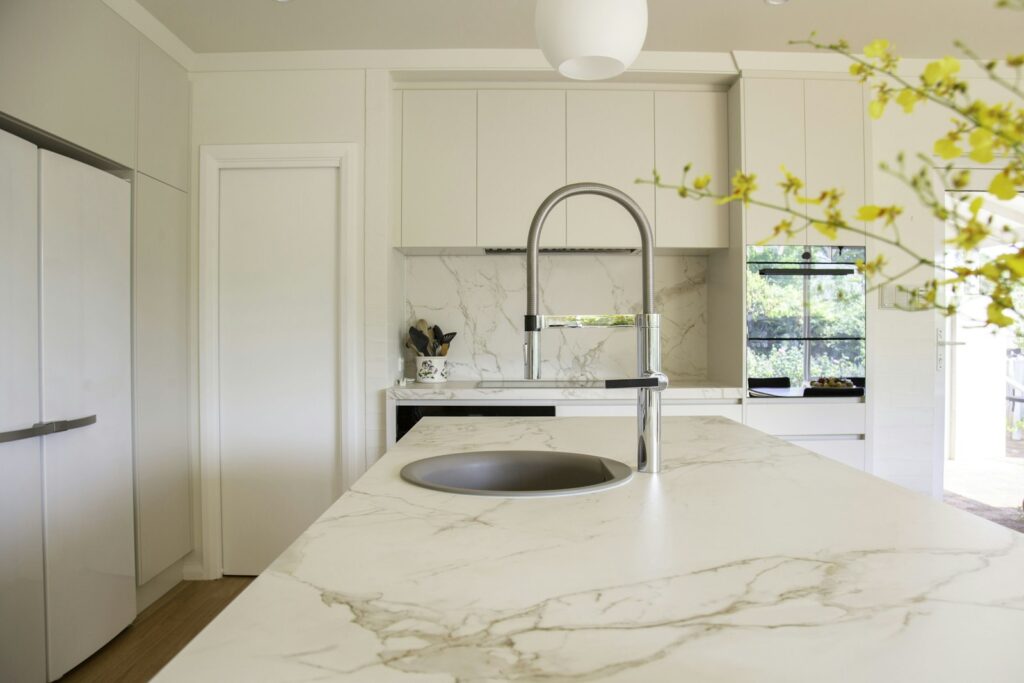
Marble remains the material most people picture when they imagine a statement vanity, and for good reason — no other surface offers the same depth of veining or the sense of quiet permanence that a slab of natural stone brings to a small room. But marble is porous, and a bathroom vanity sees more standing water, toothpaste, and skincare product than almost any other stone surface in the house. A honed rather than polished finish hides the inevitable etching from acidic products far better, and a quality sealant, reapplied roughly once a year, keeps staining at bay. Choosing a bolder vein pattern also helps disguise the small marks that accumulate with daily use, so that the marble’s imperfections read as character rather than damage over time. For those drawn to the most celebrated white marble of all, our piece on the Statuario vanity looks at the material in closer detail.
Terrazzo’s Quiet Comeback
Terrazzo has returned to considered interiors with real staying power, and a bathroom vanity is one of its best applications. Made from chips of marble, quartz or glass set in a cement or resin binder, terrazzo offers a similar visual richness to natural stone with considerably better resistance to staining and etching, particularly in resin-based versions. It also allows for a level of customisation that solid stone cannot match — chip size, colour combination and binder tone can all be tuned to a room’s palette, which makes terrazzo a strong option for anyone building a bathroom around a specific colour story rather than working around the material’s own veining. For those who want a stone that celebrates rather than hides its natural character, our piece on the onyx vanity considers a more luminous alternative.
Vanity materials worth comparing
- Marble — the classic choice, needs honing and regular sealing to resist daily wear
- Terrazzo — durable, customisable, a strong middle ground between stone and composite
- Solid timber — warm and characterful, best sealed properly and kept away from standing water
- Engineered quartz — highly durable and low-maintenance, with a more uniform appearance
- Concrete — industrial and characterful, but needs sealing and will develop a patina over time
Timber, for Warmth Stone Cannot Offer
A timber vanity brings a warmth that no stone surface quite manages, and it has become a favoured choice for bathrooms that lean toward a softer, more residential feel rather than a hotel-spa aesthetic. Teak and other naturally water-resistant hardwoods are the sensible starting point, since they tolerate humidity far better than softer woods without needing constant maintenance. A proper marine-grade sealant, applied generously and reapplied as it wears, is non-negotiable — timber left unsealed in a humid bathroom will warp and discolour within a season. The trade-off for that warmth is more upkeep than stone or composite demands, but for many considered homes it is a trade worth making, particularly around a freestanding basin where the timber’s grain can be seen in full.
A vanity is one of the few surfaces in a house scrutinised at arm’s length, every single morning.
Practical Considerations Beyond Looks
Whatever material is chosen, a few details separate a vanity that ages well from one that does not. An integrated or under-mount basin, rather than a vessel sink perched on top, keeps water from pooling around the basin’s base — a common failure point regardless of material. A slight overhang at the front edge protects cabinetry below from splashes, and a matte or honed finish, rather than high gloss, hides water spots and daily marks far better under bathroom lighting, which tends to be brighter and more direct than anywhere else in the house. None of these details are visible in a photograph, but they are the difference between a vanity that still looks considered after five years of daily use and one that needs replacing after two.
Engineered Quartz and Concrete, Considered
For households that want a statement surface without the maintenance calendar that natural stone and timber demand, engineered quartz offers a genuine middle ground. Manufactured from crushed stone bound with resin, it is non-porous, resistant to staining and etching, and available in patterns that mimic marble’s veining closely enough to satisfy most eyes without any of the sealing regime a real slab requires. Concrete sits at the opposite end of the character spectrum — deliberately imperfect, with visible aggregate and a faint mottling that develops further with age. It needs sealing to resist staining and will always carry small variations from pour to pour, but for a home leaning toward an industrial or minimalist palette, those imperfections are very much the point rather than a flaw to be designed around.
Choosing for the Long Term
The best approach is to think of the vanity the way one would think of a kitchen worktop — a surface that will be touched, splashed and scrutinised daily for a decade or more, not a one-off design statement. Marble and terrazzo suit a household prepared to maintain them properly; timber suits one that values warmth over lowest-maintenance; engineered quartz and concrete suit anyone who wants a strong material story with a lighter maintenance load. Whichever material wins out, it is worth choosing the one that will still look considered in ten years’ daily use, not just in the render, and worth remembering that the small, unglamorous details — the basin mount, the sealant, the edge profile — matter just as much as the slab itself.
For more, browse our full Homes & Culture section, along with how to choose the right bathroom vanity, the best materials for a bathroom renovation, and how to choose bathroom fittings and taps for the finishing details.
Priya tours the homes most people only glimpse from the road, and asks how they are really lived in.