The Art of the Photographic Safari
A great wildlife photograph rarely comes down to equipment alone. Here is what separates a considered photographic safari from an ordinary game drive.
 By Marcus Lim
30 August 2026 · 6 min read
By Marcus Lim
30 August 2026 · 6 min read
A photographic safari differs from an ordinary game drive in ways that go well beyond simply bringing a bigger lens. It is a different pace entirely — longer stops, more patience with a single sighting, guides trained specifically to read light and position vehicles for photography rather than merely for a good viewing angle. Done properly, it produces images that a standard game drive, moving quickly between sightings to maximise species count, simply cannot capture. Understanding what actually goes into a well-run photographic safari changes how travellers should choose a camp, a guide, and even a season.
Choosing the right operation
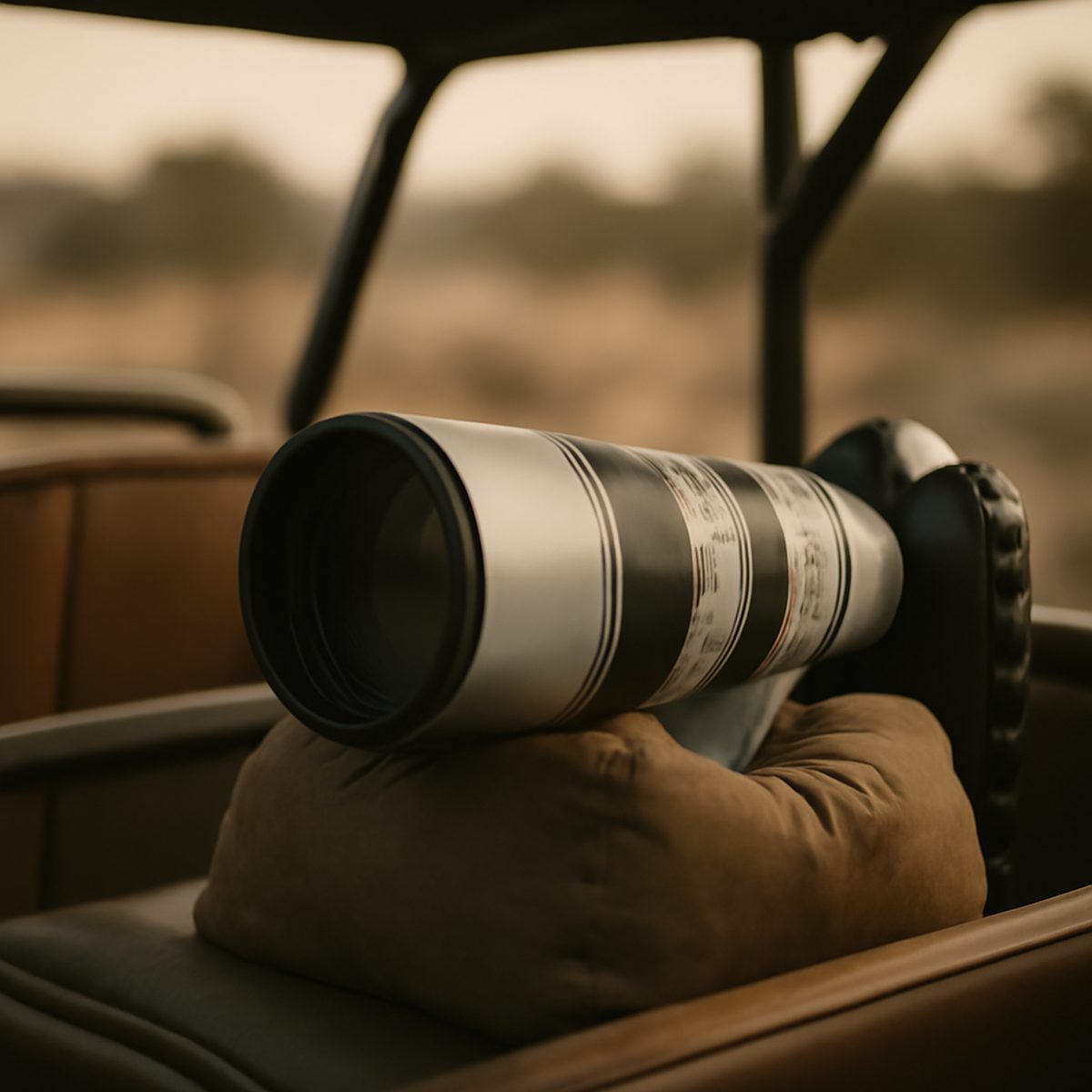
Not every safari camp is equipped or staffed for serious photography, regardless of how it markets itself. The genuine specialists employ guides trained specifically in photographic positioning — understanding where the light will fall an hour before it does, anticipating an animal’s likely movement to pre-position the vehicle rather than reacting after the moment has passed. Vehicle specification matters considerably too: photographic-focused operations typically limit guest numbers per vehicle, offer beanbags or gimbal mounts rather than expecting handheld shooting from a moving platform, and allow genuine flexibility to stay with a sighting for as long as the light and the animal’s behaviour warrant, rather than adhering to a fixed drive schedule built around covering ground.
Ask directly, before booking, how many guests share a vehicle and whether the itinerary allows for extended stays at a single sighting rather than a fixed loop. The answers reveal more about whether an operation genuinely understands photography than any amount of marketing language about “photographic safaris” printed in a brochure.
Light, timing and the fieldcraft that actually matters
The golden hours around sunrise and sunset remain the foundation of good wildlife photography, both for the quality of light itself and because animal activity tends to peak during the cooler parts of the day. A well-run photographic safari builds its schedule around this reality rather than convenience, with early starts that put photographers in position before first light rather than arriving once the best conditions have already passed. Midday, by contrast, tends to offer harsher, less flattering light and reduced animal activity, better used for rest, equipment maintenance, or reviewing the morning’s images than for active shooting.
Patience is the fieldcraft skill that separates strong photographic results from mediocre ones more than any single piece of equipment. A guide willing to wait quietly at a waterhole for twenty minutes on the possibility of a particular behavioural moment, rather than moving on after the first few frames, is worth more to a photographer’s final portfolio than almost any lens upgrade.
“The best photographs almost never happen in the first five minutes of a sighting,” one veteran safari guide specialising in photography told us. “They happen once everyone’s settled and the animal’s forgotten the vehicle is there.”
Equipment worth bringing, and what to leave behind
A telephoto lens in the 100-400mm range covers the great majority of safari photography needs without the weight and cost of the longest professional glass, and a beanbag support, easily filled with rice or beans on arrival rather than shipped full, stabilises shots far more effectively than a tripod in the confines of a safari vehicle. A second camera body, if travelling with one, is genuinely worth the extra weight — swapping lenses mid-sighting risks missing the moment entirely, and having a wider lens ready on a second body for environmental shots alongside the telephoto captures a fuller, more varied set of images from any single encounter.
Readers planning a wider wildlife-focused trip beyond a single photographic safari should read our guide to the best photography trips in Asia, which covers destinations well beyond the traditional safari format, and our companion piece on the art of the wildlife safari in Asia, which addresses the broader safari experience for travellers whose priorities extend beyond photography alone.
Marine and alternative photographic opportunities
Photographic safaris need not be limited to traditional land-based game viewing. Travellers drawn to marine subjects should read our guide to the best whale and marine wildlife trips, which applies much of the same fieldcraft logic — patience, positioning, understanding subject behaviour — to an entirely different setting. Our broader piece on where to go for wildlife watching is a useful starting point for travellers still deciding which format and destination best suits their photographic interests before committing to a specific trip.
Post-processing and managing the shoot
A photographic safari generates an enormous volume of images over even a few days — several thousand frames is not unusual for a dedicated shooter working multiple sightings a day — and a workable system for reviewing and culling images each evening prevents the task from becoming overwhelming by the trip’s end. Many committed photographic safari travellers bring a laptop specifically for this purpose, backing up cards nightly and doing a rough first pass of selects while the context of each sighting is still fresh in memory, before the details of one golden-hour encounter start blending into another.
Camp choice matters here too, in a less obvious way than lens selection or guide expertise. The better photographic-focused camps understand this workflow and provide reliable power and a quiet space suited to evening editing, a detail worth asking about directly if serious post-processing is part of the plan rather than an afterthought handled once home. Some of the more specialised operations even offer informal photography critique sessions with resident guides or visiting photographers, a genuinely valuable addition for travellers looking to improve technique rather than simply accumulate images.
A discipline worth taking seriously
The photographic safari rewards exactly the kind of patience and preparation that considered travellers tend to bring to serious trips more broadly — research into the right operation, willingness to build a trip around light and animal behaviour rather than convenience, and genuine restraint in the field rather than rushing every sighting. The resulting images, built through hours of quiet waiting rather than opportunistic snapshots, are considerably better for it. Explore more of the region’s considered travel in our Travel & Stays section.
Marcus writes on travel and hospitality across Asia, and is happiest a long way from a lobby.