The Art of the Chesterfield with Velvet Collar
A velvet collar on a Chesterfield coat is a small detail with an outsized history, tracing to nineteenth-century aristocratic tailoring, not mere decoration.
 By Daniel Koh
31 August 2026 · 6 min read
By Daniel Koh
31 August 2026 · 6 min read

Of all the details that distinguish a genuinely well-considered overcoat from an ordinary one, the velvet collar on a Chesterfield remains among the most immediately recognisable, and among the least understood. It is a small piece of fabric, rarely more than a few inches wide, and yet it carries an outsized amount of history, signalling a lineage in formal menswear that stretches back considerably further than most of the garment’s wearers realise.
Where the detail actually began
The Chesterfield coat itself takes its name from a nineteenth-century Earl of Chesterfield, credited with popularising the coat’s clean, single-breasted silhouette among London’s aristocratic set. The velvet collar came slightly later, adopted as a mark of formality and status, a small luxurious flourish against an otherwise restrained wool coat that distinguished the wearer’s coat from a plainer, more everyday overcoat at a glance. We cover the coat’s broader silhouette separately in the art of the Chesterfield coat, but the velvet collar deserves its own closer look given how much history it carries in such a small space.
Why velvet, specifically
It is worth noting that the velvet collar’s association with formality and status has followed the coat well beyond its original aristocratic origins, appearing on stage and screen throughout the twentieth century as a kind of visual shorthand for old-world sophistication. That cultural weight is part of why the detail still reads as meaningful rather than merely decorative today — audiences and wearers alike have absorbed a century of association between this specific detail and a particular register of considered, formal dressing, whether or not they could articulate exactly why. Velvet carries a similar evening register indoors, as our piece on the return of the smoking jacket explains.
A practical origin, dressed up as luxury
There is a practical explanation often overlooked in favour of the more romantic status story: velvet, being a deep-piled fabric, wears considerably better against the friction of a scarf and the back of the neck than the coat’s main wool cloth would on its own, protecting the collar from the fraying and shine that repeated friction causes. The luxurious appearance was, in that sense, a happy byproduct of a genuinely practical tailoring solution.
Colour and contrast
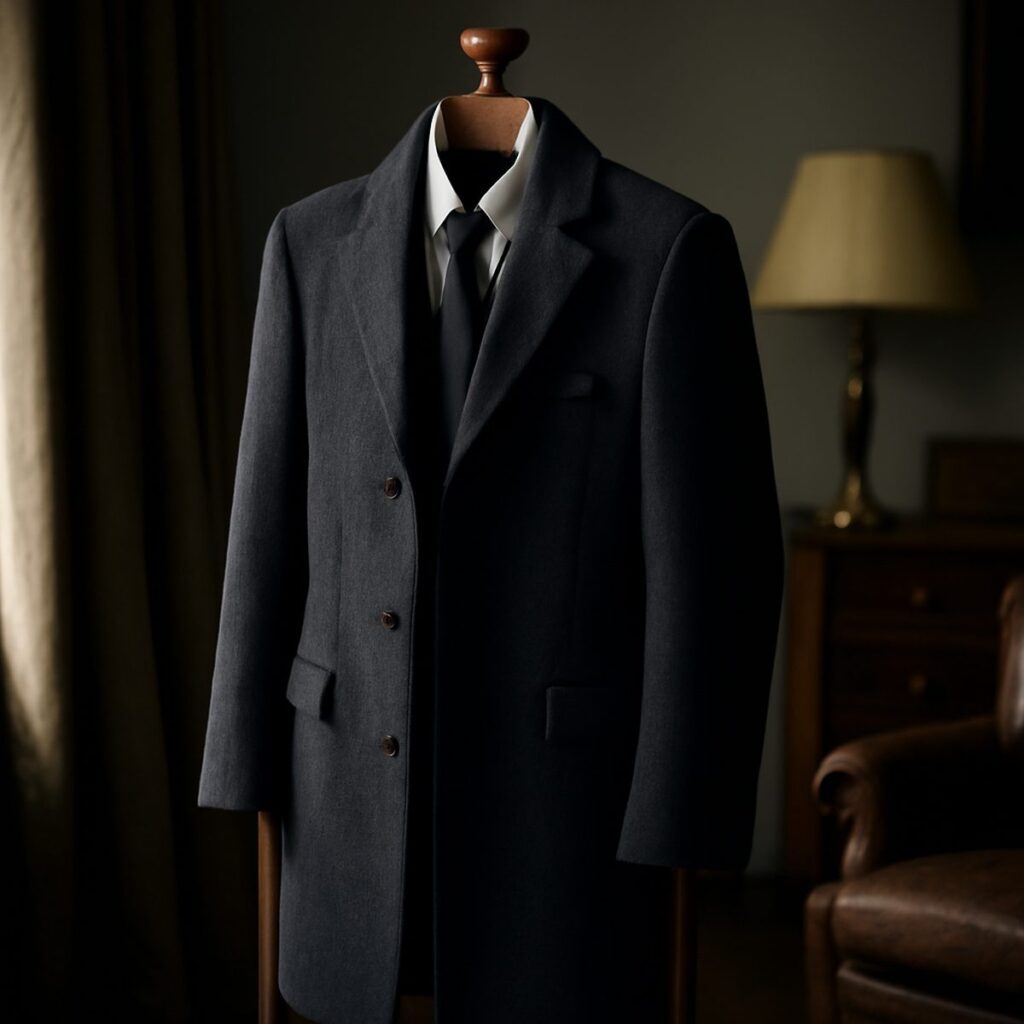
Traditionally rendered in black regardless of the coat’s own colour, the velvet collar creates a deliberate contrast against charcoal, navy or camel wool, a detail meant to be noticed without shouting. Some contemporary interpretations experiment with tonal collars matched closer to the coat’s own colour, a subtler variation that trades some of the traditional contrast for a more understated modern read.
Construction and quality
A well-executed velvet collar is hand-stitched to the coat rather than simply glued or machine-applied, allowing it to be removed and replaced by a tailor once the pile eventually wears down from years of contact — a detail worth asking about specifically when buying at the higher end, since a collar that cannot be replaced effectively caps the useful life of an otherwise excellent coat.
Wearing it without overdoing it
Seasonality plays its own role here too. A velvet-collared Chesterfield is fundamentally a cold-weather garment, and the collar’s texture reads best against the deeper, more saturated tones that dominate a winter wardrobe rather than the lighter palette of spring dressing. Buyers investing in one for the first time should treat it as a genuine winter cornerstone piece rather than a coat meant to see year-round use, which in turn makes a strong case for choosing quality over compromise, since it will be worked hard through a concentrated handful of months each year.
The velvet collar is, by design, a subtle detail rather than a loud one, and the coat works best when the rest of the outfit stays similarly restrained — simple tailoring underneath, minimal competing texture elsewhere. It suits genuinely formal occasions particularly well, evening events and formal daywear where the coat’s aristocratic history feels appropriate to the setting, though a well-cut version wears just as convincingly over a simple jumper and trouser combination for those wanting the detail in a more everyday context.
- Choose black velvet for the most traditional, versatile contrast against the coat’s main cloth
- Ask whether the collar is detachable or replaceable before buying, particularly on a significant investment piece
- Keep the rest of the outfit restrained; the collar is the statement, not a supporting cast of loud accessories
- Brush the velvet gently and regularly to keep the pile looking fresh rather than crushed or shiny
“A velvet collar tells you something about the coat before you even feel the cloth. It’s a signal, quietly done, and that’s exactly the point,” a bespoke tailor specialising in formal outerwear told us.
Pairing it with the rest of a formal wardrobe
Because the coat carries such a specific historical register, it pairs most convincingly with tailoring that shares a similar sense of occasion — a well-cut suit, a proper shirt collar, leather gloves and a plain scarf rather than anything overtly sporty or casual underneath. Worn this way, the coat and its velvet collar read as a coherent whole rather than a single dressed-up flourish sitting awkwardly atop an otherwise relaxed outfit, which is the most common way the detail ends up looking forced rather than earned.
Modern variations worth knowing
Contemporary tailors have introduced their own variations on the theme over the past decade, including corduroy collars as a slightly more casual alternative, and even considered leather in place of velvet for a more contemporary read. Purists tend to argue these substitutions lose something of the original’s specific texture and light-catching quality, but they remain worth considering for buyers who want the historical reference without committing to velvet’s particular upkeep, which does require slightly more careful handling than a standard wool collar.
A small detail worth the history
Few details in menswear carry quite so much history in quite so little fabric, and understanding the velvet collar’s origins — part status marker, part practical solution to everyday wear — deepens the appreciation for a garment that might otherwise register as simply “smart” without much further thought. For readers exploring other formal coat details and fabrics worth understanding, our Style & Watches section and our guide to the best fabrics for a transitional coat both offer useful further context.
Once you know what you are looking at, a velvet-collared Chesterfield stops reading as simply an expensive coat, and starts reading as a small, deliberate piece of tailoring history still doing exactly the job it was designed for.
Daniel has spent fifteen years arguing that the best watch is the one you never take off.