In Search of Singapore’s Best Nasi Lemak
Everyone has an opinion on the best nasi lemak in Singapore. Here is what actually separates a great plate from a merely adequate one, and where to look.
 By Renée Tan
29 August 2026 · 6 min read
By Renée Tan
29 August 2026 · 6 min read
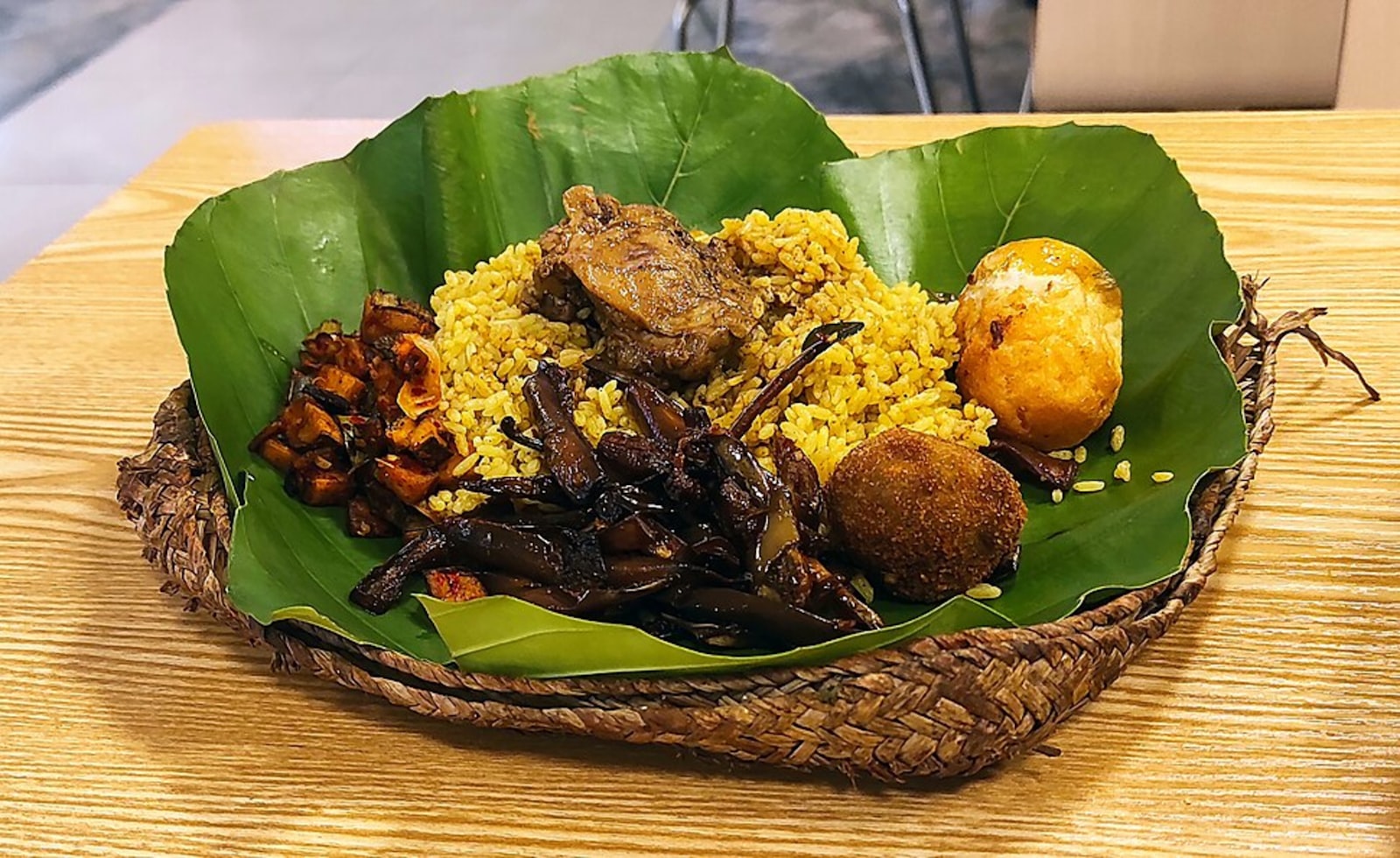
Everyone in Singapore has an opinion about nasi lemak, and almost nobody agrees. Ask three people for their favourite plate and you will get three fiercely defended answers, usually anchored to a specific coffeeshop, a specific queue and a specific hour of the morning. This is, in a sense, the whole appeal of the dish — it is humble enough that everyone has tried dozens of versions, and precise enough that the differences between a good plate and a forgettable one are unmistakable the moment you taste it.
What Actually Makes a Great Nasi Lemak
The name means ‘fatty rice’, and that fat — traditionally coconut milk, sometimes supplemented with pandan and a little salt — is doing more work than most diners realise. A great nasi lemak lives or dies on its rice before anything else touches the plate. It should be fragrant without being cloying, glossy without being wet, and separate into individual grains rather than clumping into a starchy mass. Get the rice wrong, and no amount of good sambal or perfectly fried chicken can save the plate.
The garnishes matter too, but they are secondary. Crisp fried anchovies, roasted peanuts with a genuine crunch, a properly fried egg with a slightly crisp edge, and thin slices of cucumber to cut the richness — these are the constants. What varies, and what tends to separate the merely good from the exceptional, is everything layered on top: fried chicken with a shatteringly crisp skin, a slab of otah, or a piece of rendang that has been simmered for hours rather than minutes. Another rice dish judged just as closely on its grains is surveyed in our guide to the best nasi briyani in Singapore, where fragrance and texture count for everything.
The Coconut Rice Test
The simplest way to judge any nasi lemak stall is to try the rice alone, before adding anything else. If it holds its own — fragrant, slightly sweet from the coconut, with just enough salt to make you want another bite — the rest of the plate is usually built with the same care. If the rice needs the sambal or the sides to be interesting, the kitchen is compensating for something it has not got quite right.
Sambal, the Real Signature
If the rice is the foundation, the sambal is the signature — the one element that varies most dramatically from stall to stall and tells you the most about a cook’s hand. Some lean sweet, cooked down slowly with dried shrimp and shallots until it turns almost jammy. Others favour a sharper, more assertive chilli heat, built to cut through the richness of the coconut rice rather than complement it. Neither approach is more correct than the other, but a serious stall will have clearly chosen one register and executed it with total conviction, rather than serving something bland and inoffensive to please everyone.
Signs of a Good Plate
- Rice that tastes distinctly of coconut and pandan, not just salt
- A sambal with real depth, whether sweet or fiery, never flat
- Anchovies fried to a genuine crunch, not merely warmed through
- A queue of regulars ordering without glancing at a menu board
Where the Search Usually Leads
The best nasi lemak in Singapore tends to be found in unglamorous places — a stall that has operated from the same corner of a wet market since before dawn for thirty years, a Geylang Serai institution that only really wakes up after midnight, a modest coffeeshop stall in a housing estate where the queue starts forming before the stall has even finished setting up. None of these places advertise. They do not need to.
“My mother taught me that the rice has to taste good enough to eat on its own,” one longtime hawker has said of the recipe she inherited. “Everything else on the plate is just there to keep you company.”
What is notable about the very best of these stalls is how little they have changed. Recipes are guarded closely and passed down rather than reinvented, and the owners tend to resist the temptation to expand or franchise, correctly sensing that consistency is harder to maintain across multiple kitchens. A single wok, one family, one recipe — that scale is often precisely why the plate stays good.
The Sides Worth Paying Extra For
A base plate of rice, egg, anchovies and peanuts will always be inexpensive, and that is part of the dish’s enduring democracy — a satisfying plate should never cost very much. But the sides are where a stall’s ambition shows, and it is worth paying extra for the ones done properly rather than defaulting to the cheapest option out of habit. A well-fried piece of chicken, marinated overnight and fried to order rather than sitting under a heat lamp, is usually the single most worthwhile upgrade. Rendang, when a stall bothers to make it well, is another sign of real investment — it should taste of hours of slow cooking, dark and fragrant with toasted coconut, not simply of chilli.
Beyond the Plate
Nasi lemak rewards the same kind of loyalty that defines much of Singapore’s hawker culture more broadly — return to a stall enough times and small things start to change in your favour, a slightly larger portion, a piece of chicken from the better part of the pan, a nod of recognition before you have even ordered. For readers building out a wider map of where that loyalty pays off, Black Cow’s guide to the hawker stalls worth queuing for this year is an essential companion, alongside the more communal pleasures covered in the zi char stalls worth seeking out, for the nights a solo plate of rice will not quite do.
The sambal itself sits within a much larger regional tradition worth understanding on its own terms; anyone drawn to the chilli, shrimp paste and aromatics that define it should also read a field guide to Southeast Asian spice, which traces the same building blocks across half a dozen neighbouring cuisines. And for the full landscape of where Singapore eats and drinks well, Black Cow’s Dining & Drinks section covers considerably more ground than any single plate ever could.
The search for the city’s best nasi lemak never really ends, and that is precisely the point. It is a dish built for repetition, for regulars, for arguments settled only by going back and trying again. Find a stall whose rice you would eat plain, and the rest of the search tends to sort itself out.
Renée has covered Singapore's restaurants for over a decade, with a soft spot for the kitchens most people walk past.