A Weekend in Miaoli
An hour south of Taipei, Miaoli's tea hills and Hakka villages move at an entirely different pace. Here is how to spend a proper weekend there.
 By Marcus Lim
31 August 2026 · 5 min read
By Marcus Lim
31 August 2026 · 5 min read
Miaoli rarely makes it onto a first-time Taiwan itinerary, which is exactly its appeal. An hour or so south of Taipei by train, this county of tea-covered hills and Hakka villages has none of the capital’s density and little of the polish that has crept into Taiwan’s better-known weekend escapes. What it has instead is a genuinely distinct culture — the Hakka people settled these hills generations ago, and their food, architecture and unhurried rhythm still shape the county more than any tourist board could invent.
A weekend here is best spent slowly: a morning among tea terraces, an afternoon in a hot spring town, an evening over a Hakka dinner that bears little resemblance to the Taiwanese food most visitors already know.
Friday: into the tea hills
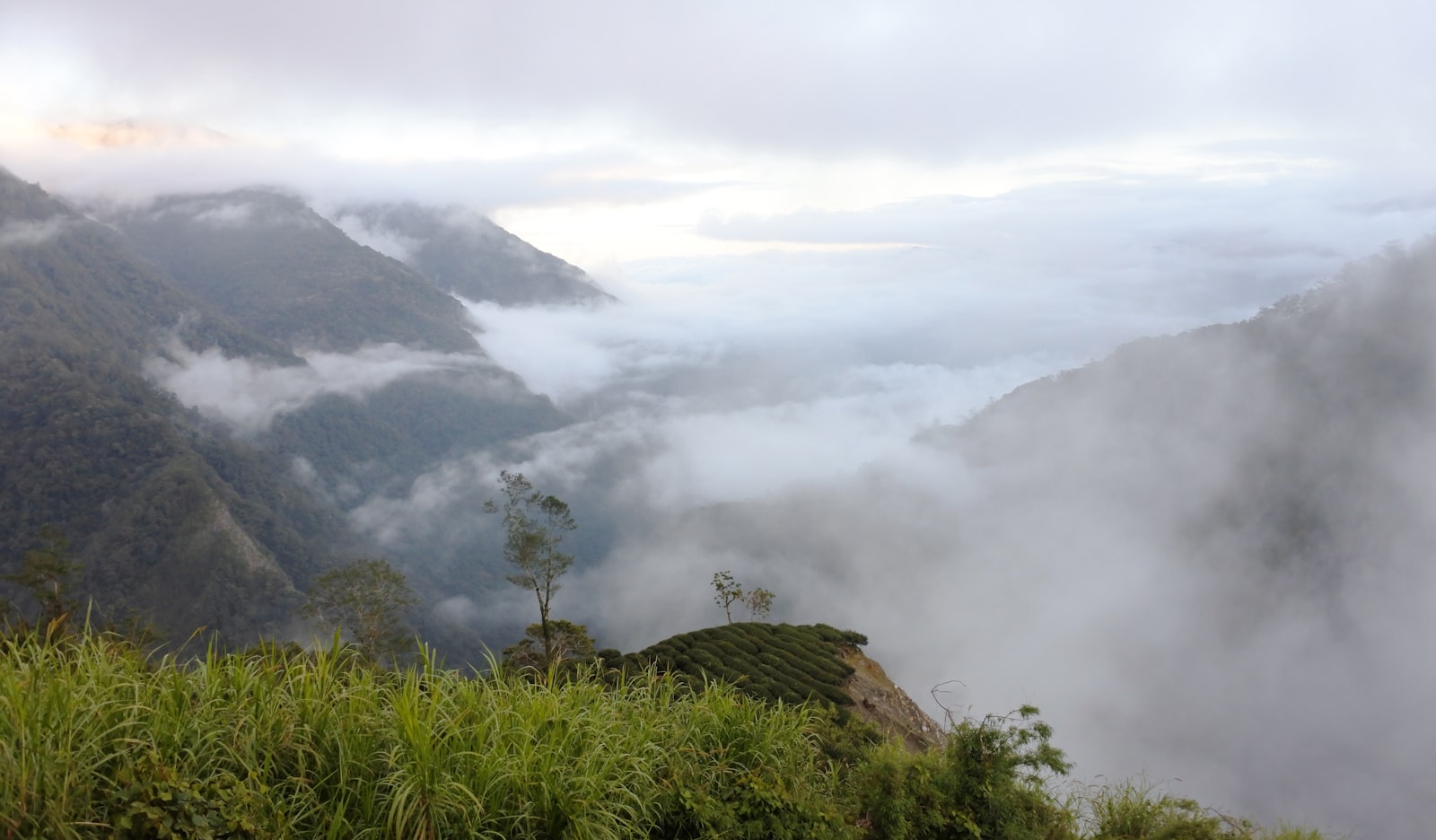
Arrive by early afternoon and head straight for the hill country, where terraced tea gardens climb in neat rows up slopes still worked by families who have farmed the same plots for three or four generations, the rows following the contour of the land rather than any imposed grid. The light here in late afternoon, raking low across the leaves, is reason enough for the detour, and a handful of small farmhouses now offer simple guest rooms alongside their tea production, so a visit can extend naturally into an overnight stay. Dinner is worth taking at a farmhouse table rather than a restaurant proper — Hakka cooking runs on preserved vegetables, stir-fried mountain greens and a distinctive, deeply savoury pounded tea that is closer to a savoury broth than the beverage its name suggests, served in a wide bowl and topped with puffed rice, peanuts and whatever greens are in season that week.
Saturday: hot springs and old streets
Miaoli’s interior holds a scattering of hot spring towns considerably quieter than Taipei’s more famous options, with simple bathhouses set beside mountain streams rather than built up into resort complexes. A soak in the morning, before the day gets warm, is the right order of operations; follow it with a walk through one of the county’s preserved old streets, where wooden shopfronts and a slower pace of commerce have survived largely because Miaoli was, for a long time, simply overlooked by the wider tourist trail. It makes a natural contrast with the busier pace covered in our guide to forty-eight considered hours in Taipei, for travellers combining both legs of a trip.
Sunday: the Hakka table
No weekend in Miaoli is complete without a proper Hakka lunch before the train back — a table crowded with braised pork belly, stir-fried rice noodles, and the region’s distinctive fermented and preserved vegetables, all built around the frugal, resourceful cooking traditions that Hakka communities carried with them through generations of migration. It is heartier and saltier than most Taiwanese food found in Taipei, and considerably harder to find well done outside Hakka strongholds like this one. Readers wanting the full context of this cuisine before arriving should read our guide to contemporary Hakka tasting menus, which traces how a handful of chefs are reworking these traditions for a new generation of diners.
Practical notes for the weekend
- Trains from Taipei to Miaoli run frequently throughout the day and take roughly an hour on the faster express services.
- A rental car or scooter makes the tea hills and hot spring towns considerably easier to reach than public transport alone.
- Spring brings the county’s flame-red tung blossom season, when hillsides turn briefly and spectacularly white with fallen petals.
- Book farmhouse stays ahead where possible — rooms are limited across the tea hills and fill quickly on weekends with good weather forecast.
“People assume Hakka food is simple because it looks humble on the plate,” a farmhouse cook in the tea hills told me, ladling out a bowl of pounded tea. “It isn’t simple. It’s just honest, which most food that travels well eventually stops being.”
The wood and paper crafts worth seeking out
Miaoli’s Hakka communities carried a strong craft tradition alongside their cooking, and a handful of small workshops still practise it much as they always have — hand-woven bamboo baskets, dyed cotton in the deep indigo-blue associated with Hakka dress, and paper umbrellas painted with the same floral motifs that have decorated them for generations. A short stop at one of these workshops, usually a single family working from a shopfront rather than anything resembling a tourist attraction, is worth building into a Saturday afternoon. Prices are modest, the work is genuinely made on site, and the conversation, where language allows, is often more interesting than the purchase itself — most of these craftspeople are the last in their family still practising the trade, and they tend to know it. A small woven basket or a length of hand-dyed indigo cloth, bought directly from the person who made it, tends to mean considerably more back home than anything found in an airport gift shop, and costs a fraction of the price.
Extending the trip north
Miaoli sits close enough to Taiwan’s autumn mountain colour that the two make a natural pairing for travellers with a few extra days — the county’s own hills turn handsomely in late autumn, and the higher ranges further north extend the season by several weeks. Anyone building a longer Taiwan itinerary around this landscape should also read our guide to autumn escapes in Taiwan’s mountains, and browse our broader travel and stays coverage for how Miaoli fits into a wider trip through the island.
What makes Miaoli worth the detour is not any single sight but the accumulation of small, unhurried moments — a farmer explaining how tea is picked, a bathhouse attendant topping up a spring without being asked, a lunch that takes two hours because nobody involved seems to think that is unusual. It is, in the best sense, a weekend that resists being rushed — and, for a county so close to Taipei, remarkably successful at feeling like it belongs to an entirely different, slower era of Taiwanese travel altogether.
Marcus writes on travel and hospitality across Asia, and is happiest a long way from a lobby.