
A Guide to Tea Ceremonies and Culture
Beyond the cup — a guide to the tea ceremonies and cultures worth understanding, and where to find them practised properly close to home in Singapore.
 By Renée Tan
30 August 2026 · 6 min read
By Renée Tan
30 August 2026 · 6 min read
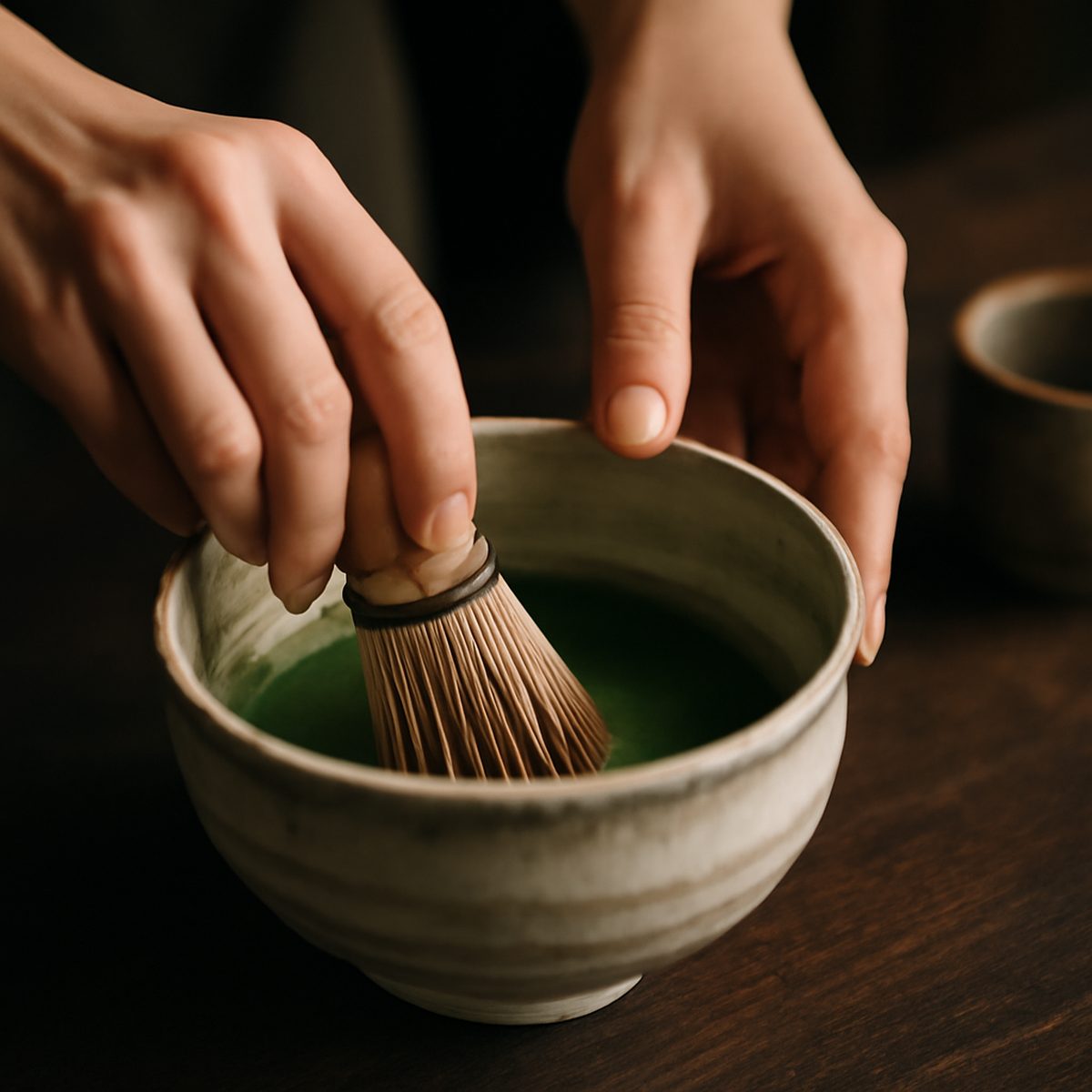
Tea, treated properly, is one of the more meditative rituals available to a busy life, and Asia’s various tea traditions have spent centuries refining exactly how to make that ritual meaningful rather than merely functional. From the precise, almost liturgical movements of a Japanese chanoyu ceremony to the rapid, high-repetition brewing of Chinese gongfu tea, these traditions differ enormously in form but share a common instinct: that the preparation of tea deserves as much attention as its consumption. Singapore, sitting at the crossroads of several of these traditions, offers a genuinely useful vantage point for understanding them.
The Japanese tea ceremony
Chanoyu, often translated simply as “the way of tea,” is built around matcha — powdered green tea whisked to a froth in hot water rather than steeped as loose leaf. The ceremony itself, formalised over centuries and closely associated with Zen Buddhist principles, treats every gesture as significant: the specific way a bowl is turned before drinking, the placement of utensils, the deliberate pacing that resists any sense of hurry. A full formal ceremony can run for several hours and involves considerably more ritual than most visitors expect, but even an abbreviated, more accessible version retains the essential philosophy — that slowing down enough to prepare tea with total attention is itself the point, not merely a means to the drink.
Matcha’s broader cultural moment beyond the ceremony itself has been considerable in recent years, moving well past tea bowls into desserts, lattes, and an entire retail category of its own. Understanding the ceremonial roots gives that broader trend considerably more context — the reverence modern matcha culture holds for quality and preparation traces directly back to centuries of ceremonial practice, even when the format has shifted to a café counter.
Chinese gongfu tea
Where the Japanese ceremony emphasises slowness and ritual formality, Chinese gongfu tea takes a different approach entirely — rapid, repeated short infusions of the same leaves in a small clay or porcelain vessel, extracting a slightly different flavour profile with each successive steep. The word gongfu translates roughly to “skill through practice,” and the method rewards exactly that: a practitioner develops an intuitive feel for water temperature, steeping time, and leaf quantity through repetition rather than fixed rules. This makes it, in some ways, a more accessible entry point than the more formalised Japanese ceremony, since it can be practised casually at home with relatively simple equipment and still yield genuinely excellent results.
Oolong and pu-erh teas are particularly well suited to this method, their complex flavour profiles unfolding differently across each infusion in a way that rewards patient, repeated tasting rather than a single steep. A serious pu-erh, aged for years or even decades, can shift meaningfully in character across a single gongfu session, offering a kind of tasting arc more commonly associated with wine than with tea.
Where to experience these traditions properly
- Seek out a dedicated tea house rather than a café that simply offers tea alongside coffee — the equipment, water quality, and staff knowledge differ enormously.
- Ask whether a matcha preparation uses ceremonial-grade or culinary-grade powder; the former is intended for drinking straight, the latter for baking and lattes, and the difference in flavour is significant.
- For gongfu tea, look for a house that lets you taste several infusions of the same leaves rather than serving a single generic pot.
- Approach either tradition with unhurried time set aside — rushing either ceremony defeats much of the purpose.
“Tea forces you to slow down in a way coffee never quite does,” one tea master running a small house in the city has observed. “The ceremony isn’t decoration. It’s the whole point.”
Singapore’s own tea culture
Singapore’s evolving relationship with tea reflects its position between these major traditions, and the city has developed a genuinely interesting scene of its own as a result. Our feature on Singapore’s new tea houses, beyond the bubble covers the growing number of dedicated spaces taking both Japanese and Chinese traditions seriously, often within the same establishment. Tea’s relationship with food is equally worth exploring, and our piece on the art of pairing tea with food looks at how the right tea can elevate a meal in much the same way a considered wine pairing does.
For a more social, leisurely approach to the category, the best places for afternoon tea offers a different but equally worthwhile entry point, while those drawn to the wider philosophy of ritual and mindfulness that underpins these traditions may also find resonance in our travel feature on onsen etiquette and culture, another Japanese tradition built around unhurried, deliberate practice.
Beginning a home practice
Neither tradition requires extensive equipment to begin properly at home, though both reward investing in a few key pieces rather than improvising indefinitely. For matcha, a bamboo whisk and a wide, shallow bowl make a genuine difference to the texture achieved, producing the fine, even froth that a regular whisk or blender simply cannot replicate. For gongfu tea, a small clay teapot, seasoned over time with repeated use, gradually develops its own character and is generally considered to improve the tea brewed in it — a slow, cumulative kind of investment that mirrors the patience the whole tradition asks of its practitioners.
What both traditions ultimately teach, beyond technique, is a different relationship with time itself. In a city that prizes efficiency as thoroughly as Singapore does, deliberately setting aside twenty unhurried minutes to prepare a single bowl or a single pot of tea is a small act of resistance against the pace of everything else, and one that becomes more valuable, not less, the busier life gets around it.
The verdict
Understanding tea ceremony and culture properly changes how the drink itself is experienced, turning what is often treated as a quick beverage into something closer to a considered practice. Singapore offers more access to these traditions than many visitors realise, and taking the time to seek them out properly — rather than settling for tea as an afterthought to a meal — is a genuinely rewarding way to slow down. The rest of the city’s considered food and drink culture is explored across Dining & Drinks.
Renée has covered Singapore's restaurants for over a decade, with a soft spot for the kitchens most people walk past.


