A Guide to Tasting Pu-erh Tea
Earthy, deep and quietly complex, pu-erh is the aged tea that improves with decades. A guide to tasting it, from raw and ripe to the art of brewing.
 By Renée Tan
1 September 2026 · 6 min read
By Renée Tan
1 September 2026 · 6 min read
Most tea is meant to be drunk young, prized for its freshness and best within a year of picking. Pu-erh is the great exception — a tea made to age, to deepen and to transform over years and even decades, gathering complexity the way a fine wine does. To the curious drinker it offers something no other tea can: the taste of time itself.
Named for a region in Yunnan, in China’s mountainous southwest, pu-erh is a fermented tea with a character utterly its own — earthy, deep, sometimes woody, sometimes sweet, always complex. It rewards patience both in the cup and in the cellar, and understanding it opens a door onto one of the most fascinating corners of the tea world. For a tea at the opposite end of the spectrum, delicate and barely processed, our guide to tasting silver needle tea makes an instructive comparison.
Raw and ripe: the great divide
The first thing to understand is that pu-erh comes in two fundamentally different styles, and confusing them leads only to disappointment.
- Raw (sheng): made in the traditional way and left to age slowly and naturally over years. Young raw pu-erh is bright, astringent, even grassy; with age it mellows into something honeyed, deep and profound.
- Ripe (shou): made by a modern process that accelerates fermentation, producing a dark, smooth, earthy tea ready to drink much sooner, with none of the youthful edge.
Neither is superior; they are different pleasures. Ripe pu-erh is the gentle, approachable entry point — mellow and forgiving. Raw pu-erh is the connoisseur’s tea, capable of astonishing complexity but demanding more patience and more understanding. The distinction echoes the way terroir shapes specialty tea everywhere: origin and process together make the cup.
The compression, and the ageing
Pu-erh is traditionally pressed into cakes, bricks or nests rather than sold loose, and this is not mere packaging. Compression slows the tea’s interaction with air, allowing the slow, even ageing that gives pu-erh its character. A well-stored cake can improve for decades, its harshness softening, its flavours deepening and rounding.
Storage matters enormously — the tea wants a stable, gently humid environment, away from strong smells and direct light. This is a tea you can genuinely lay down and return to years later, a quality it shares with few things in the pantry. There is a deep satisfaction in it, the same slow reward that anyone who appreciates the ritual of the tea ceremony will recognise.
How to brew it
Pu-erh rewards a particular approach, and it is more forgiving than delicate green teas. Use water just off the boil — pu-erh can take the heat that would scorch a green tea. The traditional method uses a small vessel, a generous quantity of leaf, and many short infusions rather than one long one. At the gentler end of the spectrum, where heat must be handled with real care, our guide to tasting white tea makes an instructive contrast.
Begin with a quick rinse: pour hot water over the leaves and discard it almost immediately. This wakes the compressed leaf and washes away any storage dust. Then brew in short bursts — a few seconds at first, lengthening with each steeping — and taste how the tea evolves across infusion after infusion.
A good pu-erh is not one cup but a dozen. Brew it in many short infusions and watch it change, opening and deepening with each pour.
Tasting with attention
To taste pu-erh well is to slow down. Note the colour first — anything from pale amber in a young raw tea to deep mahogany in a ripe one. Then the aroma, which in a good pu-erh is layered and evolving: earth, wood, dried fruit, sometimes a note the Chinese call chen xiang, the prized aroma of age.
On the palate, look for depth and smoothness rather than brightness. A fine pu-erh has body and a long, sweet finish — the aftertaste, or hui gan, that returns to the throat moments after swallowing. Astringency in a young raw tea is expected and will soften with age; a good ripe tea should be silky and clean, never muddy or sour. Approaching it this deliberately is a pleasure in itself, closer to the considered attention of a proper tea ritual than to a hurried mug.
Where to begin
For a newcomer, start with a good ripe pu-erh — its smooth, earthy character is easy to love and hard to get wrong. Once that is familiar, venture into raw pu-erh, first a young one to understand the starting point, then an aged example to taste what time does. Buy from a seller who can tell you the tea’s age and origin; with pu-erh, provenance is everything.
The vessel and the water
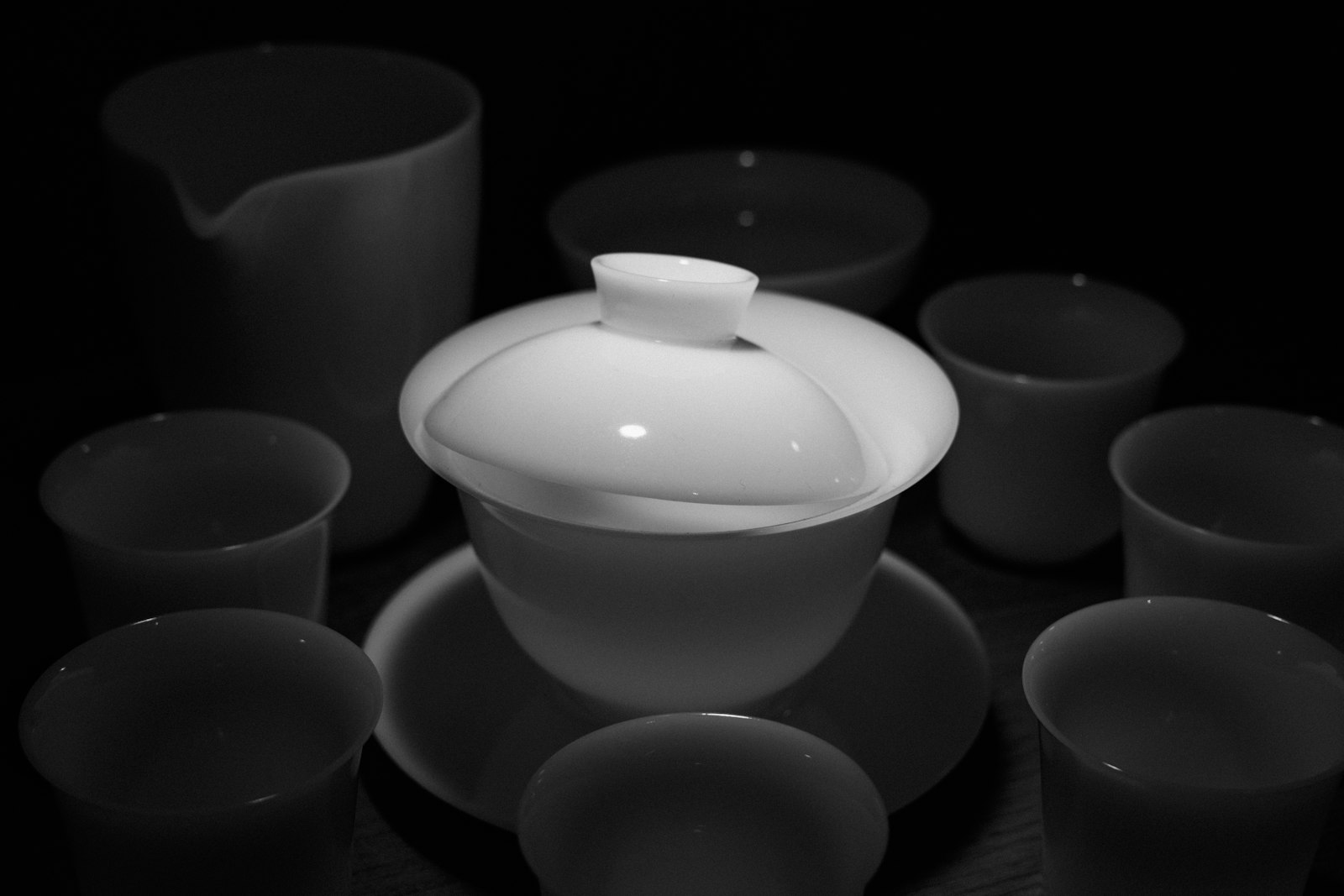
As with all fine tea, the details around the leaf matter nearly as much as the leaf itself. Pu-erh is traditionally brewed in a small unglazed clay pot or a porcelain gaiwan, and the choice is not merely aesthetic. A seasoned clay pot, used only for pu-erh, absorbs a little of the tea over time and gives something back, gradually rounding and deepening the brew; a gaiwan, by contrast, is neutral and lets you taste the tea exactly as it is, which makes it the better vessel for judging an unfamiliar cake.
Water, too, repays attention. Pu-erh is forgiving of high temperatures but not of poor water; soft, fresh water drawn just off the boil flatters it, while hard or over-boiled water flattens the very depth you are brewing for. Warm the pot or gaiwan before you begin, keep the infusions short and the leaf generous, and pay attention to how the tea shifts from steeping to steeping. Done with this small care, the ritual becomes as much a part of the pleasure as the drink — an unhurried few minutes that reward the attention they ask. There is a meditative quality to it, the slow warming and rinsing and pouring, that suits the tea’s own character; pu-erh is not a drink to be gulped between tasks, but one to be sat with, and the vessel and the water are simply the first steps in slowing down to meet it.
Approached with patience, pu-erh becomes one of the most rewarding pursuits in all of tea — a drink that changes in the cup, improves in the cupboard, and rewards a lifetime of attention. It sits among the slow, considered pleasures our Dining & Drinks pages return to again and again: the things that are better for being given time.
Renée has covered Singapore's restaurants for over a decade, with a soft spot for the kitchens most people walk past.