A Guide to Tasting Gyokuro Tea
Sweet, savoury and shaded from the sun, gyokuro is among the most refined of Japanese green teas. A guide to tasting it, and to brewing it as it deserves.
 By Renée Tan
2 September 2026 · 5 min read
By Renée Tan
2 September 2026 · 5 min read
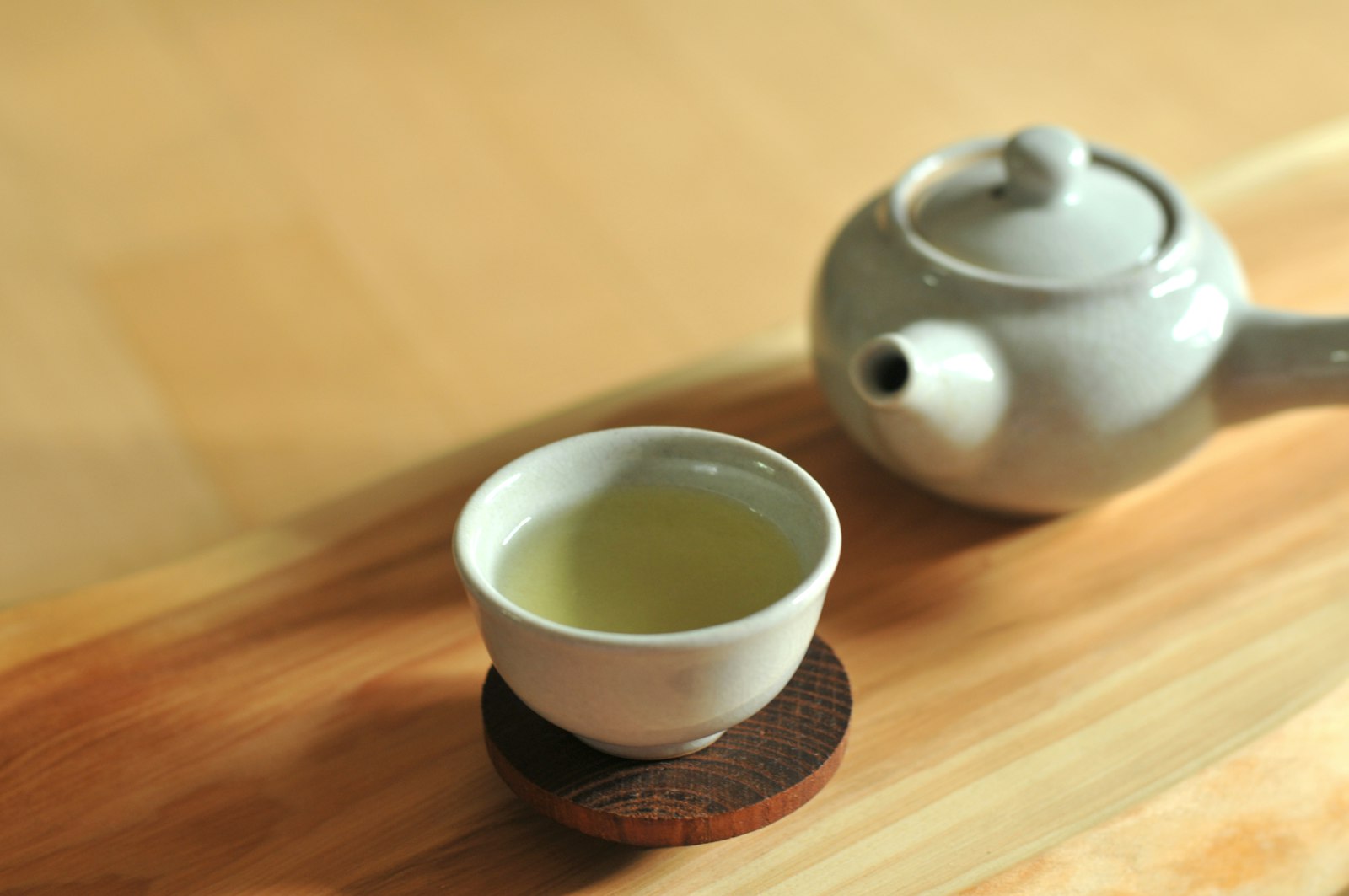
Among the many green teas of Japan, gyokuro tea occupies a rarefied place. Its name translates roughly as jade dew, and the poetry is earned. This is a tea of extraordinary sweetness and depth, savoury in a way that startles the uninitiated, with an intensity that has nothing to do with strength or bitterness. To drink it well is to slow right down, and in that slowing lies much of its pleasure.
It is not an everyday tea, and it does not want to be treated like one. Gyokuro rewards the kind of attention we usually reserve for a fine wine or a rare spirit — which is precisely what makes it worth learning.
Shade, and what it does
The secret of gyokuro lies in shade. For several weeks before harvest, the tea bushes are covered, blocking most of the sunlight. Deprived of it, the plant responds by producing more chlorophyll and, crucially, more of the amino acid theanine, which lends the tea its signature savoury sweetness — the quality the Japanese call umami. That shading also suppresses the bitterness and astringency that mark ordinary green tea, leaving something round, deep and almost broth-like.
This is the same savoury register that runs through so much of Japanese cuisine, and gyokuro is perhaps its purest expression in a cup. Those who have explored our primer on miso, soy and umami will recognise the sensation immediately; gyokuro is umami you can drink, and it reframes what green tea can be.
How to brew gyokuro
Getting how to brew gyokuro right is everything, and it runs contrary to almost every instinct about making tea. The water must be cool — far cooler than for most teas, closer to fifty or sixty degrees than boiling. Hot water scorches the delicate leaf and unlocks the very bitterness the shading worked so hard to suppress. Cool water, by contrast, draws out the sweetness and the savoury depth while leaving the harshness behind.
A gentle method
- Use a generous quantity of leaf relative to a small volume of water — gyokuro is concentrated by design.
- Let the water cool well below boiling; patience here is the single most important step.
- Steep gently and briefly for the first infusion, then taste before deciding to go longer.
- Re-steep the same leaves several times; each infusion reveals a different facet of the tea.
The first cup will be small, intense and almost syrupy — sip it slowly and let it coat the palate. This unhurried ritual has much in common with the wider traditions of the tea table, and anyone drawn to it will find our note on the ritual of the tea ceremony a natural companion to the practice.
Gyokuro asks you to unlearn everything you thought you knew about green tea: cooler water, less haste, and a small cup savoured rather than a mug gulped down.
Tasting with attention
To taste gyokuro properly is to notice its layers. The first impression is sweetness and a marine, almost seaweed-like savouriness; then a mellow, vegetal depth; and finally a long, clean finish that lingers well after the cup is empty. There is no bitterness to fight through, no astringency drying the mouth — just a smooth, umami-rich fullness that unfolds slowly.
Multiple infusions are part of the pleasure. Each successive steep, with slightly warmer water and a little more time, shifts the character, moving from the intense sweetness of the first cup towards fresher, greener notes. It is a tea that reveals itself gradually, in the same way a good terroir in specialty tea does across a tasting; the more attention you give it, the more it returns.
Slowing down to enjoy it
The vessels and the ceremony
Brewing gyokuro well is helped, though not strictly required, by the right vessels. The traditional pot for it is small — a kyusu, often with a side handle and a fine built-in strainer — sized for the modest volumes that suit such a concentrated tea. The cups, too, are tiny, holding little more than a mouthful, because gyokuro is not a tea to be drunk by the mugful but savoured in small, deliberate sips. There is a logic to this beyond mere tradition: the small scale keeps the tea at the right temperature and the right intensity throughout.
Some devotees go further still, cooling the water by pouring it between vessels to bring down the temperature by careful degrees before it ever touches the leaf. This slow, attentive preparation is part of the pleasure rather than a chore. To make gyokuro properly is to enter, however briefly, into a more contemplative frame of mind, one in which the making of the tea is as much the point as the drinking of it.
Gyokuro asks for small vessels, cool water and a quiet mind. Give it those three things and it will give you one of the most extraordinary flavours in all of tea.
None of this need be intimidating. You can make a fine cup of gyokuro with an ordinary small teapot and a little patience, and the ceremony can be as simple or as elaborate as your mood allows. What matters is the spirit of attention — the willingness to slow down, to measure carefully, and to give a remarkable leaf the care it has earned. The vessels are merely tools in service of that attention.
Gyokuro is not a tea to make on autopilot, and that is exactly its gift. It insists that you pause, measure carefully, wait for the water to cool, and drink in small, considered sips. In doing so it offers a rare kind of quiet luxury — a few minutes of genuine attention in a hurried day. That pause, more than the tea itself, may be the real gift, a small daily reminder that some pleasures cannot and should not be rushed. For more teas worth slowing down for, and for the broader pleasures of the considered table, the rest of our dining and drinks writing is the place to linger.
Renée has covered Singapore's restaurants for over a decade, with a soft spot for the kitchens most people walk past.