The Case for the Earthenware Baker
Older than cast iron and quietly better at some things, the earthenware baker holds heat gently. The case for cooking in clay, and how to keep one well.
 By Renée Tan
2 September 2026 · 6 min read
By Renée Tan
2 September 2026 · 6 min read
Long before enamelled cast iron and gleaming stainless steel, there was clay. The earthenware baker is among the oldest cooking vessels known to us, and its persistence into the modern kitchen is not sentiment but merit. Fired clay does something to food that metal cannot quite manage: it holds heat gently, releases it slowly, and surrounds whatever is inside with a mild, even warmth that coaxes rather than blasts. For certain dishes, nothing else comes close.
In an age of high-tech cookware, there is a quiet luxury in reaching for something so elemental. A good clay baker is a reminder that the finest results often come from the simplest materials, handled with a little understanding.
Why clay behaves differently
Metal conducts heat quickly and fiercely; clay does the opposite. A clay baking dish absorbs heat slowly and radiates it back with a softness that suits anything you want to cook through gently and evenly. There are no scorching hot spots, no sudden temperature spikes — just a steady, enveloping warmth that reaches the centre of a dish without punishing its edges.
This makes earthenware particularly suited to the long, forgiving cooking that rewards patience. A braise settles into a clay pot and emerges meltingly tender; a gratin bakes to an even gold without catching at the sides. It is the same principle that makes traditional vessels so prized across cultures, from the Japanese donabe to the North African tagine. Those drawn to that world will find kindred spirits in our writing on the clay donabe pot and the tagine pot, both of which trade on the same quiet chemistry.
Bread, and the crust it makes
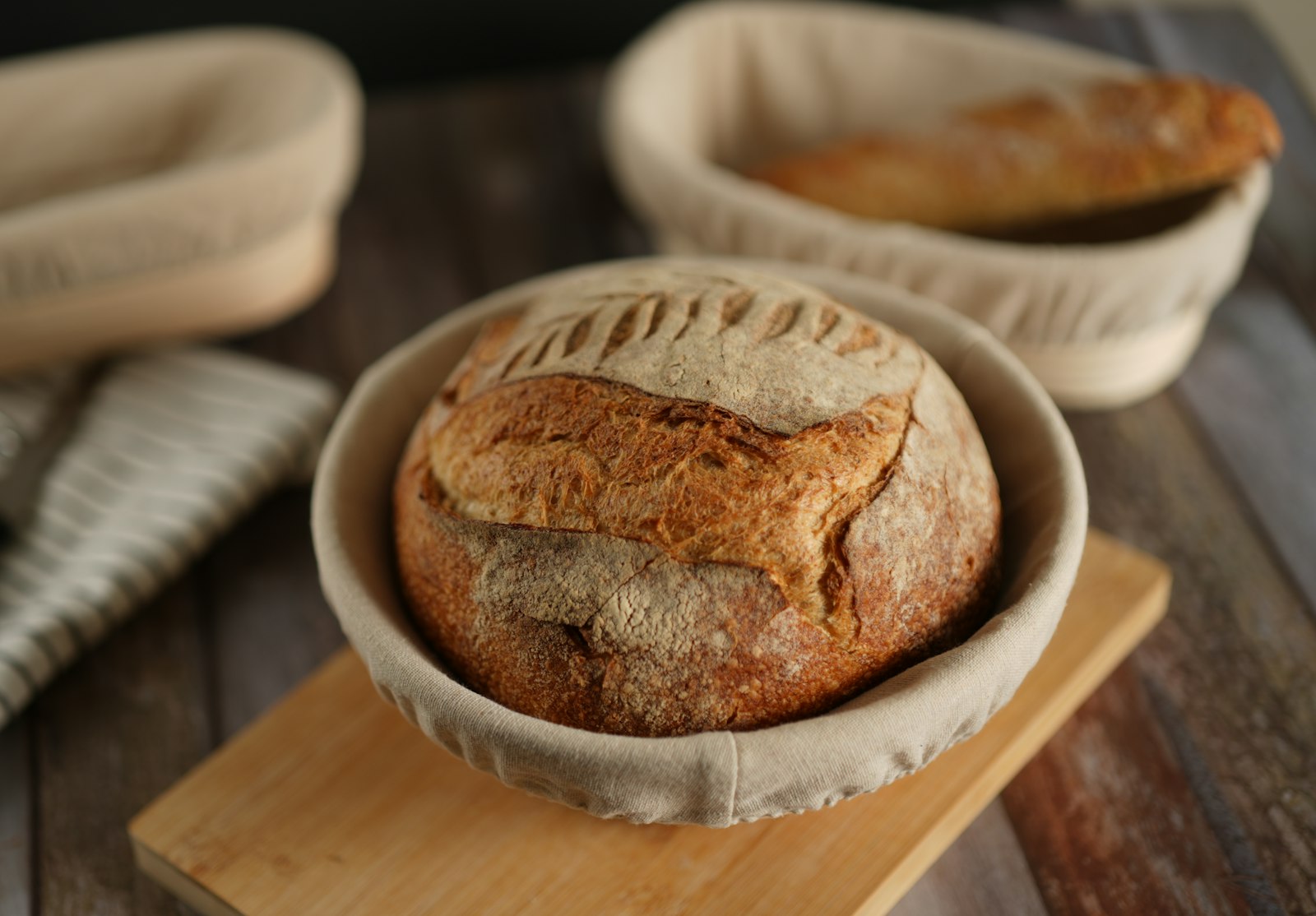
For the home baker, an unglazed or partly glazed clay baker is something close to a secret weapon. Soaked in water before use, the porous clay releases steam slowly as it heats, creating the humid environment a good loaf craves in its first minutes in the oven. That steam is what allows the crust to stay supple long enough to spring properly before it sets, giving you the crackling, blistered exterior that marks a loaf baked with care.
Anyone deep in the rituals of sourdough and bread baking knows how much trouble people go to in order to trap steam around a loaf. A clay baker does it naturally, no ice cubes or spray bottles required. Lift the lid partway through and the crust colours and crisps; the result rivals anything from a cast-iron pot, with a gentler hand.
Clay asks for a little patience and rewards it with a generosity metal cannot match. It is cooking at the speed the food actually wants.
Living with earthenware
Clay does ask for a certain courtesy in return. It dislikes thermal shock, so a cold baker should not go into a screaming-hot oven, nor a hot one onto a cold surface. Warm it gradually and it will serve you for decades. Many unglazed bakers benefit from an initial soak before each use, and most prefer washing by hand with little or no soap, since porous clay can hold detergent.
Keeping one well
- Season a new unglazed baker as the maker advises, often a gentle bake to drive off moisture and set the clay.
- Avoid sudden temperature changes — build the heat up and let it come down slowly.
- Wash by hand, and let it dry thoroughly before storing to discourage any mustiness.
- Expect a patina to develop over time; this is the vessel improving, not wearing out.
A vessel that ages well
Glazed or unglazed, and what each suits
Earthenware comes in two broad forms, and the choice shapes what you will cook in it. Unglazed clay is porous, which is precisely what makes it so good for bread — soaked before use, it releases steam gently as it heats, giving a loaf the humid start it needs for a proper crust. That same porosity, however, means it absorbs flavours and moisture, so an unglazed baker tends to become dedicated to a particular kind of cooking over time.
A glazed earthenware dish, by contrast, has a sealed surface that will not absorb liquid or odour, which makes it the more versatile choice for gratins, braises, roasted vegetables and baked puddings. It still offers the gentle, even heat that defines clay cookware, but it is far easier to clean and does not require soaking before each use. For most households, a good glazed baker is the sensible first purchase, with an unglazed one added later if bread becomes a serious pursuit.
Clay is not trying to compete with metal on speed or ferocity. Its gift is gentleness, and gentleness is exactly what so many of the best dishes quietly require.
Whichever you choose, buy from a maker who takes the material seriously. Well-made earthenware, whether the work of a studio potter or a long-established workshop, is fired properly and finished with care, and it will serve you for decades. Cheap, thin clay can crack under the demands of the oven, so this is a case where a little extra spent at the outset repays itself many times over.
There is something deeply satisfying about cookware that gets better with use, that carries the faint scent of every good thing you have made in it. A clay baker is not a tool you replace on a whim; it becomes a fixture of the kitchen, quietly present at every gathering and slow Sunday for years on end. An earthenware baker is not for searing or fierce, fast heat — for that you want metal — but for the slow, comforting dishes that make a house feel like a home, it has no equal. It is the vessel you reach for on a grey afternoon when what you want is not speed but warmth, not spectacle but sustenance, and it delivers exactly that, dish after unhurried dish. It slots naturally into the same considered kitchen as a good carbon steel pan: honest materials, chosen for what they do best and kept for a lifetime. For more on cooking with intention and building a kitchen worth keeping, our dining and drinks pages return to this theme with real affection.
Renée has covered Singapore's restaurants for over a decade, with a soft spot for the kitchens most people walk past.