Understanding the Art of the Roast Chicken
How to roast a chicken to a perfect finish, crisp-skinned and juicy, from the choice of bird and an early salting to the all-important rest before carving.
 By Renée Tan
1 September 2026 · 6 min read
By Renée Tan
1 September 2026 · 6 min read
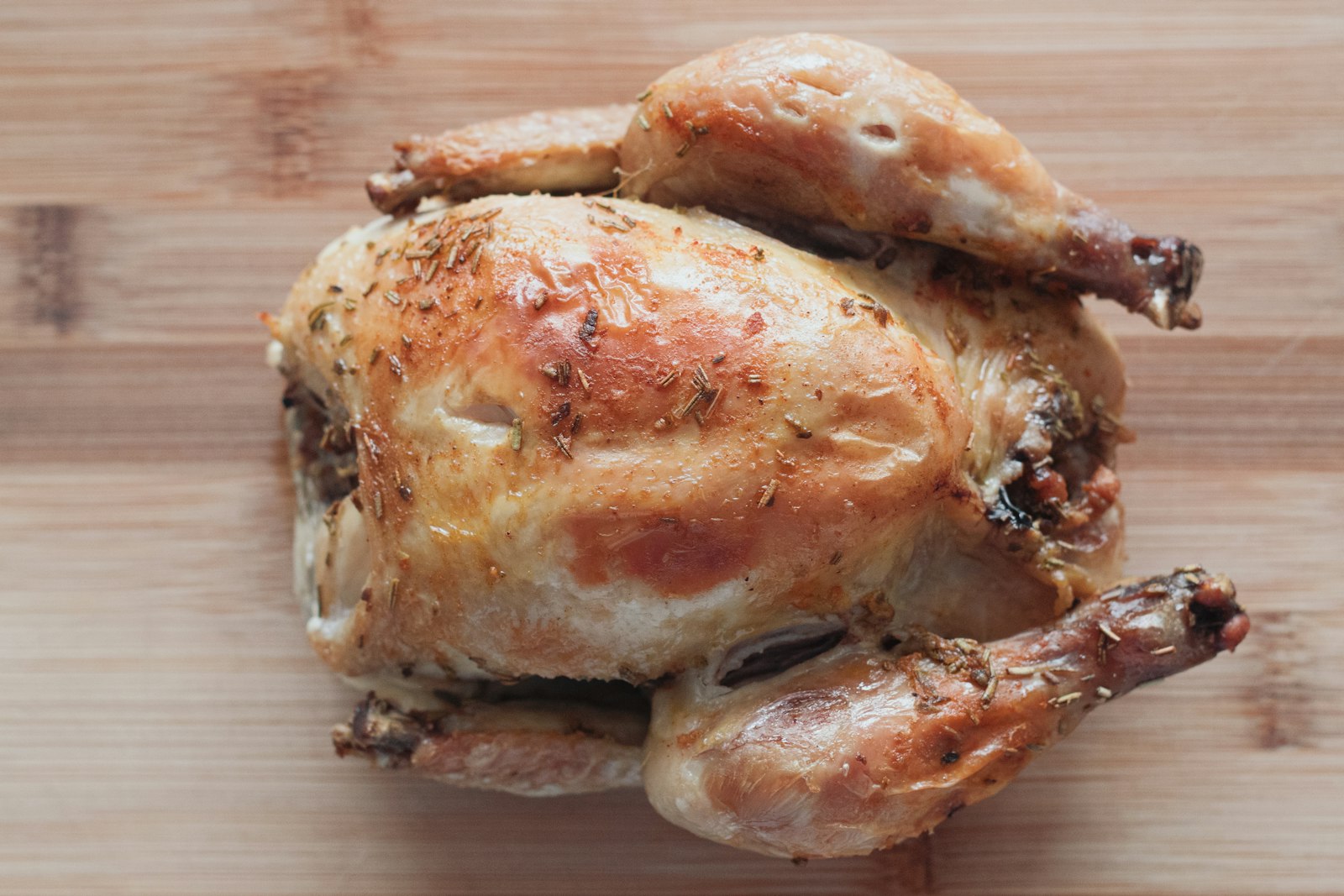
A roast chicken is the dish by which cooks are quietly judged. It hides nothing. There is no sauce to mask dry meat, no clever plating to distract from pallid skin. When it is right, crisp burnished skin giving way to juicy flesh, it is one of the great pleasures of the table, and it costs very little. Getting it right is less about secret tricks than about understanding what is actually happening in the oven.
The bird matters most
No technique rescues a poor bird. A chicken that has been allowed to grow slowly, with room to move and a varied diet, simply tastes of more. Its flesh is firmer, its fat more golden, its flavour deeper. Buy the best you can from a butcher you trust, and buy it whole; a whole bird roasts better than parts and gives you the carcass for stock afterwards, which is a small economy that pays you back handsomely if you already believe good stock is worth the afternoon.
Bring it to room temperature before it goes in. A fridge-cold bird cooks unevenly, the outside racing ahead while the centre lags, and that unevenness is behind most of the dry breasts and underdone thighs that put people off roasting at home.
Salt early, and salt well
If you do one thing differently, salt the bird ahead of time. Season it generously all over, ideally the day before, and leave it uncovered in the fridge. The salt seasons the meat deep down rather than sitting on the surface, and the dry air draws moisture from the skin so it crisps rather than steams. A bird salted a day ahead comes out of the oven with skin like parchment, shatteringly crisp. The quality of the salt matters too, which is why it is worth understanding your salts a little.
Do not stuff the cavity tightly. A halved lemon, a few sprigs of thyme, a bruised garlic head are plenty; a packed cavity slows the cooking of the thighs and courts undercooked meat near the bone. Truss lightly if you like a neat shape, though a loosely trussed bird cooks its legs faster, which is usually what you want.
Heat, position and time
Start hot. A high initial heat sets the skin and begins the browning, after which many cooks drop the temperature to finish the bird through more gently. The single most useful piece of kit is not a fancy roasting tin but a reliable thermometer. The thickest part of the thigh should reach the safe temperature; the breast, which dries faster, benefits from coming out a touch earlier, which is why roasting the bird on its side or breast-down for part of the time is a trick worth knowing.
Cook to temperature, not to the clock. A thermometer in the thigh tells you the truth; a time on a chart is only ever a guess about an oven and a bird it has never met.
Let the juices run clear and the leg wobble loose in its socket. Colour is your other guide: you want deep gold, not pale yellow, so if the skin lags, a final blast of high heat sorts it out.
The rest is not optional
When the bird is done, resist the knife. Lift it onto a warm board or plate, tent it loosely with foil, and leave it for at least fifteen minutes, longer for a large bird. During the roast the juices are driven towards the centre; the rest lets them relax back through the meat. Carve too soon and those juices spill onto the board, leaving the flesh dry. Wait, and they stay where they belong.
Use the rest to make a quick pan sauce. Tip off excess fat, set the tin over a flame, deglaze with a splash of wine or stock, scrape up the caramelised bits and let it reduce. That is the whole of a good gravy, no thickeners required.
Carving and the afterlife
Carve with a sharp knife and a little ceremony. Legs first, then the breast in generous slices off the bone. Serve it simply; a roast chicken needs no elaborate accompaniment, only good bread to catch the juices, or a bowl of buttered greens, or a spoonful of the pan sauce. It sits as happily at the centre of a quiet supper as a well-built cheese board does at the end of one.
Then keep the carcass. Simmered with an onion, a carrot and a bay leaf, it becomes the stock that starts next week’s cooking, closing a small and satisfying loop. Nothing about a good roast chicken is wasted, which is part of why it endures.
The plain truth of it
The vegetables beneath, and the whole meal in one tin
One of the quiet joys of a roast chicken is how much it gives back for so little effort, and the trick is to let the bird cook above the rest of the meal rather than alone. Set it on a bed of thick-cut vegetables, potatoes, onions, whole garlic, hardy roots, and as the chicken roasts, its rendering fat and juices drip down and baste them from above. The vegetables catch the caramelised drippings and turn golden and savoury in a way no amount of oil alone can match, and you have cooked an entire meal in a single tin with nothing extra to wash up. The same principles of high heat, patience and resting scale up to grander occasions, as the art of the cochon de lait describes.
Timing is the only thing to watch. Denser roots want the full roasting time, so they go in from the start; softer, quicker things can be added partway through so they are tender but not collapsed by the end. Give everything room to sit in a single layer, because vegetables crowded together steam and go pale rather than browning; if the tin is packed, use a second one. A large, sturdy roasting dish that will not buckle under high heat earns its place here, spreading the vegetables out and taking the fierce oven without complaint.
When the bird comes out to rest, the vegetables can have a final blast at high heat to crisp up while you make the pan sauce, so that everything arrives at the table at its best. It is the most economical sort of cooking, generous and unfussy, one good bird turning a tin of humble vegetables into a proper Sunday lunch.
There is no mystery here, only a handful of disciplines applied with care: a good bird, salted early, brought to room temperature, roasted to temperature rather than time, and rested properly before carving. Master those and you will never again produce a dry, sad chicken. Everything beyond that, the herbs under the skin, the vegetables roasting in the fat beneath, is decoration on a method that already works. For more of this ingredient-first, technique-led cooking, the Dining & Drinks section returns to the theme again and again, because the simplest dishes, done attentively, remain the ones worth learning by heart.
Renée has covered Singapore's restaurants for over a decade, with a soft spot for the kitchens most people walk past.