The Best Everyday Power-Reserve Watches
Power reserve is the least glamorous complication on a watch and arguably the most useful one for daily wear. Here is how to choose it well.
 By Daniel Koh
31 August 2026 · 6 min read
By Daniel Koh
31 August 2026 · 6 min read
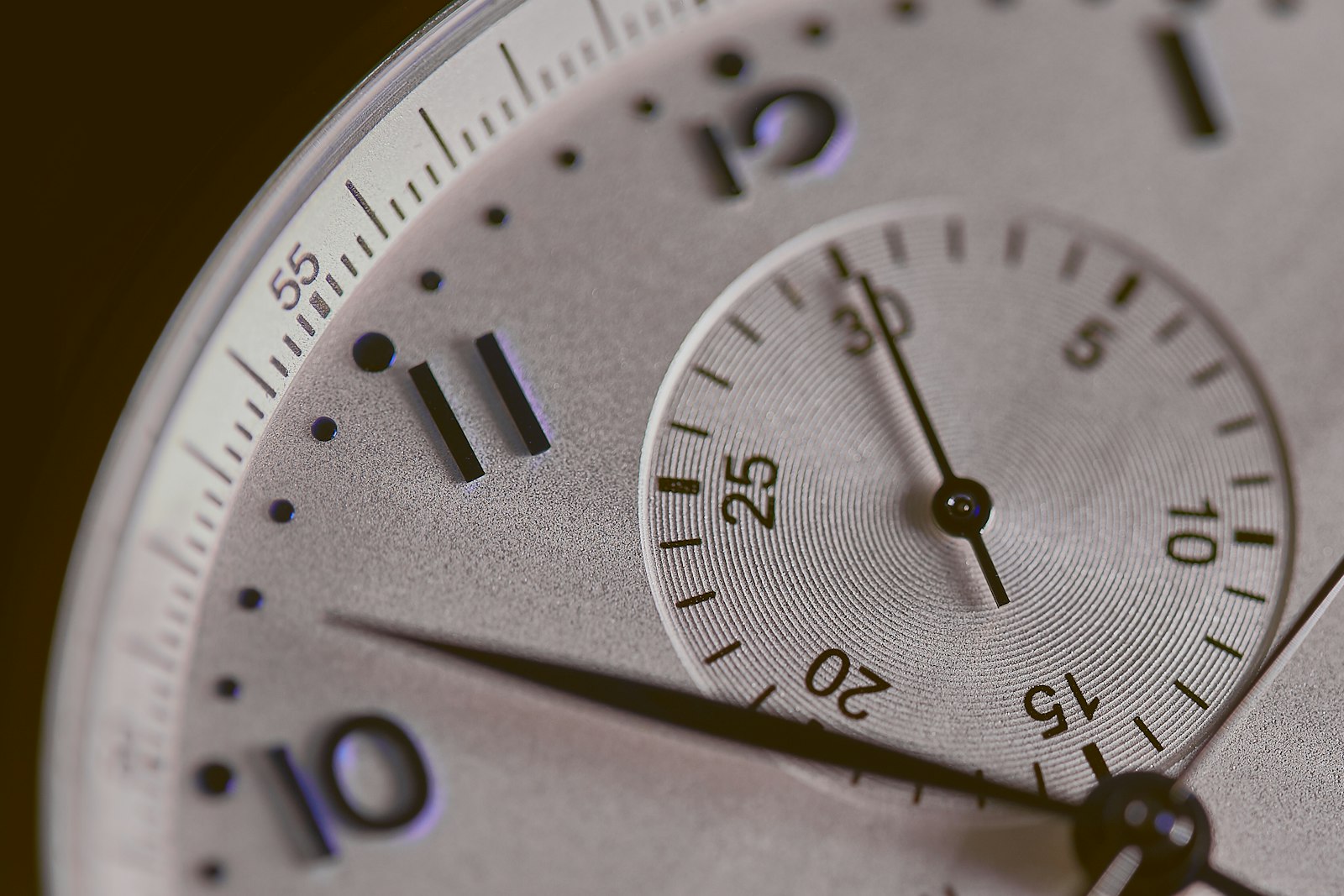
Of all the complications a watchmaker can add to a dial, the power-reserve indicator is the least likely to come up at a dinner party. It does not chime the hour, it does not track a second time zone, it does not do anything a stopwatch does. What it does is answer a question every owner of an automatic watch eventually asks: how much longer will this keep running if I take it off tonight? For a watch worn most days but not every day, that quiet, unglamorous answer turns out to matter more than most complications people actually pay a premium for.
Why the reserve matters more than the complication looks
An automatic movement is wound by the motion of the wrist, and it stops — silently, without warning — once that stored energy runs out. For someone who wears the same watch daily, this rarely matters; the watch never gets the chance to run down. But for anyone with more than one piece in rotation, which is most people who read guides like this one, a watch set aside for a few days will stop, and restarting it means resetting the time and, on many watches, the date — a genuinely tedious few minutes on a piece with a quick-set function, and considerably longer without one. A visible power-reserve indicator removes the guesswork: a glance at the dial tells you whether a watch needs winding tonight or can wait until the weekend.
This is a different, more practical concern from the kind of complication collectors chase for its engineering alone — the subject of our piece on understanding watch complications and value, which is worth reading alongside this one for the broader context.
What counts as a genuinely useful reserve
Most modern automatic movements offer somewhere between 38 and 70 hours of reserve, which sounds similar until you consider how it plays out across a working week. A 40-hour reserve, wound fully on a Friday evening, will typically be stopped by Sunday morning if left off the wrist — fine for a watch worn daily, frustrating for one kept for occasional use. A 70-hour-plus reserve, increasingly common in movements designed with exactly this in mind, comfortably survives a full weekend off the wrist and often into Monday, which is the real-world benefit worth paying for rather than the number itself. We cover the mechanics of this properly in understanding watch power reserve and winding.
What to check before buying
- Ask for the reserve figure at full wind, not the average — some brands quote generously
- Check whether the indicator is a genuine mechanical display or a printed scale with no moving element
- Consider how the watch will actually be worn — daily, or rotated — before valuing the reserve figure at all
Reserve versus other everyday complications
It is worth comparing power reserve honestly against the other complications commonly marketed for daily wear. A GMT function earns its keep for anyone travelling regularly across time zones, a genuinely different use case covered in our guide to the best everyday GMT watches. A chronograph, by contrast, is rarely used for its stated purpose by most owners and functions mainly as a dial detail — still handsome, as we explore in the best everyday chronograph watches, but genuinely less useful day to day than a well-implemented power reserve. Of the common complications available at accessible price points, power reserve is arguably the one most owners actually use, simply because it answers a question that comes up every single week rather than occasionally.
“People chase complications for the story,” one Singapore watchmaker told us. “But the reserve indicator is the one I check on my own watch every morning without thinking about it.”
Design considerations that matter
A power-reserve indicator can be integrated elegantly or clumsily, and the difference shows up in daily use rather than in photographs. A subdial placed at nine or twelve o’clock, with a simple sweeping hand across a clean arc, reads at a glance; some watches instead bury the function behind a small window or a scale so tightly printed it requires closer inspection than a quick morning check should demand. Dial balance matters too — a reserve indicator crowded against a date window and running seconds can leave a dial feeling busy rather than considered, so it is worth handling a piece in person before buying rather than judging from a catalogue image alone.
Movement quality behind the indicator
It is worth remembering that a power-reserve indicator is only as useful as the movement behind it. A cheaply produced reserve display can drift out of sync with the actual state of the mainspring over a few years of wear, showing a fuller reserve than the watch actually has, which defeats the entire purpose of the complication. This is one area where paying for a well-regarded movement, rather than the cheapest option with the feature ticked on a spec sheet, genuinely matters — an indicator that lies to you is worse than no indicator at all, since it encourages false confidence rather than honest uncertainty. Ask, when buying, whether the indicator is calibrated at the factory and how it is serviced over the watch’s life; a reputable dealer or watchmaker should be able to answer this without hesitation.
Servicing and long-term ownership
A power-reserve complication adds a small amount of mechanical complexity to a movement, typically an additional gear train reading the mainspring’s tension, and this is worth factoring into servicing conversations. It rarely adds significant cost to a routine service, but it is one more component that can wear or need adjustment over a watch’s decades of use, and it is worth mentioning specifically when a watch goes in for its periodic check rather than assuming a general service covers it by default. Owners who wear a piece daily will notice a fault quickly, since the reserve becomes part of the daily glance at the wrist; owners who rotate watches more widely may not notice a miscalibrated indicator for months, which is another reason the daily-wear case for this complication is the strongest one.
Building it into a considered rotation
For anyone building out a small, considered collection rather than a single do-everything watch, a power-reserve piece earns a specific place: the watch worn two or three days a week rather than daily, where the indicator genuinely changes behaviour rather than serving as a novelty. Paired with a more frequently worn daily piece and perhaps one dress watch for evenings, it rounds out a rotation without duplicating function. Our Style & Watches section has further guidance on building that kind of considered edit, one piece at a time rather than all at once.
Daniel has spent fifteen years arguing that the best watch is the one you never take off.