The Best Autumn Escapes in Kyushu
Southern Japan's autumn runs later and warmer than the north's, and Kyushu's volcanic hot springs and maple gorges make a compelling, less crowded case.
 By Marcus Lim
31 August 2026 · 6 min read
By Marcus Lim
31 August 2026 · 6 min read
Every autumn, the same handful of Kyoto temples fill with the same crush of tripods, all chasing the same maple against the same stone wall. Kyushu, Japan’s southernmost main island, gets almost none of that attention, despite offering a version of the season that is arguably more interesting: a later, warmer autumn, volcanic terrain that adds drama no formal garden can match, and a coastline that lets you close a day of leaf-watching with a swim.
Why Kyushu’s autumn runs differently
Because it sits further south and lower in elevation than much of Honshu, Kyushu’s colour typically peaks two to three weeks later than Kyoto’s, often stretching into early December in the warmer coastal pockets. That later window means travellers who missed the famous northern peak, or who simply prefer to avoid it, get a genuine second chance at the same spectacle with a fraction of the crowd. The island’s volcanic geology adds something else entirely — hot springs fed by the same forces that shaped its mountains, so that a maple-lined gorge in the morning can lead directly to a steaming outdoor bath by afternoon. For a wider view of the season across the region, see our guide to the best autumn escapes in Asia.
Reading the colour forecast
Autumn colour moves through Kyushu roughly in reverse of how it arrives in Hokkaido — starting at the highest inland elevations in mid-October and working its way down to the coast by early December, with the mountains around the island’s active volcanoes typically turning first. Local tourism boards and shrine websites publish detailed, frequently updated colour forecasts through the season, and it is worth checking these in the week before travel rather than relying on a fixed calendar date, since an unusually warm or cool autumn can shift the peak by a fortnight in either direction.
Where the season shows off
The gorges and river valleys
Kyushu’s interior is cut through with narrow gorges where maple and gingko crowd right down to the water, turning rivers into corridors of colour by mid-November. Walking trails follow several of these valleys closely enough that the canopy meets overhead, and a handful of suspension bridges offer the kind of elevated view that Kyoto’s ground-level gardens can’t replicate. These routes are best walked slowly, over a full morning, with lunch built around the season’s produce — chestnuts, persimmon, the last of the autumn mushrooms.
Hot spring towns with a view
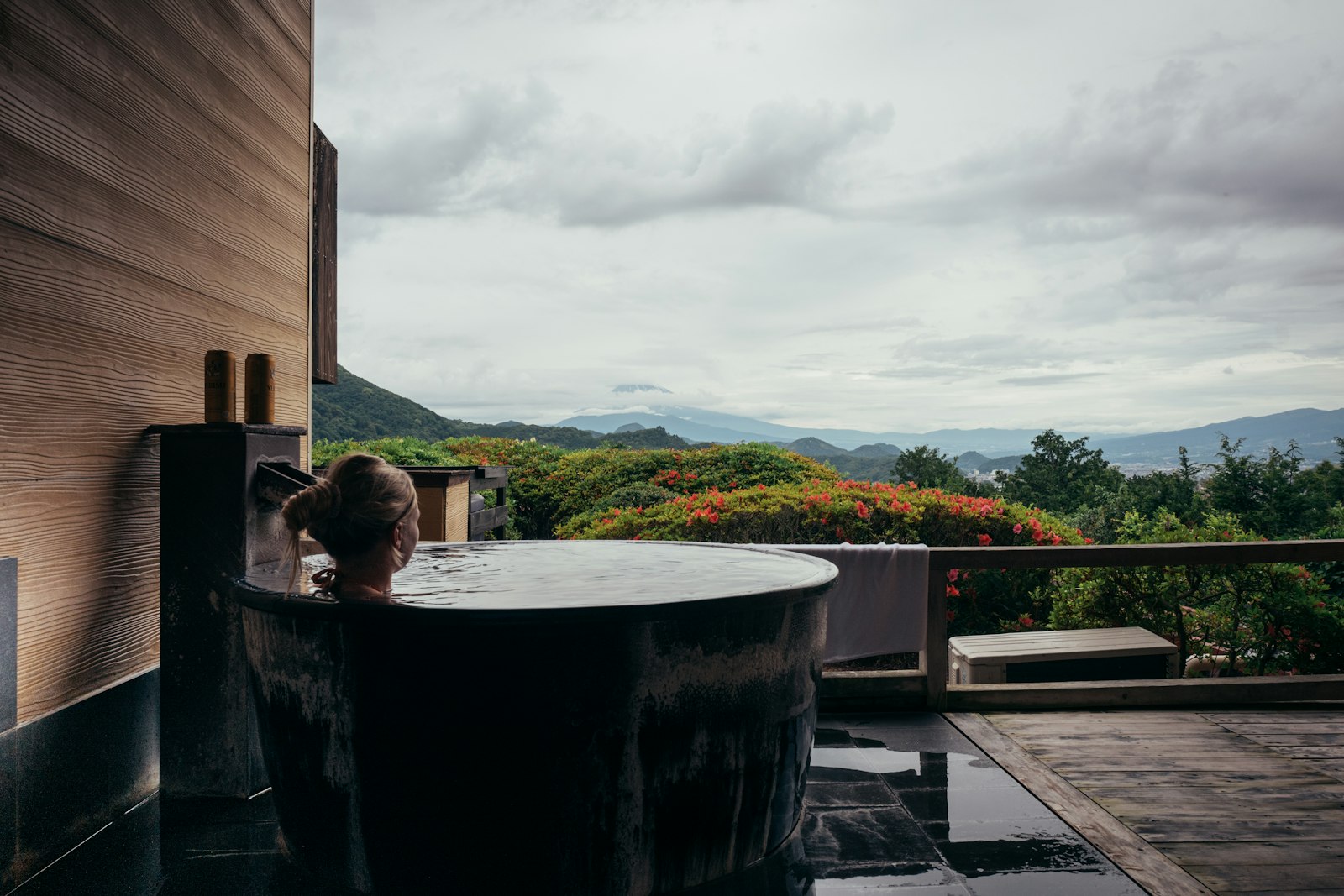
Kyushu’s onsen culture is arguably the best in Japan, and several of its hot spring towns are built directly into hillsides that turn spectacular in autumn. An outdoor bath framed by burning maple is one of those experiences that photographs well but still undersells the reality — the smell of sulphur, the steam rising into cold air, colour on every side. We have written more broadly about autumn colour across Japan, and Kyushu’s onsen towns are consistently among the most atmospheric settings in the whole country for the season.
Coastal towns and volcanic drama
Kyushu’s active volcanoes give its landscape a rawness that autumn colour only heightens — plumes of steam rising behind burning-red hillsides, caldera lakes that turn the same deep colour as the maple around them. Coastal towns nearby offer a change of pace after a few days inland, with seafood markets and a slower, saltier version of the same autumn light.
Planning the trip
Kyushu rewards a loop rather than a single base — a few nights inland near the gorges and hot springs, followed by a coastal stretch to close the trip. Rail links across the island are excellent, and renting a car for a day or two opens up the smaller gorge trails that public transport doesn’t reach. If Kyushu is one stop on a longer Japanese itinerary, our guide on planning a grand tour of Japan is worth reading alongside this one, particularly for travellers weighing how much time to allocate to the south versus the more famous northern circuits.
- Aim for late November into early December for peak colour in Kyushu’s warmer valleys
- Book onsen ryokan well ahead — the good ones are small, and word has been spreading
- Balance an inland gorge-and-hot-spring stretch with a coastal finish for contrast
- Consider the wider islands of southern Japan if you have an extra few days to extend south
“People fly straight to Kyoto every November and never think to look south. Kyushu gives you the same colour, later, warmer, and with hardly anyone else on the trail,” a ryokan owner in the island’s interior told us.
Food built for the season
Kyushu’s autumn table deserves its own mention. The island is known for hotpot built around the season’s mushrooms and root vegetables, simmered slowly over the kind of long, unhurried dinner that suits a cold evening after a day on the trails. Regional sake breweries, many of them small and family-run, open their doors more readily in autumn than at any other time of year, and a tasting arranged directly with a brewer tends to be far more interesting than anything on a hotel menu. Persimmon, chestnut and sweet potato all peak within the same weeks as the maple, giving the season a flavour as distinctive as its colour.
The case for going south
There is a strong argument that Kyushu is simply the more complete autumn destination — the colour is genuine, the crowds are a fraction of the north’s, and the volcanic geography gives the season a physical drama that formal gardens can’t match. It asks a little more of the traveller in terms of planning a route rather than following a well-trodden circuit, but the reward is a version of Japanese autumn that still feels like a discovery rather than a checklist. For a full sense of what else the region and the wider category of Asian travel can offer beyond a single season, our Travel & Stays section has considerably more to explore.
Go once with an open itinerary, and there is a good chance Kyushu becomes the autumn trip you return to, rather than the one you settle for after Kyoto’s rooms sell out.
Marcus writes on travel and hospitality across Asia, and is happiest a long way from a lobby.