A Primer on Pasta Shapes and Sauces
Every pasta shape exists for a specific reason tied to the sauce it carries. Here is a practical primer on matching the two properly, the Italian way.
 By Renée Tan
30 August 2026 · 5 min read
By Renée Tan
30 August 2026 · 5 min read
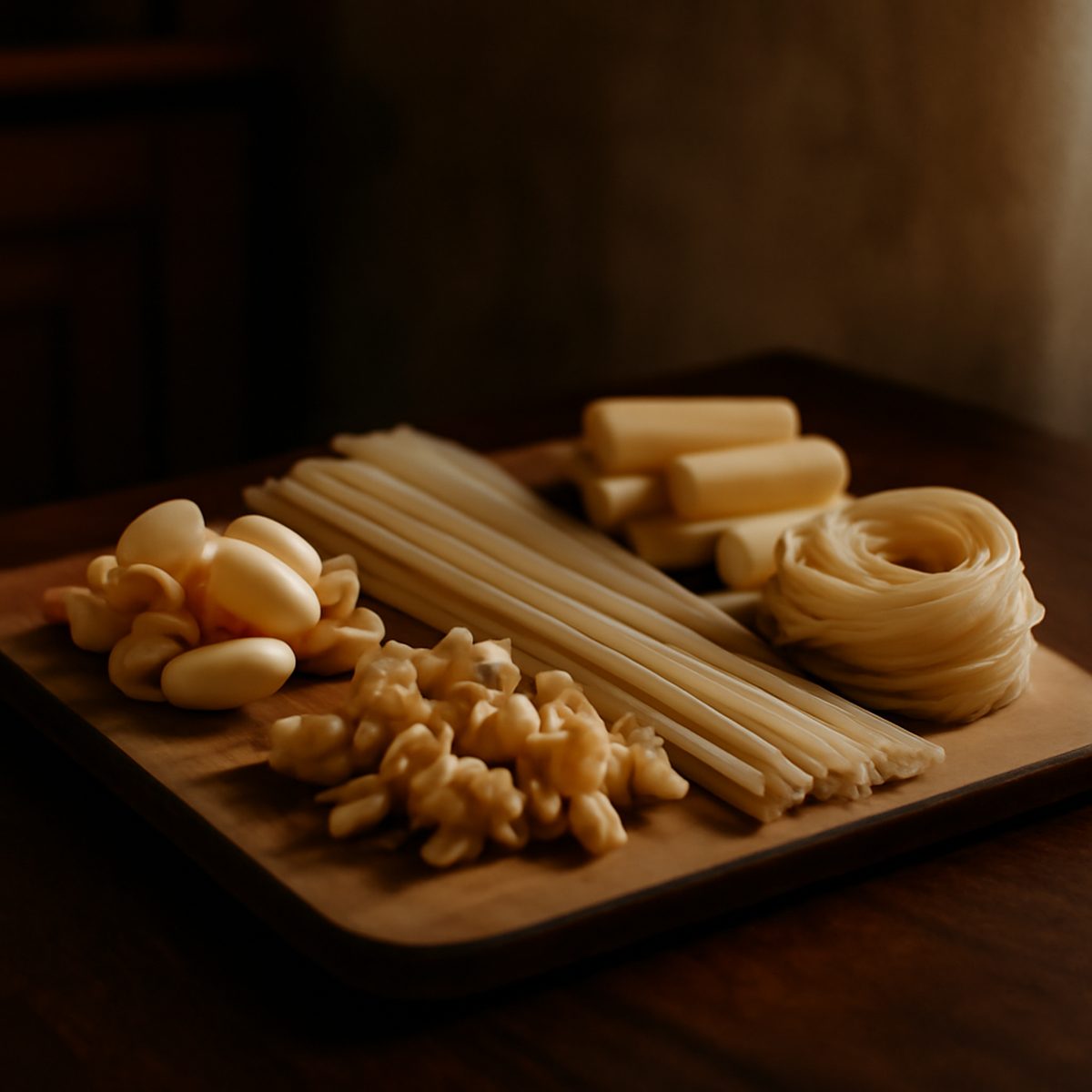
There is a persistent myth, common outside Italy, that pasta shape is mostly a matter of aesthetic preference — that a sauce which works on spaghetti will work more or less as well on penne, or fusilli, or whatever happens to be in the cupboard. This is, with respect, wrong, and it is wrong in a way that actually matters to how a dish tastes. Pasta shapes evolved, often over centuries and in specific regions, to carry specific sauces in specific ways. Understanding why makes you a considerably better cook, and a more discerning diner.
The logic behind the shapes
The governing principle is surface area and structure. A long, smooth strand like spaghetti wants a sauce that clings by emulsification — oil-based, or a light tomato sauce reduced enough to coat rather than pool. A ridged, tubular shape like rigatoni or penne rigate is built to trap chunkier sauces inside its ridges and hollow centre — a ragù with visible pieces of meat, for instance, finds real purchase there in a way it never would on spaghetti, where it would simply slide to the bottom of the bowl.
Then there are the shapes built explicitly around a specific regional dish. Orecchiette, the small ear-shaped pasta from Puglia, is designed to cup small ingredients — classically cime di rapa, or turnip tops, sautéed with garlic and anchovy — in its concave centre. Tagliatelle, wider and flatter than spaghetti, is the traditional partner for ragù alla bolognese specifically because its width and slight roughness hold a meat sauce far better than a rounder strand would.
A working shape-to-sauce guide
- Long, thin strands (spaghetti, linguine) — oil-based sauces, light tomato, seafood, or anything where you want the sauce to coat rather than cling in pockets.
- Wide, flat ribbons (tagliatelle, pappardelle) — rich, slow-cooked ragùs and braises, where the width can carry real weight.
- Tubes with ridges (rigatoni, penne rigate) — chunky vegetable or meat sauces that benefit from being trapped inside the tube.
- Small shapes with cups or folds (orecchiette, conchiglie) — sauces with small discrete pieces — beans, greens, small bits of sausage.
- Stuffed pasta (ravioli, tortellini) — usually served with a simple butter, sage, or light broth, so as not to compete with the filling itself.
“You would never dress a fish the way you dress a steak. Pasta deserves the same logic. The shape tells you what it wants,” an Italian chef working in Singapore told us over a plate of cacio e pepe, made properly with tonnarelli rather than the more common spaghetti.
Where Singapore is applying this properly
The city’s better Italian kitchens have, over the past several years, become noticeably more disciplined about shape-and-sauce pairing, moving away from an earlier era when almost everything defaulted to spaghetti or penne regardless of what sat on top. Our guide to the best handmade pasta in Singapore highlights kitchens rolling their own dough daily, which tends to correlate closely with a kitchen that also thinks carefully about pairing — the two disciplines usually go together, since a chef who bothers to hand-cut orecchiette is rarely going to serve it with the wrong sauce.
For a broader look at where the city’s Italian dining scene stands more generally, beyond pasta specifically, our piece on the best Italian trattorias is a useful companion, covering the wider category of casual, technique-focused Italian dining that this primer’s principles apply to across the board.
A note on sauce reduction and pasta water
No pairing advice matters much if the sauce itself is technically wrong, and the single most common home-kitchen error is under-reducing a sauce before it meets the pasta. A properly finished sauce should be thick enough to cling on its own, emulsified further at the very end with a splash of starchy pasta cooking water and a knob of butter or a drizzle of good olive oil, tossed together in the pan rather than simply ladled over plated pasta. This final step — mantecatura, as it is known in Italian kitchens — is often the real difference between a restaurant-quality plate and a merely adequate one, and it is achievable at home with almost no special equipment, just attention and a willingness to finish the dish in the pan rather than the bowl.
Buying and storing dried pasta well
Quality dried pasta, extruded through bronze dies rather than the smoother Teflon dies used by cheaper mass producers, has a rougher surface that holds sauce noticeably better — worth seeking out even for a simple weeknight dish. It is a small, inexpensive upgrade that makes a genuinely measurable difference, arguably more than most other single changes you could make to a home pasta dish.
For more considered guides to the fundamentals of good eating, our Dining & Drinks section covers technique, ingredients and the kitchens getting the details right across the city.
A note on fresh pasta, and when it is genuinely better
It is worth dispelling another common misconception here: fresh pasta is not simply a superior version of dried pasta, it is a different category suited to different sauces. Fresh egg pasta — tagliatelle, pappardelle, the base for most stuffed shapes — has a tender, porous texture that suits rich, cream- or butter-based sauces and ragùs beautifully, but it lacks the bite and structural integrity that dried pasta, cooked properly al dente, offers with lighter oil-based or tomato preparations. A kitchen that serves everything as fresh pasta, including dishes that traditionally call for dried, is often optimising for a perceived sense of luxury rather than for what actually tastes best with a given sauce.
The inverse mistake — serving a rich, egg-heavy ragù over dried spaghetti rather than tagliatelle or pappardelle — is just as common and just as avoidable. Good Italian kitchens in Singapore increasingly understand this distinction and stock both fresh and dried pasta specifically to match, rather than defaulting to one or the other across an entire menu. It is a small thing to notice on a menu, but it tells you a great deal about how seriously a kitchen has thought through its cooking.
Renée has covered Singapore's restaurants for over a decade, with a soft spot for the kitchens most people walk past.