Understanding Watch Finishing and Decoration
Movement finishing decorates parts of a watch almost nobody sees, yet it remains one of the clearest signals of genuine watchmaking standards today.
 By Daniel Koh
30 August 2026 · 6 min read
By Daniel Koh
30 August 2026 · 6 min read
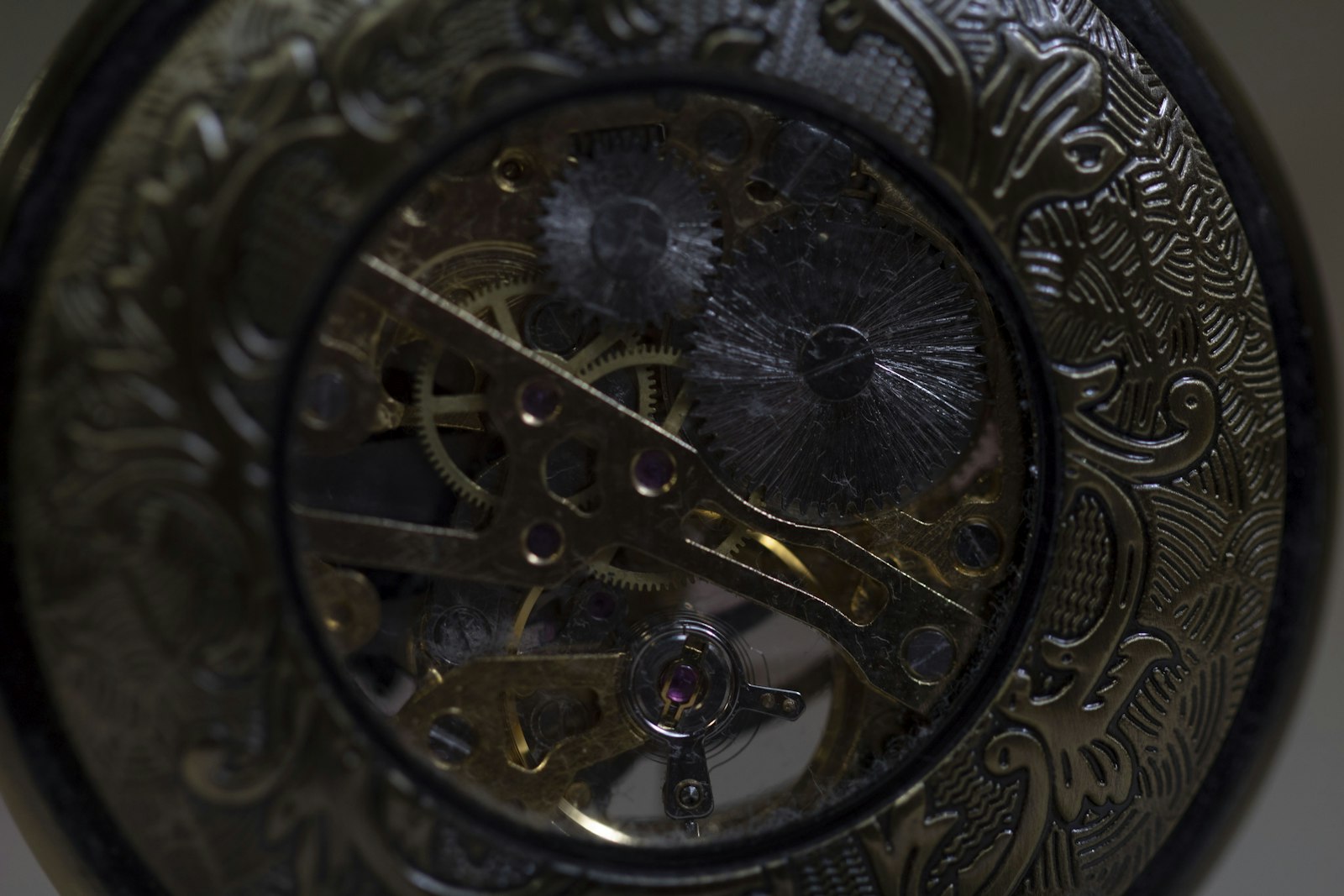
Turn most mechanical watches over and, through a sapphire caseback, a small, hidden world becomes visible — one that the vast majority of a watch’s daily wearers will glance at perhaps twice a year, if that. Movement finishing exists almost entirely for its own sake: decoration applied to components that serve no functional purpose being decorated, purely because a certain tradition of watchmaking has always insisted that even the parts nobody sees deserve real craft. Understanding what that finishing actually involves changes how a watch reads entirely, turning an anonymous mechanism into something with a legible hierarchy of care.
Why Finishing Exists at All
In strictly functional terms, a bridge does not need to be polished, a screw head does not need bevelled edges, and a rotor does not need an engraved pattern — the watch would keep time identically without any of it. Finishing survives as a discipline for the same reason fine furniture gets dovetail joints nobody sees once the drawer is closed: it is a statement about the standard a maker holds itself to when no one is checking. Higher-end watchmaking treats finishing as inseparable from the movement’s engineering rather than decoration applied afterward, which is part of why serious collectors read a well-finished movement as a genuine signal of a brand’s overall standards, extending well beyond the parts on display. The functional side of a movement, by contrast, is covered in our guide to understanding watch reserve and efficiency.
The Core Techniques Worth Recognising
A handful of finishing techniques recur across serious watchmaking, each worth being able to identify:
- Côtes de Genève — parallel wave-like stripes applied to bridges, primarily decorative but a reliable marker of care taken elsewhere in the movement
- Perlage — a circular graining pattern, traditionally applied to base plates, that also helps trap dust and stray oil
- Polished countersinks — small bevelled recesses around screw holes, a detail so minor it is easy to miss entirely but consistent across genuinely well-finished movements
- Anglage, or bevelling — hand- or machine-finished angled edges on bridges and levers, with hand-anglage in particular prized for the crispness of its internal angles
- Black polishing — a mirror-flat finish on small components like screw heads, achieved through painstaking hand polishing rather than machine buffing
Our broader primer on watch movements is worth reading alongside this list, since finishing only really makes sense once the underlying mechanical layout it decorates is understood.
Hand-Finishing Versus Machine Finishing
Not all finishing is created equal, and increasingly the meaningful distinction is not which technique is used but how it was applied. Machine-applied Côtes de Genève, produced quickly and consistently, has become common even in relatively accessible watches, and there is nothing wrong with that on its own terms. Hand-finishing, by contrast, remains slower, less perfectly uniform, and considerably more expensive to produce — and it is precisely that imperfection, the faint evidence of a human hand rather than a machine’s flawless repetition, that serious collectors have learned to seek out and value. It is a similar instinct to the one that prizes a hand-engraved guilloché dial over a stamped imitation: the craft is valued precisely because it could have been skipped.
“You can fake the pattern,” one independent watchmaker told us of hand-finishing. “You cannot fake the time it took to get the angles that sharp.”
A Brief Note on Cost
Hand-finishing adds meaningfully to a watch’s production cost, and buyers are often surprised at just how much of a movement’s total price traces back to labour rather than materials once finishing enters the equation. A single hand-bevelled bridge can take a trained finisher the better part of a day to complete to an acceptable standard, and a full movement may carry a dozen or more such components. This is worth understanding not as a justification for paying more indiscriminately, but as context for why two watches with outwardly similar specifications can carry dramatically different prices, and why that difference is not always simply marketing.
Learning to Spot It Yourself
A magnifying loupe, the kind any jeweller keeps to hand, is genuinely the fastest way to develop an eye for finishing quality without relying on a dealer’s word for it. Under magnification, hand-applied anglage shows slightly uneven, faceted angles with a distinctive sharpness at internal corners, while machine-applied finishing tends toward a rounder, more uniform edge that looks correct from a distance but softens under closer inspection. Perlage applied by hand shows subtle variation in the size and spacing of its circles; a stamped or machine-applied version repeats with a regularity that, once noticed, becomes difficult to unsee. None of this requires formal training, only patience and a willingness to compare enough movements to build a genuine reference point.
Finishing on Accessible Watches
It would be a mistake to assume genuine finishing quality is the exclusive preserve of the very top of the market. A number of accessible watchmakers have made real finishing craft central to their identity precisely because it offers a way to compete on substance rather than marketing budget, applying hand-bevelled anglage or genuinely varied perlage at price points that would have been unthinkable a generation ago. This has, if anything, raised the baseline expectation across the entire industry, and collectors shopping at more modest price points now have genuine reason to seek out finishing quality rather than assuming it is simply unavailable below a certain threshold.
What This Means for Buying
For collectors building a collection with genuine intent rather than simply accumulating names, movement finishing is one of the more reliable ways to judge whether a brand’s claims about craftsmanship hold up under closer inspection — a caseback, unlike a dial, is difficult to dress up convincingly if the underlying work is not there. Our guide to building a watch collection with intent touches on this directly: learning to read finishing is one of the fastest ways to develop genuine discernment rather than relying on brand reputation alone.
The Case for Caring About What You Cannot See
There is a reasonable argument that finishing matters most in exactly the watch described in our piece on the case for one very good watch — the single, considered piece worn often enough that its owner eventually does turn it over, out of curiosity, and finds something worth the look. Whether or not a wearer ever checks, the finishing was always there, quietly proving a point about standards that the dial alone never could. Further watchmaking explainers can be found throughout our Style & Watches section.
Daniel has spent fifteen years arguing that the best watch is the one you never take off.