The Art of the Considered Dressing Table
A dressing table can be a genuine daily ritual or an expensive place to pile things. The difference lies almost entirely in how deliberately it's designed.
 By Priya Nair
30 August 2026 · 6 min read
The dressing table fell out of fashion for a long stretch, a casualty partly of smaller bedrooms and partly of a broader move toward multipurpose furniture that did everything reasonably well rather than one thing beautifully. It has been finding its way back in recent years, though, not as a nostalgic revival so much as a recognition that a dedicated space for the daily ritual of getting ready has genuine value — a small, considered counterpoint to bedrooms increasingly organised around screens and storage rather than any sense of occasion.
The risk, and it’s a real one, is that a dressing table without a clear design brief becomes exactly what killed the format the first time around: a flat surface that quietly accumulates everything with no other obvious home, until the considered piece of furniture underneath is barely visible beneath the clutter. Designing one well means being deliberate about scale, storage, and light from the outset.
Scale to the Room, Not the Catalogue
A dressing table photographed in a spacious studio can look considerably smaller in person than it does in a room shot styled to make every piece look generously proportioned. Before choosing one, it’s worth measuring the actual footprint against the bedroom wall it will occupy, accounting for a chair pulled fully out and genuinely usable rather than wedged in as an afterthought. A narrow, slightly taller table often suits a smaller bedroom better than a low, wide one, since it reads as a considered vertical element rather than competing for floor space with the bed and wardrobe.
Storage Is the Detail That Determines Whether It Stays Tidy
The single biggest factor in whether a dressing table remains a pleasure to use, rather than a source of quiet daily frustration, is whether it has genuine, well-organised storage built in from the start. A table with only an open surface and no drawers will, within weeks, collect everything visibly on top of it. Shallow, well-divided drawers — ideally with some form of internal organisation for smaller items like jewellery — keep the surface itself reserved for what’s actually in daily rotation: a scent, a considered tray, perhaps one or two objects with genuine meaning rather than everything owned. Taken further, the same idea of a private, considered corner becomes a whole room, as our piece on the return of the boudoir describes.
- A single shallow top drawer, close to hand while seated, is worth prioritising over deeper storage further away, since it’s what actually gets used every single morning.
- Felt or fabric drawer lining protects delicate jewellery and makes the daily routine of opening and closing feel more considered than a bare wood or laminate interior.
- Resist styling the surface with more than a handful of objects — restraint here does more for the table’s sense of calm than any amount of additional storage could.
Light Matters More Than Almost Any Other Decision
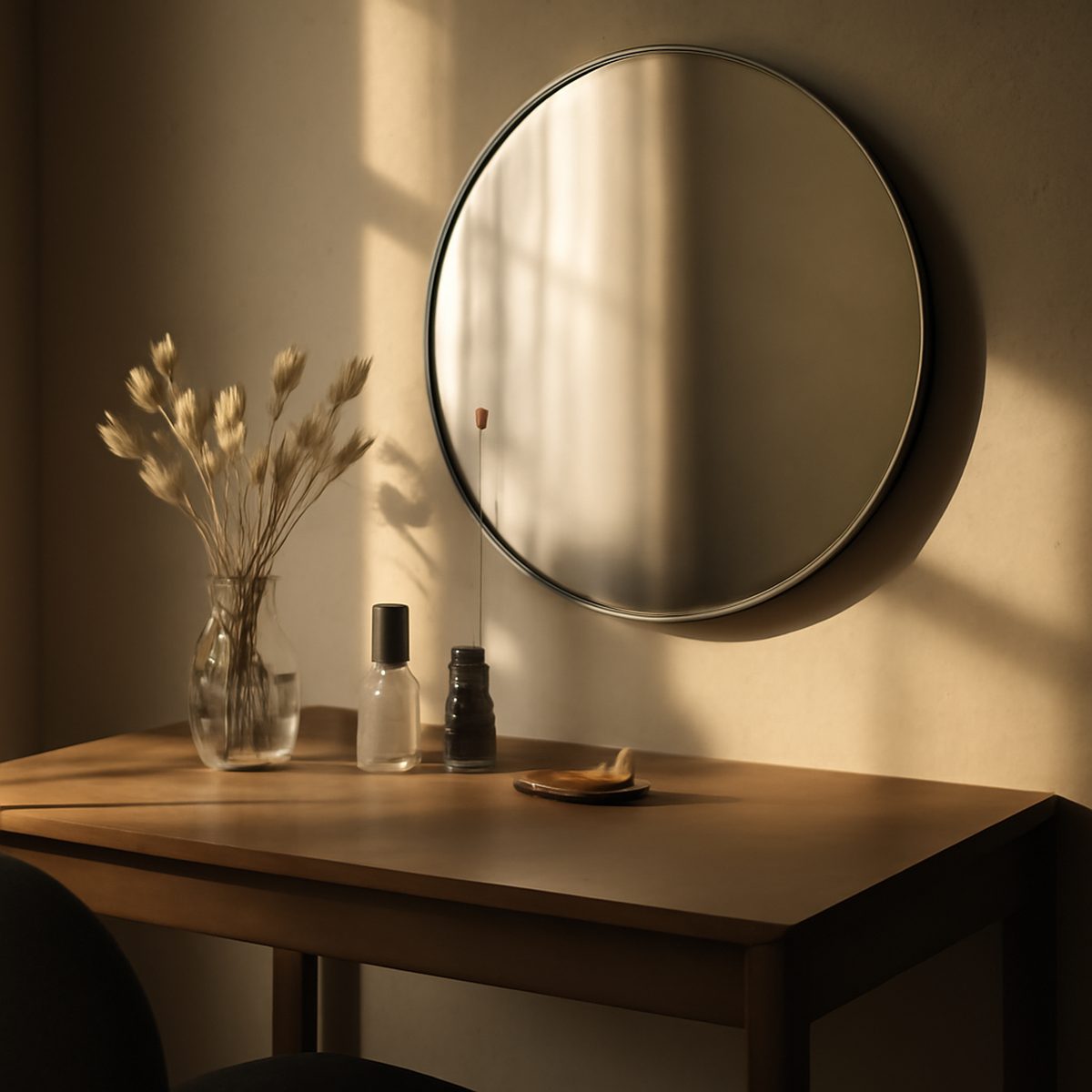
Lighting is where most dressing tables genuinely succeed or fail, and it’s worth treating as seriously as the furniture itself. Overhead room lighting alone casts unflattering shadows across the face; the better solution is light positioned at roughly face height, either as sconces flanking the mirror or as a mirror with integrated, evenly diffused lighting around its perimeter. Natural light from a nearby window, where the room’s layout allows it, remains the single best light source for any task involving a mirror, and positioning the dressing table to take advantage of morning light, specifically, gives the daily ritual a genuinely pleasant quality that artificial light alone rarely matches.
“A dressing table with bad lighting is worse than no dressing table at all,” a designer once told me. “You’ll just end up doing everything in the bathroom mirror instead, and the beautiful table becomes a place to put your bag.”
The Mirror Sets the Tone
A mirror’s shape and frame do more to define a dressing table’s character than the table itself in many cases. A round mirror in a slim frame reads softer and more contemporary; a taller rectangular mirror with a more architectural frame suits a room already leaning traditional. Whichever shape is chosen, proportion relative to the table beneath it matters enormously — a mirror significantly wider than the table it sits on or beside will always look slightly wrong, regardless of how well each piece is made individually.
The Chair Deserves Equal Thought
The seat is frequently the last decision made and often the one that determines whether the table gets used daily or simply looked at. A chair chosen purely for how it looks beside the table, without being sat in for the several minutes an actual routine requires, is a common and easily avoided mistake. A slightly upholstered stool or a low-backed chair, easy to tuck fully beneath the table when not in use, tends to work better in most bedrooms than a bulkier armchair, which can dominate a corner that’s meant to feel light and considered rather than heavily furnished. A chair with a slim profile and legs that don’t visually compete with the table’s own is usually the safer choice, allowing the whole grouping to read as a single considered piece rather than two separate purchases placed side by side.
Where It Sits in the Bedroom’s Larger Story
A dressing table often works best positioned near, though not directly competing with, the room’s storage — close enough to a well-organised wardrobe system that getting dressed feels like one continuous sequence rather than two disconnected zones. In bathrooms without the space for a separate dressing area, some of the same principles — considered lighting, genuine storage, a mirror worth the name — apply just as directly to a statement bathroom vanity, which increasingly does double duty as the daily ritual space a bedroom dressing table might otherwise provide.
Guests deserve the same consideration, incidentally — a small dressing surface in a well-appointed guest room is a detail visitors notice and remember, disproportionate to its actual cost. Done with genuine intention rather than as an afterthought, a dressing table earns back its footprint many times over, turning a few minutes of the daily routine into something closer to a considered ritual than a chore. More at Homes & Culture.
Priya tours the homes most people only glimpse from the road, and asks how they are really lived in.