The Best Rice Terrace and Countryside Stays
Some of the region's most restorative stays sit not on the coast but among working rice terraces, where the pace is set by planting season, not tide charts.
 By Marcus Lim
30 August 2026 · 6 min read
By Marcus Lim
30 August 2026 · 6 min read

There is a version of a luxury holiday that has nothing to do with the sea. It involves waking to the sound of water moving through a terrace irrigation channel, watching farmers wade into paddies still cool from the night, and eating a meal built almost entirely from what was harvested within sight of the dining table. Across the region, a small number of properties have built themselves into this landscape with genuine care, rather than simply parking a resort near a scenic terrace and calling it immersive.
The appeal is partly aesthetic — few landscapes photograph as beautifully as a stepped hillside of flooded paddies catching the early light — but the deeper draw is rhythm. Rice terraces run on an agricultural calendar that has barely changed in centuries, and a stay built around that rhythm forces a different, slower kind of holiday than most travellers are used to.
What separates a genuine countryside stay from a resort with a view
The best properties in this category are working farms first and hotels second, or at minimum operate in close partnership with the farming families who work the surrounding land. Composite examples worth studying: a cluster of restored wooden farmhouses set into a terraced hillside in northern Vietnam, where guests can join the morning planting during the right season; a small lodge above a terrace system in central Bali that sources most of its kitchen produce from within a short walk; and a handful of countryside retreats in the hill country of central Sri Lanka, built into former tea and rice smallholdings and run with a similarly slow, seasonal logic.
What unites them is a refusal to over-programme the stay. Rather than a menu of scheduled activities, the better properties simply make the surrounding landscape available — a guide on request, a bicycle for the village road, a kitchen willing to explain what is growing and why. A gentler, more enclosed version of the same idea is explored in our case for the walled-garden stay, where the garden itself sets the pace.
The rhythm of a terrace stay
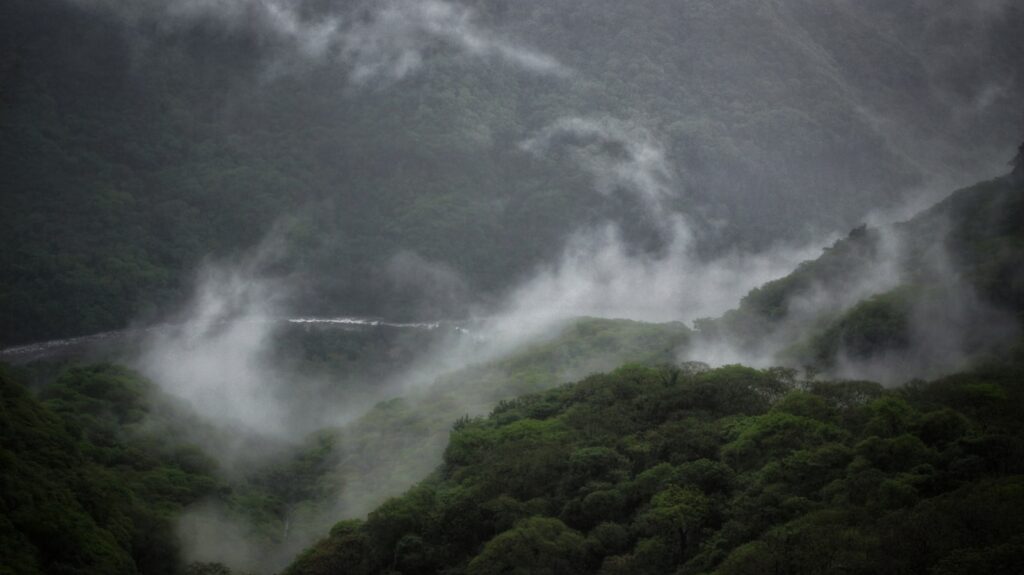
Days here follow the light rather than a printed itinerary. Mornings are for walking the terrace paths while the mist is still low and the light soft; afternoons, when the sun is highest, tend to be for reading on a shaded veranda rather than sightseeing. Evenings often bring the most memorable meals of the trip, cooked in open kitchens using produce that was, in several cases, still in the ground that morning.
- Visit during planting or harvest season for the most vivid green or gold terraces, roughly determined by the local monsoon calendar.
- Ask in advance whether the property arranges village walks with a local guide — the more considered ones do, at a pace set by the guide rather than a fixed clock.
- Pack sturdy, closed shoes; terrace paths are narrow, often muddy, and unsuited to resort sandals.
Pairing a terrace stay with the wider region
These properties rarely sit alone on an itinerary — most travellers pair a few nights among the terraces with time elsewhere, whether coastal or urban. Those heading to Bali specifically will find the terrace lodges of the island’s interior sit naturally alongside the wider case made in Bali beyond the crowds, where to stay now, which covers several inland alternatives to the island’s more familiar beach clubs.
Travellers drawn to the deeper jungle and forest lodges that share a similar unhurried philosophy should also look at the best rainforest and jungle lodges, several of which sit within a short drive of major terrace regions and share the same emphasis on landscape over amenity.
A note on what to expect
Rooms at genuine countryside stays are often simpler than a beach resort suite of comparable price — expect thoughtful, locally made furnishings rather than imported five-star fittings, and Wi-Fi that is deliberately patchy in the more remote locations. This is generally by design rather than oversight; the properties that do this well are selling quiet, not connectivity.
“Guests arrive expecting a spa menu and leave asking to help plant the next crop,” one lodge owner in the hill country of central Sri Lanka told us. “That shift usually happens by the second day.”
Mountain and highland alternatives
For travellers drawn more to elevation and cooler air than to paddies specifically, the region’s mountain retreats offer a related but distinct version of the same slow philosophy. The best mountain retreats in Asia covers highland properties that share the same working-landscape ethos, often built into tea estates or forest reserves rather than rice terraces.
For those curious about the crop itself and its many regional forms, a primer on rice varieties and uses is a useful companion for understanding what exactly is growing in the terraces outside the window, from sticky mountain varieties to the fragrant long-grain rice more familiar on Singapore tables.
The people behind the landscape
It is easy, on a short visit, to treat a terrace as pure scenery. The better properties actively resist this by introducing guests to the families who actually farm the surrounding land — a shared meal, a morning spent learning to transplant seedlings by hand, a conversation over tea about how a particular terrace has been passed down through several generations. This is not always comfortable in the way a spa treatment is comfortable; it asks something of the guest, a willingness to be a guest in someone else’s working life rather than a passive observer of a view. Done well, it is also the part of the stay most travellers describe afterwards as the one that actually changed how they think about food and land.
Some properties formalise this exchange through a modest fee that goes directly to the farming families involved, a model worth asking about explicitly when booking; it is generally a good sign when a lodge can explain exactly where that money goes rather than folding it vaguely into the room rate.
Why it is worth the detour
A rice terrace stay will never offer the immediate gratification of a beach club or the convenience of a city hotel. What it offers instead is a genuine sense of scale and season — a reminder, delivered gently over several unhurried days, that most of the region’s culinary and cultural life still runs on an agricultural clock rather than a booking calendar. For travellers planning a wider trip around stays like this, Black Cow’s travel and stays section covers further options worth building into the same itinerary.
Visitors who come expecting a checklist of activities tend to leave slightly recalibrated, having spent several days measuring time in a way most modern travel no longer allows.
Marcus writes on travel and hospitality across Asia, and is happiest a long way from a lobby.