
The Best Rainforest and Jungle Lodges
A good jungle lodge does not tame the forest, it opens a window onto it. A guide to the region's most considered canopy stays and what makes them work.
 By Marcus Lim
30 August 2026 · 6 min read
By Marcus Lim
30 August 2026 · 6 min read
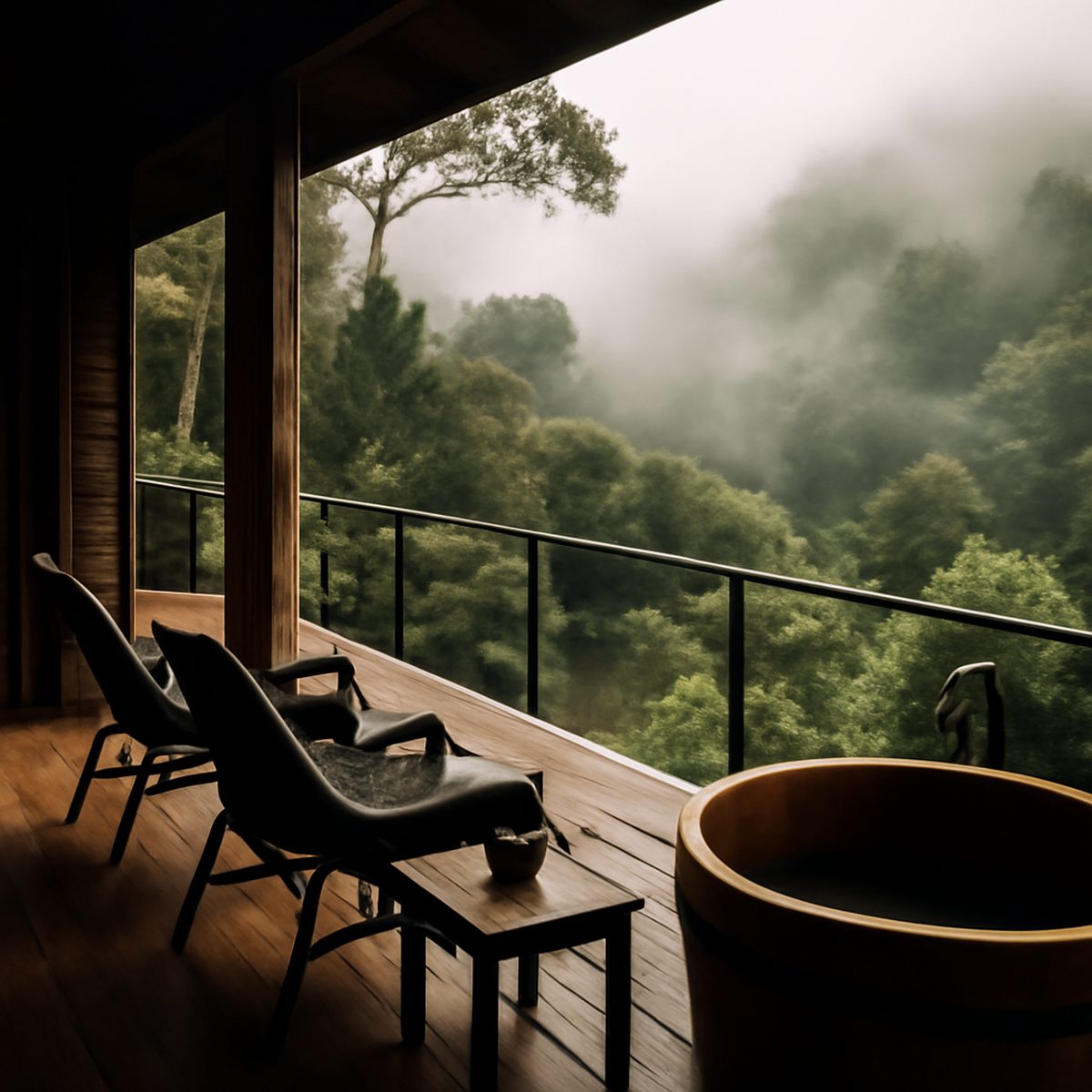
There is a version of the jungle lodge that exists mostly for the photograph — a plunge pool dropped into a clearing, rattan furniture, a “rainforest” that turns out to be a managed garden a short drive from the nearest highway. And there is the real thing: a property built with genuine respect for the forest it sits inside, where the design decisions were made by ecologists as much as architects, and where the point of staying is not comfort despite the jungle but comfort because of it. The difference is immediately obvious once you are there, and worth understanding before you book.
What separates a genuine jungle lodge from a themed one
The tell is usually in the site plan. A lodge that has actually been built around the forest tends to have a low structure count relative to its land area, raised walkways instead of cleared paths, and lighting designed to minimise disruption to nocturnal wildlife rather than to flatter the architecture after dark. Properties that get this backwards tend to over-clear, over-light and over-landscape, producing something closer to a resort with jungle views than a stay genuinely inside one. Ask, before booking, how much forest the property actually occupies versus how much surrounding land it manages — the better operators are proud to answer this in detail.
Borneo, for the genuine article
Borneo’s remaining primary rainforest offers the region’s most credible claim to an unfiltered jungle stay, with lodges positioned along river systems that double as the main wildlife-viewing corridor — proboscis monkeys, hornbills and, with patience, orangutans visible from a boat at dawn or dusk without ever leaving the water. The better properties here run their own conservation research alongside the guest programme, which tends to produce guides with a depth of species knowledge well beyond the standard resort naturalist.
Sri Lanka’s hill country, for a gentler introduction
For travellers who want the sensation of jungle immersion without the full commitment of a multi-day river expedition, the forested hill country of Sri Lanka offers a considerably softer entry point — tea-estate adjacent lodges with genuine leopard territory a short walk away, cooler temperatures than the lowland tropics, and an infrastructure of roads and small towns that makes the logistics far more forgiving than Borneo’s remoter river lodges.
What to actually pack for a jungle lodge
- Long, light layers rather than shorts — most guides will insist on covered arms and legs for dawn and dusk wildlife walks regardless of temperature.
- A proper head torch, since jungle lodges run limited generator hours and paths between rooms are often unlit after dark.
- Dry bags for cameras and phones — river transfers and sudden downpours are part of the experience, not an exception to it.
The wildlife-watching trade-off worth understanding
Genuine jungle lodges rarely guarantee sightings, and the better ones are candid about this rather than overselling a wildlife encounter that depends entirely on the forest’s own schedule. A three-night stay generally produces a meaningfully richer set of sightings than a single overnight, simply because guides can adjust the following day’s route based on tracks and calls picked up the day before. Readers planning a wildlife-led trip more broadly should also look at where to go for wildlife watching, which surveys the wider region beyond the jungle lodge category specifically.
“Guests ask us for a sighting guarantee and we simply don’t give one,” one Borneo lodge naturalist told us. “What we guarantee is that we’ll be out there looking properly, every single morning.”
Comfort without compromising the setting
The best jungle lodges have learned to deliver real comfort — good beds, reliable hot water, food considerably better than the setting might suggest — without resorting to the over-engineering that undermines the forest experience. Open-sided architecture, passive cooling through cross-ventilation and careful screening rather than heavy air conditioning tend to mark out the properties that understand their own premise. A lodge that air-conditions its way through the jungle has, in a sense, already given up on the thing guests came for.
Sound, and why it matters more than sight
A genuinely well-sited jungle lodge is often judged more accurately by ear than by eye. The best rooms are positioned to let the forest’s dawn chorus and evening insect noise through clearly, rather than sealed against it, and the better properties will happily tell you which rooms sit closest to a known bird roost or a regular hornbill flight path. This is worth asking about directly when booking, since a room chosen purely for its river view can sometimes sit further from the most acoustically rewarding stretch of forest — and for many repeat guests, the soundscape ends up mattering more to the memory of the stay than anything visible from the deck.
Night walks, offered by most of the better lodges as a separate add-on rather than part of the standard programme, deserve more consideration than they usually get on a first visit. The forest’s character shifts entirely after dark, with an almost completely different set of species active — insects, amphibians and nocturnal mammals rarely glimpsed on a daytime walk — and a guide equipped with a proper spotlight can reveal a side of the jungle most day-trip visitors never see at all.
Pairing a jungle stay with the rest of a trip
A jungle lodge rarely works as a standalone week — the pace and intensity of dawn wildlife walks are best balanced against a slower, more indulgent stretch either side of it. Travellers building a longer Southeast Asian itinerary around this kind of contrast should also consider a weekend in Bagan for a very different, temple-plain landscape that rewards the same unhurried attention, or a coastal finish drawn from the quiet islands of Asia’s design hotels to decompress after several days of early alarms and river crossings.
What ties the best of these properties together is a kind of humility in the design — an acknowledgement that the forest was there first and will remain long after the lodge is gone, and that the guest’s job is simply to be let in quietly for a few days. Book on that basis, ask the direct questions about land use and lighting before arriving, and the stay tends to deliver considerably more than the photograph promised. Further ideas on the region’s most considered resorts sit within our Travel & Stays section.
Marcus writes on travel and hospitality across Asia, and is happiest a long way from a lobby.


