The Art of the Shawl-Collar Coat
The shawl collar brings a rounded, almost domestic formality to outerwear that no notch lapel quite matches. Here is how to choose and wear the coat well.
 By Daniel Koh
30 August 2026 · 6 min read
By Daniel Koh
30 August 2026 · 6 min read
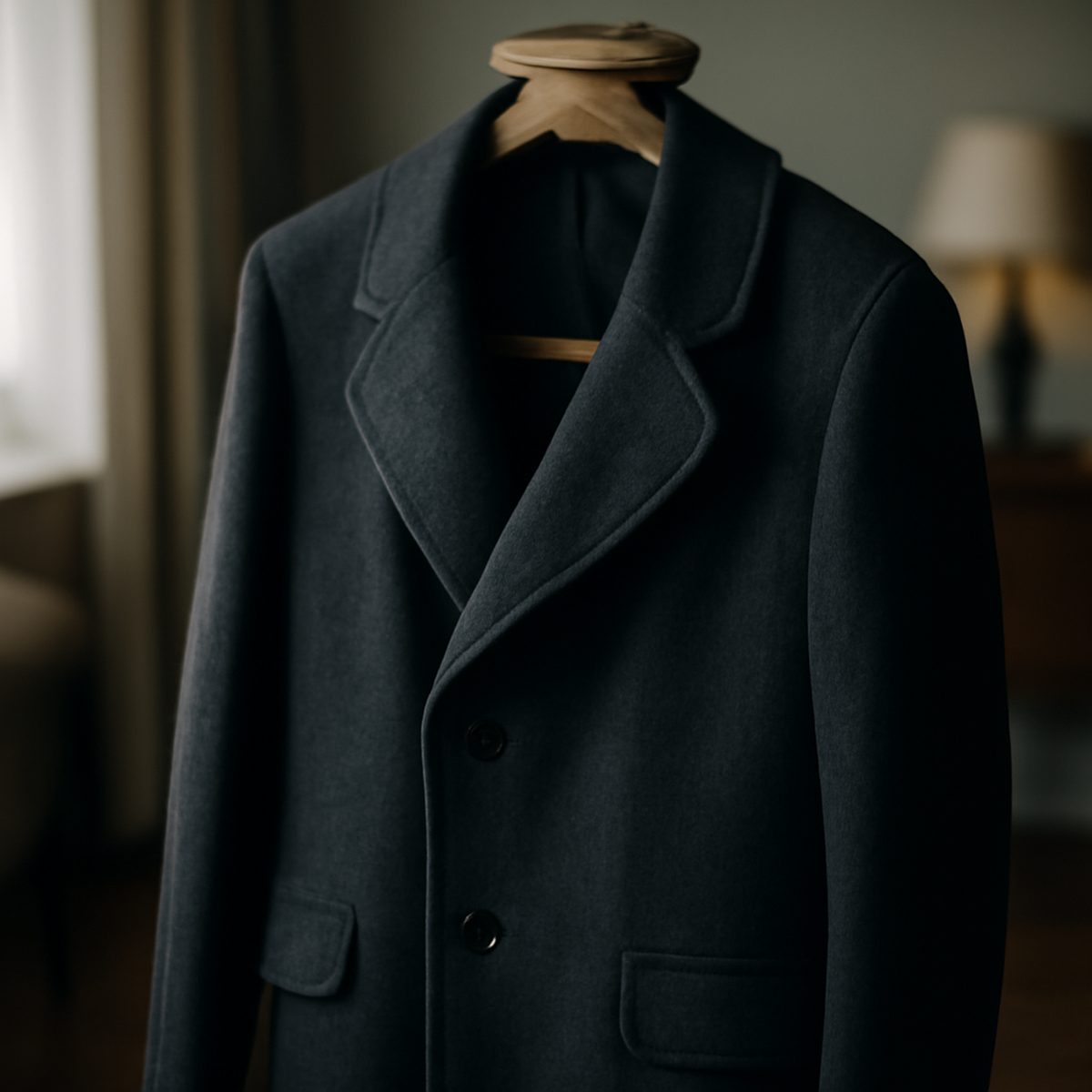
Of the handful of lapel shapes available to a coat, the shawl collar is the odd one out, and deliberately so. Where a notch lapel breaks the line of the collar with a visible seam and a peak lapel sharpens it into a point, the shawl collar runs in one unbroken, rounded curve from the back of the neck to the top button, with no seam interrupting the sweep at all. The effect is softer, warmer in feeling, and slightly more formal in a domestic rather than boardroom sense — a coat that has always suggested fireside evenings and dressing gowns as much as it suggests tailoring, which is precisely where much of its charm comes from.
Where the Shape Comes From
The shawl collar’s history runs through the smoking jacket and the dressing gown before it ever reached formal outerwear, which explains the shape’s slightly domestic, at-ease quality even when executed in the heaviest wool overcoat. It found its way into eveningwear through the dinner jacket, where it remains one of two acceptable lapel shapes alongside the peak, before migrating outward into coats proper sometime in the twentieth century as a genuinely elegant alternative to the more common notch.
That lineage matters because it explains why the shawl collar reads differently to a peak lapel even when the two are cut from an equally formal cloth. A peak lapel projects sharpness and assertion; a shawl collar projects ease and warmth, wrapping around the neck rather than pointing outward from it. Understood this way, the coat sits in interesting contrast to the art of the camel coat, another piece built on a soft, enveloping silhouette rather than a sharp one.
Choosing Fabric and Silhouette
A heavier wool or a wool-cashmere blend suits the shawl collar best, since the shape depends on a certain amount of structure to hold its curve rather than collapsing flat against the shoulders. Camel, charcoal and a deep navy all work well, with camel in particular echoing the coat’s dressing-gown origins in a way that reads considered rather than costume. A double-breasted construction pairs especially naturally with the shawl collar, the two features sharing a common ancestry in eveningwear and reinforcing rather than competing with each other visually.
Length matters more here than with most coats, since a shawl collar cut too short starts to look like a cardigan rather than an overcoat. A knee-length or just-above-knee cut gives the collar room to make its full visual statement, while anything cropped shorter tends to undercut the coat’s essential formality before it has a chance to register.
Where the shawl collar works best
- Over a suit or tailored separates for evening wear, where its formality reads as intentional.
- Over a chunky knit for weekend wear, where its softness reads as considered rather than sloppy.
- In camel or charcoal wool, where the fabric’s weight supports the collar’s curve properly.
- As a genuine alternative to a great overcoat for anyone wanting a softer silhouette than the standard notch-lapel version offers.
Styling It With Intent
The shawl collar’s inherent softness means it pairs unusually well with texture underneath — a cable knit, a shawl-collar cardigan worn deliberately beneath its outerwear namesake, or a chunky roll neck all echo the coat’s rounded lines rather than fighting them. Worn over tailoring, the coat wants a similarly considered shirt and trouser beneath it; worn over knitwear, it becomes one of the more elegant weekend options available to a man who still wants to look assembled without appearing to have tried a suit underneath his outerwear. For a heavier, more rugged knit beneath it, our piece on the enduring style of the Cowichan sweater considers one of the most characterful options. The same soft collar works just as well in knitwear, as our pick of the best everyday cardigans shows.
A composite outfitter who stocks the shape each winter season observed: “Men are often nervous about the shawl collar because it looks, at a glance, like a robe. I tell them that is exactly the point. It is meant to feel like the most comfortable, most considered thing you own, not the stiffest.” It is a reasonable defence of a coat that has always traded a little formality for a great deal of ease, and the trade tends to age well on most men who make it.
Accessories worn alongside the coat should echo the same restraint the shape already carries. A plain leather glove, a scarf in a single solid colour rather than a busy pattern, and a hat with a clean unfussy brim all sit comfortably with the shawl collar’s rounded lines, while anything more textured or patterned tends to compete with a silhouette that is already doing a great deal of visual work on its own.
Caring for a Shawl-Collar Coat
The curved collar depends on internal structure — canvas or a similarly stiffened interlining running through the collar and lapel — to hold its shape over years of wear, and this is precisely the part of a coat that a cheap construction skimps on first. Pressing a shawl-collar coat incorrectly, particularly flattening the collar under a home iron, can crush that structure permanently, so any real pressing is best left to a professional who understands how to steam and shape the curve back into place rather than simply flattening the whole garment.
Storage matters more for this shape than for a plainer coat, too. Hung on a wide, curved wooden hanger that supports the shoulder properly, a shawl collar holds its roll far better over a summer of storage than it would folded into a garment bag or squeezed onto a thin wire hanger, where the collar’s curve can flatten out of shape within weeks and take considerable effort to restore.
A Coat Worth the Investment
Because the shawl collar depends so heavily on cloth weight and construction to hold its shape, it rewards spending toward the top of a reasonable budget far more than a simpler notch-lapel coat would. A poorly constructed shawl collar collapses and looks limp within a season; a well-made one holds its curve for decades of wear. Considered alongside other statement outerwear pieces such as the art of the polo coat, it belongs in the small category of coats worth genuinely investing in rather than replacing every few years. Readers assembling the rest of a considered outerwear rotation will find further reading across Black Cow’s Style & Watches section.
Daniel has spent fifteen years arguing that the best watch is the one you never take off.