
Why the Steppe Rewards the Patient Traveller
No sights to tick, no queues to join, only grass and sky to the horizon: why the Mongolian steppe belongs to the traveller who can slow down.
 By Marcus Lim
1 September 2026 · 6 min read
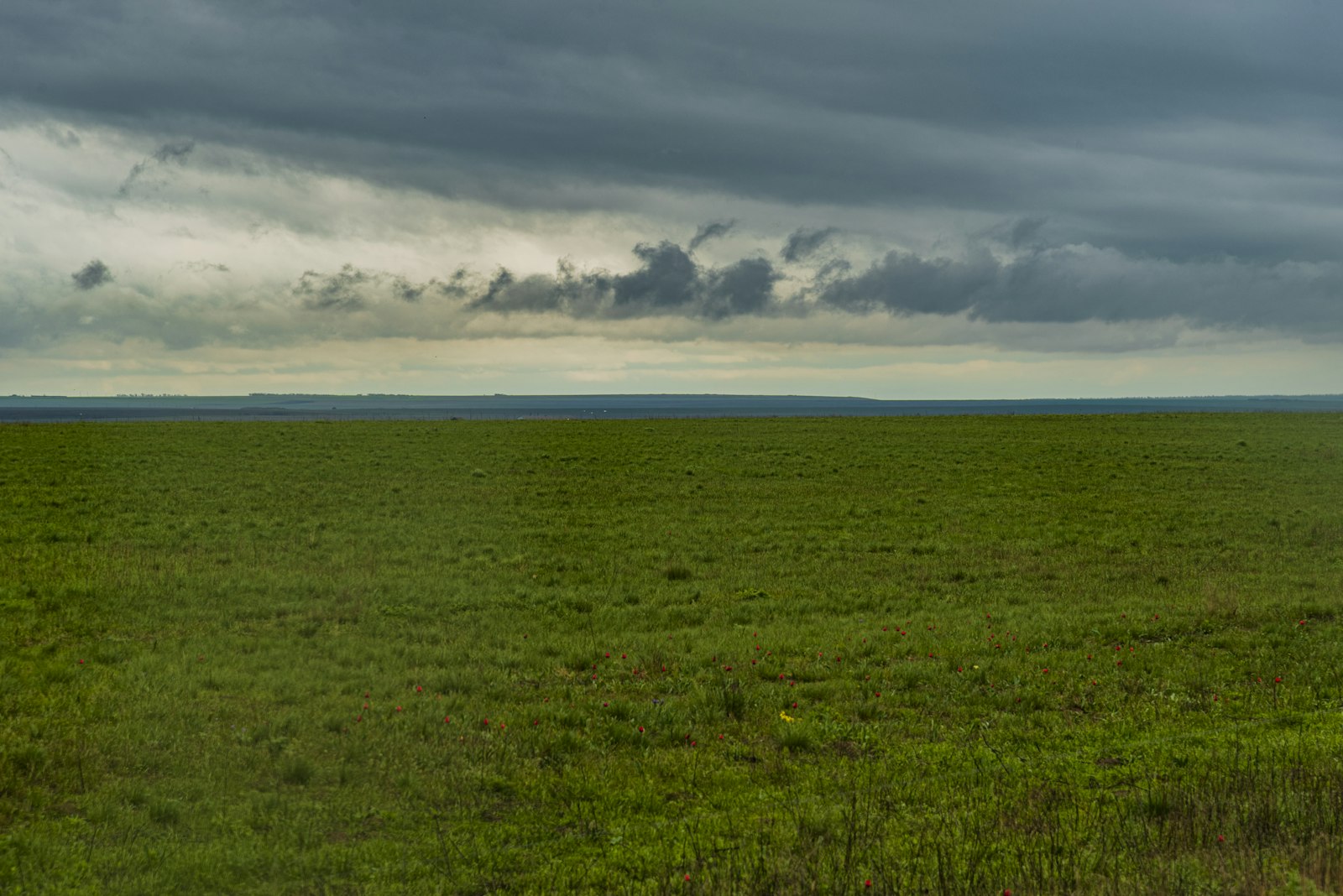
The steppe does not perform for you. There is no vista that resolves into a postcard, no single sight around which to organise a day, no queue to join. There is grass, and there is sky, and there is a great deal of both, running unbroken to a horizon that seems further away than any horizon has a right to be. To the impatient traveller this is nothing. To the patient one it is very nearly everything.
Mongolia’s grasslands are the largest intact expanse of their kind on earth, and travelling across them is an exercise in recalibration. You arrive expecting landmarks and slowly realise that the land itself is the landmark, and that the reward is not in seeing but in noticing. The same patience pays off in far smaller landscapes too, as our piece on the Pembrokeshire coast for slow travellers suggests.
The scale that resets you
The first thing the steppe does is correct your sense of size. Distances that look walkable turn out to take hours. A herd of horses that seems close is a mile off. A single white ger, the round felt tent of the herders, sits alone in a bowl of grass so vast that it takes the eye a moment to find it at all.
This scale is humbling in the literal sense: it returns you to your actual proportions. Under a sky without edges, the ordinary urgencies fall away. There is nowhere you need to be by a particular time, because the land does not keep that kind of time. The same quality draws people to other emptied-out places, and readers who love the unhurried spaces of the best savanna and grassland escapes will recognise the feeling exactly.
A slowness you cannot cheat
You cannot rush the steppe. The roads, where there are roads, are tracks; the weather does as it pleases; the herders move at the pace of their animals, which is the pace of grass and season. Travel here means accepting a schedule that is not yours to set, and this enforced slowness is the making of the trip. Much the same lesson applies far closer to a European capital, as our piece on the Sierra de Guadarrama suggests for travellers with a little patience. A gentler landscape closer to home rewards the same patience, as why the Cotswold escarpment rewards the slow traveller describes.
The patient traveller stops fighting it around the second day. You wake with the light, you travel while the travelling is good, you stop when a family offers tea, and you let the day take the shape it wants to take. It is the same surrender that rewards the visitor to more familiar slow places, the kind we describe in our account of why Tasmania rewards the slow traveller, only pushed to a further extreme.
The steppe gives you nothing to look at and, in doing so, teaches you to look at everything: the wind in the grass, the tilt of the light, the single hawk turning overhead.
Hospitality without transaction
The great human pleasure of the steppe is its hospitality, which operates on a code older than any hotel. A traveller arriving at a ger is welcomed, fed and given tea as a matter of course, not commerce. You sit on low stools, you are handed a bowl of salted milk tea, you communicate in gesture and smile, and you glimpse a way of living that has changed remarkably little in centuries.
This is hospitality as it existed before it was an industry, and it is deeply affecting. There is no bill, no performance, no expectation beyond the courtesy of accepting what is offered. To the traveller accustomed to being a customer, it is a quiet reorientation of what welcome can mean.
Spend a night in a ger and the reorientation goes deeper still. The felt walls hold the warmth of the stove, the family sleeps in a ring around it, and the sounds from outside are only wind and the occasional shift of tethered horses. There is no glow of a screen, no hum of a machine, nothing to mark the hours but the light and the fire. You wake with the sun because there is nothing to keep you up past it, and you sleep more soundly than you have in months. It is a way of living stripped back to its essentials, and a few days of it recalibrates your sense of what you actually need.
The discipline of the empty view
Learning to enjoy the steppe is learning to enjoy an empty view, which is a discipline modern travellers have largely lost. There is no dopamine hit of a famous sight, no obvious photograph, nothing to tick. Instead there is subtlety: the way the grassland changes colour as a cloud crosses it, the sudden movement of a marmot, the enormous silence that is not silence at all but wind and insects and distant hooves.
The traveller who can attend to this comes home changed in a way that a busier itinerary rarely manages. It is the same reward that quiet, unpeopled seascapes offer, of the sort we chart in our piece on the quiet islands of the Mergui archipelago: the deep refreshment of a place that asks nothing of you but attention.
How to travel it well
Go with time in hand and expectations lowered in the best sense. Travel light, dress for four seasons in a day, and accept that plumbing and comfort will be basic. Hire a good local driver and interpreter, because the steppe is not a place to navigate alone. And above all, do not over-schedule; leave whole days empty, because the empty days are when the steppe finally works on you.
Season shapes everything here. The brief green summer is the kindest time, the grasslands lush and the herders’ camps at their most active, while autumn turns the whole country gold and thins the crowds to almost nothing. Winter is brutal and beautiful in equal measure, a test few travellers should attempt. Whenever you go, the essential discipline is the same: to travel at the land’s pace rather than your own, to accept the days as they come, and to measure the trip not in sights seen but in the slow, deep quiet that settles over you somewhere out on the grass.
The reward is not a set of sights but a shift in tempo that lasts long after you leave. The patient traveller returns from the steppe carrying a little of its slowness, and finds that the world at home looks different for it. For more journeys that reward patience over speed, the wider Travel & Stays section is full of them, but few teach the lesson as completely as a week under that enormous Mongolian sky.
Marcus writes on travel and hospitality across Asia, and is happiest a long way from a lobby.


