The Case for the Canal Boat Holiday
Four miles an hour, a tiller in your hand and a view that never stops changing: the quiet, deliberate pleasure of a week aboard a narrowboat.
 By Marcus Lim
1 September 2026 · 6 min read
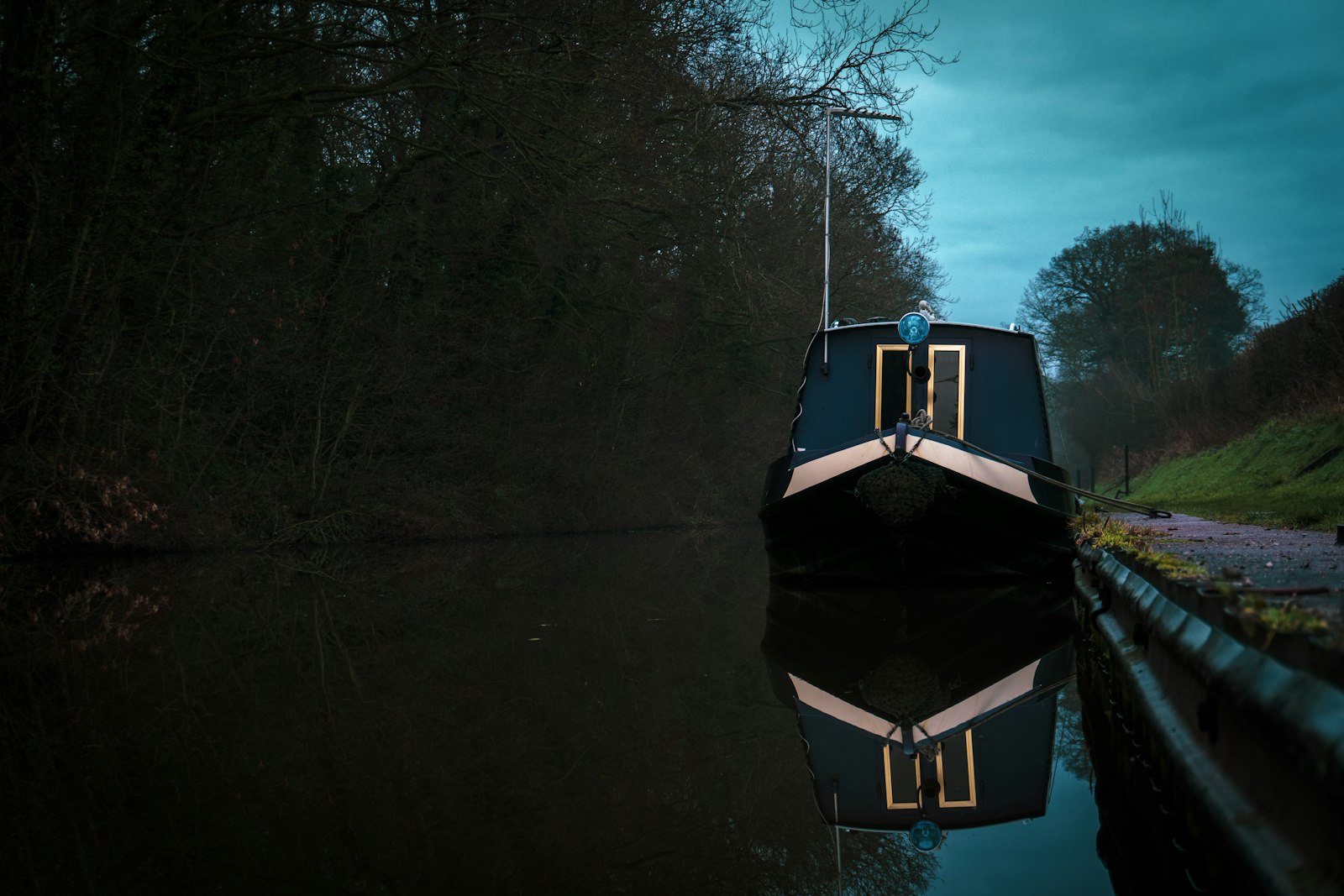
Speed is the enemy of a good holiday, and nothing is slower, more deliberately and delightfully slow, than a canal boat. Walking pace, roughly four miles an hour, is the entire premise. You are not going far, and you are certainly not going fast, and within a day of stepping aboard a narrowboat you begin to wonder why you ever thought you needed to.
The canal holiday is a curious survival: a network of waterways built for freight two centuries ago, now given over almost entirely to pleasure. It is unglamorous in the best way, and it offers something that few holidays manage, which is genuine, structural slowness. You could not rush if you tried. Those drawn to life on the water without the locks may prefer a stationary alternative, and the case for the houseboat holiday sets out its gentler pleasures.
The pleasure of doing one thing
A narrowboat asks little of you and gives a great deal in return. You steer with a tiller, which is to say you lean gently against a long wooden arm and correct your course by feel. There is a mild art to it, learned within an hour, and thereafter the whole day organises itself around a single, absorbing task: keeping a long steel boat more or less in the middle of a narrow ribbon of water.
This is the therapy of it. With one simple job to do, the mind quietens. The hedgerows slide past at the speed of a thought. A heron lifts off ahead of you and resettles fifty yards on, and you catch it up, and it lifts off again, and this small comedy repeats for a mile. You notice things. It is the same recalibration of attention that draws people to the walking holiday, only you carry your bed, your kitchen and your kettle with you.
Locks, and the sociable art of them
The canals climb and descend through locks, and working them is the one piece of proper exertion in an otherwise idle week. You moor, you wind the paddles, you lean your whole weight into the balance beam, and the great gates swing and the chamber fills or empties. It is satisfying in a way that gymnasium exercise never is, because it accomplishes something visible.
Locks are also where the sociability happens. A flight of locks is a bottleneck, and bottlenecks make conversation. You share the work with the boat ahead, you swap advice, you learn the towpath etiquette. By the second day you are on nodding terms with half the waterway.
There is a rhythm to a day of locks that the body settles into quickly: moor, wind, push, drift, moor again. It is repetitive in the way that good manual work is repetitive, absorbing rather than dull, and it leaves the mind free to wander while the hands are busy. By the end of a lock-heavy afternoon you are pleasantly tired in a way that no desk ever makes you, and the evening’s stillness feels thoroughly earned. This alternation of gentle effort and complete rest is the deep structure of a canal week, and it is why people come back to it year after year.
At four miles an hour you cannot outrun anything, least of all yourself, and after a day or two that stops feeling like a limitation and starts feeling like the whole point.
Living small, and living well
A narrowboat is an exercise in the well-organised small space, and anyone who admires a considered interior will find much to enjoy. Everything folds, stows or does double duty; the galley is compact but complete; the bed is warm and the stove throws real heat on a cool evening. It is a floating argument for warm minimalism, where restraint is a comfort rather than a deprivation.
Provisioning becomes part of the trip. You moor at a village, walk up to the shop, buy what you need for a day or two, and cook aboard as the light fades over the water. Some evenings you tie up beside a canalside pub; others you are alone in open country with only the moorhens for company. The variety is entirely in your gift, because you decide each morning how far, if at all, you wish to go.
A different kind of luxury
There is nothing lavish about a canal boat, and that is precisely its luxury. It offers time, quiet and self-sufficiency, three things that money increasingly struggles to buy. In an age of frictionless travel it reintroduces a little friction, the good sort, the sort that makes you present.
It rewards the same temperament that enjoys other unhurried journeys. Readers drawn to the slow tempo of the slow traveller in Tasmania will recognise the instinct, as will anyone who has ever chosen the long way round on purpose. And for those who prefer their slowness with a little grandeur at either end, our piece on the enduring romance of the grand hotel makes an agreeable counterpoint to a week of self-steered simplicity.
How to begin
Start with a short trip, three or four nights, on a gentle stretch without too many locks, and take the handover briefing seriously. Steer more slowly than feels natural, especially past moored boats and around blind bends. Keep a windlass and a decent pair of gloves to hand. Do not plan a mileage; plan a mood.
Most first-timers arrive slightly apprehensive and leave slightly evangelical. The learning curve is real but short, and by the end of the week the tiller feels like an extension of your arm and the pace feels like the correct speed for a human being to move through the world.
It helps, too, that the network is so quietly beautiful. The old canals were dug to skirt the contours of the land, so they wind through the softest parts of the country, past water meadows and old wharves, under hump-backed bridges and along the backs of towns you would never otherwise see. You arrive at places by their forgotten waterside entrance rather than their busy front door, and the country reveals a gentler, greener face. That, in the end, is the deepest argument of all: the canal boat does not merely slow you down, it shows you a landscape that the fast roads long ago left behind.
The canal boat is not a holiday for people in a hurry, which is exactly why it is worth taking. For more journeys pitched deliberately below the speed limit, the wider Travel & Stays section is full of them. Cast off, find your four miles an hour, and let the country come to you.
Marcus writes on travel and hospitality across Asia, and is happiest a long way from a lobby.