Why the Scottish Borders Reward the Slow Traveller
Overlooked by travellers racing north, the Scottish Borders offer ruined abbeys, salmon rivers and empty hills to anyone willing to slow down and stay.
 By Marcus Lim
1 September 2026 · 6 min read
By Marcus Lim
1 September 2026 · 6 min read
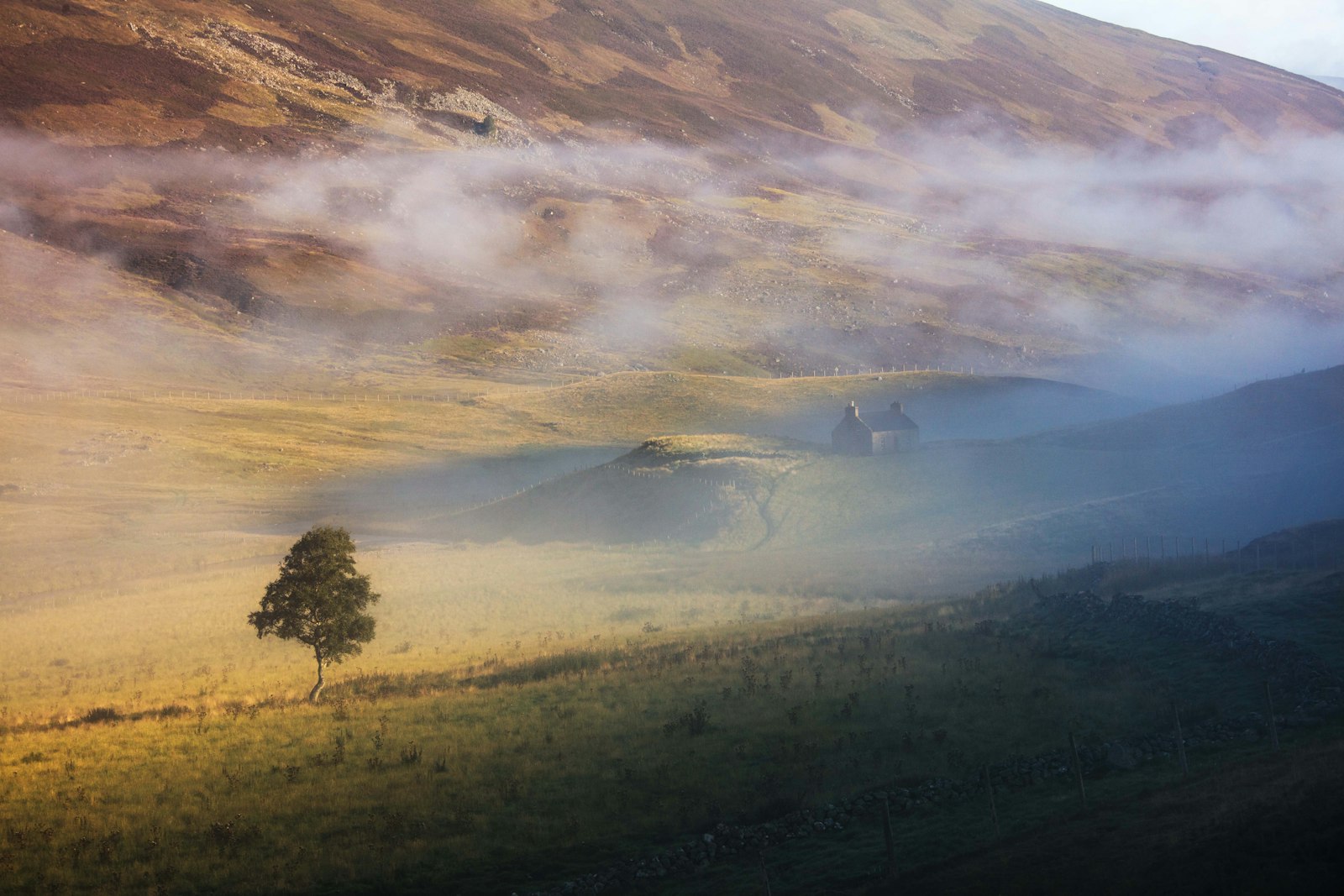
Most travellers experience the Scottish Borders at seventy miles an hour, glimpsed through a car window on the dash between the English cities and the Highlands beyond. It is a mistake as old as the motorway. This is a landscape that gives up nothing to speed and everything to patience, a rolling, river-cut country of ruined abbeys and quiet hills that rewards only the traveller willing to stop, turn off the main road and stay a while.
The Borders occupy the debatable land between two nations, a country fought over for centuries and now sunk into a deep, green peace. There are no famous mountains here and no single great sight; what there is instead is texture, history and space, the accumulated atmosphere of a place that has seen everything and now asks only to be walked slowly. For the unhurried traveller, that is riches.
A landscape of rivers and ruins
The defining features of the Borders are its rivers and its abbeys. The great salmon river winds through the heart of the region, and its valley is the spine along which the country’s life has always run, its banks lined with woods, its pools famous among anglers the world over. Above the water rise the shells of the great border abbeys, medieval monasteries burned and rebuilt through centuries of war, now standing as roofless, magnificent ruins.
These are places to visit slowly, in the changing light, rather than to photograph and leave. The pleasure is atmospheric and cumulative, the same reward that patient travellers find in the Scottish Cairngorms, where the landscape reveals its depth only to those who linger. There is a monastic quiet to the abbeys that repays a slow, wandering visit, an hour spent among the stones rather than a hurried loop.
Roads that ask you to slow down
The Borders are made for the slow road. Away from the main artery north, the region is threaded with quiet lanes that dip through wooded valleys, climb over open moorland and pass through small stone towns that see few visitors. Driving them badly, at pace, misses everything; driving them well, with time to stop at a viewpoint or a village, is one of the great underrated pleasures of British travel. Further south, a smaller range of hills rewards the same unhurried approach, as our piece on why the Quantock Hills reward the slow traveller describes.
Better still, walk. The hills here are gentle and grassy, laced with old drove roads and long-distance paths, and a day on foot reveals a Borders invisible from any car. This is walking country in the deepest sense, and the case for exploring it on foot is the same case made by the walking holiday everywhere: that some landscapes only open to you at three miles an hour. The seasons matter, too, and the region shares the luminous autumn glory that makes autumn the best time in the Highlands.
The Borders keep their secrets from the fast and give them freely to the slow. There is no way to hurry this country, and no reason to try.
Towns with a working heart
The Border towns are not tourist confections; they are working places, mill towns and market towns that have made cloth and traded sheep for centuries and still, in a quiet way, do. That authenticity is much of their charm. They have real high streets, real pubs and a strong sense of their own history, unbothered by the need to perform for visitors, which makes stumbling into them feel like a discovery rather than a stop on an itinerary.
The textile heritage runs deep here, and the region’s fine woollens and knitwear are woven into its identity as surely as the rivers are into its geography. Spend an evening in a small hotel or an old coaching inn, eat well and locally, and you feel the pull of a place that is entirely at ease with itself and in no hurry to change.
How to give it time
- Stay at least three nights. One night here shows you nothing; three begins to reveal it.
- Leave the main road. The Borders live down the side lanes, not on the trunk route.
- Walk one full day. A day on foot changes your whole sense of the landscape.
The reward for staying
What the Borders offer, in the end, is a quality that faster destinations cannot: the sense of having a beautiful, historic country almost to yourself. Because everyone rushes through, those who stop find empty abbeys, quiet rivers and hills without another soul, a rare and increasingly precious kind of solitude in a crowded corner of the world.
The literary and historical depth of the Borders adds a further layer that the patient traveller comes to treasure. This is storied country in the fullest sense, a landscape that has inspired ballads and novels for centuries and wears its past lightly on every hill and in every ruin. To walk here is to walk through a thousand years of raids and cattle-thieving, of monastic learning and border warfare, and the towns and abbeys carry that history without ever labouring it. A slow traveller has time to absorb this, to read a little before a walk, to sit in an abbey and imagine it whole, to understand why a particular tower stands where it does. The fast traveller sees only scenery; the slow one sees a palimpsest, a country written over and over by the people who fought and farmed and prayed here. That added dimension of meaning is one of the deepest pleasures the Borders offer, and it is available only to those who give the place the time to tell its story. Hurry, and the story stays closed.
That is the whole argument for the Borders, and for slow travel generally. Speed collects sights; slowness collects places, and the Borders reward slowness more richly than almost anywhere in Britain. Turn off the motorway, stay a few nights, and a stretch of country you were only ever going to drive through becomes somewhere you will want to return. For more landscapes that repay patience, the Travel & Stays section awaits.
Marcus writes on travel and hospitality across Asia, and is happiest a long way from a lobby.