Why a Good Fluted Cutter Earns Its Place
A crimped edge is not just decoration: it seals, it strengthens and it signals care. Here is why a good fluted pastry cutter earns a place in a serious kitchen.
 By Renée Tan
2 September 2026 · 6 min read
By Renée Tan
2 September 2026 · 6 min read
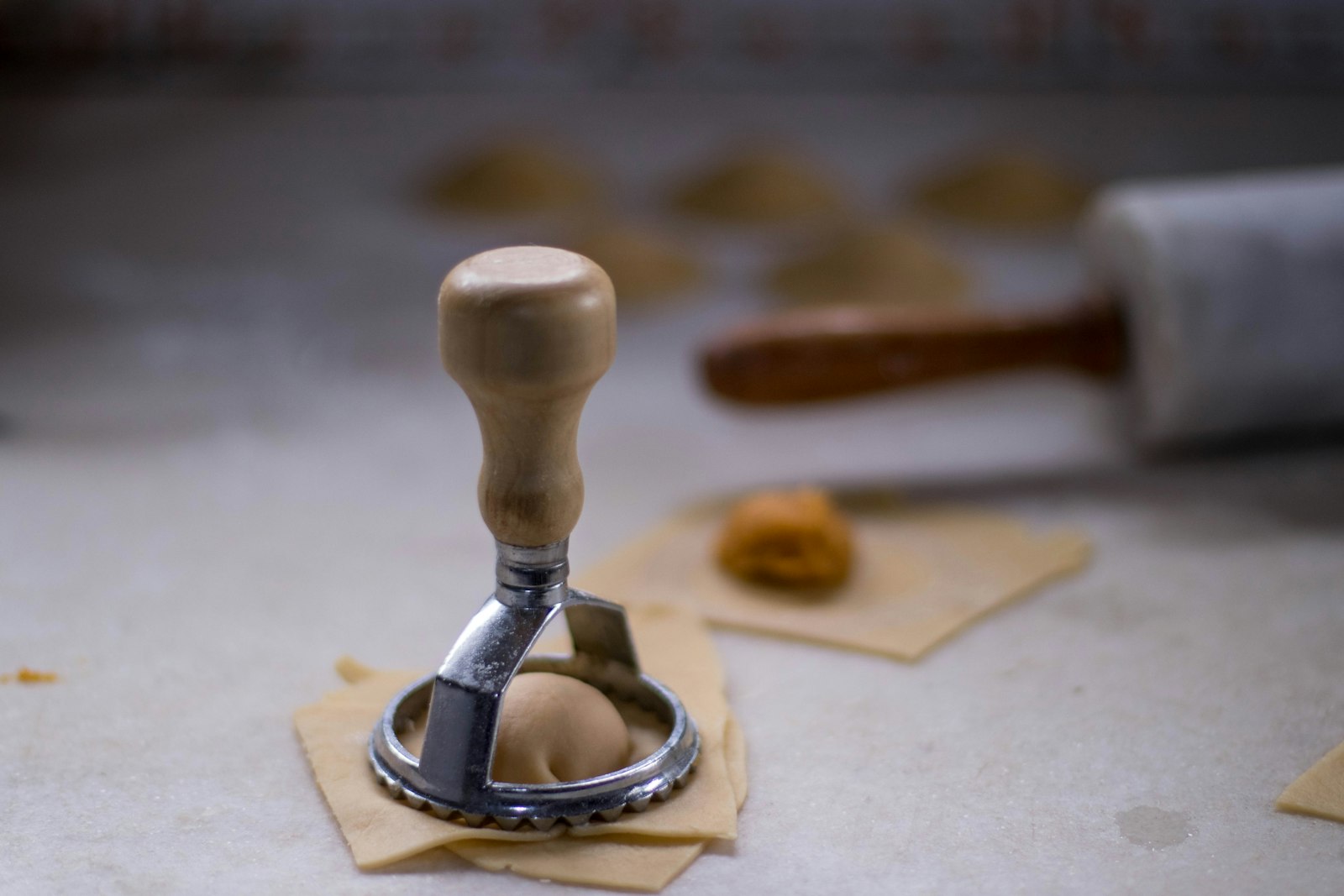
There is a small, satisfying category of kitchen tools that do one thing supremely well and nothing else at all, and the fluted pastry cutter belongs firmly within it. A ring or a wheel with a crimped, wavy edge, it exists to cut pastry into rounds and strips with a decorative zigzag border. It sounds trivial, the sort of thing that lives forgotten in a drawer, and yet a good one changes the way your baking looks and, more surprisingly, the way it behaves. It earns its place, quietly, every time you make a pie.
Like most of the best kitchen tools, its value only becomes obvious once you own a good one. A cheap, blunt cutter tears and drags; a well-made one glides through chilled pastry and leaves an edge so clean and precise it looks machine-made. The difference is not cosmetic alone.
What the flutes are for
The obvious answer is decoration, and it is a real one. A crimped edge on a tart, a scalloped rim on a mince pie, a fluted strip of lattice: these signal care and craft, the visual grammar of proper baking. But the flutes do more than please the eye. A wavy edge has more surface area than a straight one, which means two sheets of pastry pressed together along a crimped seam bond more securely, sealing a pie against leaks better than a plain cut would.
The crimping also strengthens a delicate edge, giving a thin rim of pastry the structural rigidity to hold its shape as it bakes rather than slumping. Anyone who has followed our thinking on why a good tart ring earns its place will recognise the principle: in pastry, form and function are inseparable, and the tools that shape the dough also protect it.
Wheel or ring
Fluted cutters come in two main forms. The pastry wheel, or jagger, is a crimped disc on a handle, run along a straight edge or a ruler to cut long fluted strips for lattices, ravioli and biscuits. The fluted ring, sold in nested sets of graduating sizes, cuts perfect crimped rounds for tarts, pies and scones. A serious baker wants both, though if you buy only one, the nested rings are the more versatile.
The wheel deserves special mention for pasta. A fluted jagger cuts the crimped edges of ravioli and the elegant borders of stuffed pastas, sealing and decorating in a single pass. It is one of those tools that bridges the sweet and savoury sides of the kitchen, as useful to the pastry cook as to anyone rolling their own filled pasta.
A crimped edge is quiet proof of care. It seals the seam, strengthens the rim and tells anyone who is paying attention that the maker took the extra minute.
Choosing a good one
Material matters. The best fluted cutters are made of tinned steel or, better still, solid brass or copper, which are heavy enough to cut cleanly under their own weight and resist bending. Cheap aluminium sets are light and flex under pressure, distorting the cut and going blunt quickly. A good set feels reassuringly weighty in the hand, and the flutes are sharp and evenly formed, with no rough seams to catch the dough.
This is the same logic that governs every good cutting tool. Just as we argue in why a good knife changes everything, a sharp, well-weighted cutter does the work for you, while a dull one fights back and mangles the result. Buy once, buy well, and clean and dry the cutters carefully to keep them from rusting.
Using it well
The secret to a clean fluted cut is cold dough and a decisive hand. Chilled pastry holds its edge; warm pastry drags and smears. Press the cutter straight down through the dough in a single confident motion rather than twisting, which distorts the flutes and can toughen the pastry by stretching it. Flour the cutter lightly if the dough is sticky, and cut close to the edges of your rolled sheet to waste as little as possible.
The reward for all this care is baking that looks as good as it tastes, whether you are turning out the classic French tarts described in our look at the return of fine French pastry or the buttery laminated pieces from the best bakeries for laminated pastry. A crimped edge is the small, honest flourish that separates home baking done with love from home baking done in a hurry.
A tool that outlasts the fashion
Part of the pleasure of a good fluted cutter is that it never dates. Kitchen gadgets come and go, promising to spiralise or air-fry or otherwise reinvent dinner, and most end up in a cupboard within a year. A solid brass cutter, by contrast, does exactly what it did a century ago and will do exactly the same in another hundred years. It needs no power, no parts, no replacing; cleaned and dried and kept from rust, it simply works, generation after generation. That permanence is its own quiet argument, and it places the fluted cutter among the modest, durable essentials we champion across our dining and drinks pages rather than among the gadgets that clutter a drawer.
There is a deeper pleasure here too, one familiar to anyone who cares about how things are made. A crimped edge is a small, deliberate flourish, a sign that the baker took a moment to finish the work properly rather than simply getting it done. In a kitchen it is the equivalent of a hand-stitched seam or a well-turned joint, a mark of care that costs almost nothing but shows in everything it touches. That is the real reason a good fluted cutter earns its place: not because it is strictly essential, but because it lets you do the job with a little more grace.
So do not dismiss the fluted cutter as fussy or old-fashioned. It is a specialist, and specialists are precisely the tools worth owning: cheap, durable, and quietly excellent at the one job they exist to do. Buy a good set, keep it clean and dry, and it will crimp your pastry for the rest of your baking life.
Renée has covered Singapore's restaurants for over a decade, with a soft spot for the kitchens most people walk past.