Why a Good Cast Iron Griddle Earns Its Place
Flat, heavy and almost indestructible, a cast iron griddle earns its keep with a sear no thin pan can match, and a lifespan measured in decades.
 By Renée Tan
1 September 2026 · 6 min read
By Renée Tan
1 September 2026 · 6 min read
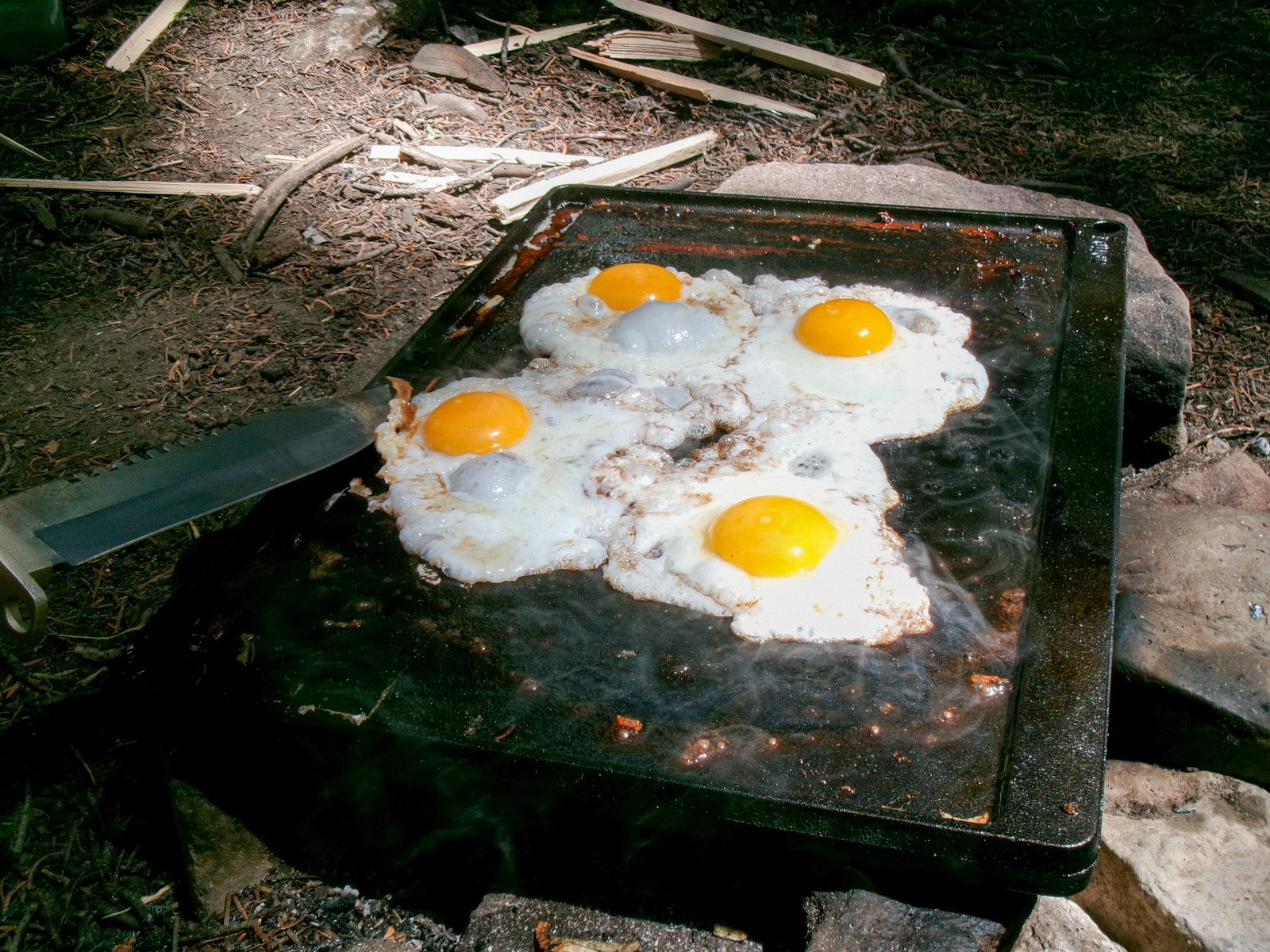
There is a small group of kitchen tools that do one thing so well nothing else compares, and the cast iron griddle is squarely among them. Flat, heavy, blunt and almost indestructible, it is the least glamorous object you will buy for the kitchen and one of the most useful. It gives you a hard, even sear across a broad surface, it holds heat like nothing else, and it will outlast the person who buys it. In a world of gadgets that break, that is a rare and quiet luxury.
Most home cooking fails at the sear. Thin pans lose their heat the moment food touches them, dropping the temperature and steaming what should be browning. A thick slab of cast iron simply does not care. It stores an enormous reserve of heat and returns it steadily, which is exactly what a proper crust requires.
Why the mass matters
The whole case for cast iron rests on thermal mass. When you lay a steak or a fish fillet on a light pan, the metal chills instantly and the food weeps rather than browns. A heavy griddle absorbs that shock without flinching, staying hot enough to drive the browning reactions that make food taste of more than itself. This is the same principle that explains why cast iron outlasts everything else in both durability and performance.
A griddle adds a flat, open surface to that mass, which changes what you can cook. Without high sides trapping steam, moisture escapes and the food browns rather than braises. It is the tool for pancakes and flatbreads, for a full breakfast cooked at once, for smash burgers and for anything you want to char rather than stew. Its Mexican cousin works on the same principle at a lighter weight, and our case for the comal explains why it deserves a place beside the iron. For deeper, faster cooking where food is tossed rather than pressed, the case for the karahi pan makes a natural companion argument.
How it compares to its cousins
A griddle is not the only serious searing surface, and it helps to know where it sits. A carbon steel pan heats faster and weighs less, making it nimbler for tossing, while cast iron holds heat longer and forgives a colder start. Neither replaces the other; a well-equipped kitchen wants both, along with something like a copper saucepan for the delicate, responsive work at the other end of the spectrum. The griddle’s job is brute, even, unwavering heat across a flat plane, and at that job it has no equal.
Buy one good griddle, season it well, and you have bought a searing surface for the rest of your life. Very few things you own will make that claim.
Seasoning and care
The mystique around caring for cast iron is overstated. Seasoning is simply a layer of polymerised oil bonded to the metal, built up through use, that gives a naturally slick, protective surface. You create it by heating thin films of oil onto the iron, and you maintain it by cooking with fat and not scrubbing it back to bare metal.
- Heat the griddle fully before cooking; a cold griddle sticks, a hot one releases.
- Clean it while warm with a stiff brush and hot water, dry it thoroughly, and wipe on a trace of oil.
- Avoid long soaks and harsh detergents, which strip the seasoning you have worked to build.
- Cook fatty things on it early in its life; bacon and burgers season it beautifully.
Treated this way, the surface only improves. A griddle that has cooked a thousand breakfasts is better than a new one, its seasoning deep and glassy. This is the opposite of planned obsolescence, and it is a large part of the appeal.
What a griddle does that a pan cannot
The flat, open surface is not a minor difference; it changes the category of cooking entirely. A pan with sides is built to contain, to hold a sauce or a braise, and those sides trap the steam that food gives off. A griddle has nowhere to trap that moisture, so it escapes, and the food browns instead of stewing in its own juices. This is why a griddle is the right tool for anything you want dry and caramelised at the edges: flatbreads that need to blister, vegetables that should char rather than soften, a piece of fish whose skin must crisp.
The broad surface also lets you cook a great deal at once, and cook it evenly. A full breakfast, several pieces of meat, a batch of pancakes for a table of people, all can go down together on a well-heated griddle without crowding. That capacity, combined with the even heat the mass provides, makes it one of the most sociable tools in the kitchen, the one you reach for when you are cooking for others rather than just for yourself. Few pieces of equipment do so much for so many at a single go. Set one across two burners and you effectively gain a small flat-top grill, the kind that restaurants build whole kitchens around, at a fraction of the cost and with none of the fuss. For anyone who cooks breakfast for a full table, or feeds a crowd on a weekend, that alone justifies the space it takes.
Choosing one worth keeping
Look for solid, heavy construction and a surface that is reasonably smooth. Some griddles are double-sided, flat on one face and ridged on the other for grill marks, which adds versatility. Match the size to your hob so it heats evenly; a griddle that overhangs a small burner will have hot and cold zones that frustrate you. Bare cast iron that you season yourself is cheapest and, to many cooks, most satisfying, though pre-seasoned and enamelled versions save the running-in period.
None of this is complicated, and that is the point. A cast iron griddle is a piece of honest equipment that asks little and gives much, quietly, for decades. It sits at the practical heart of the well-run kitchen we keep returning to across our dining and drinks pages: not a gadget, not a trend, but a tool that will still be searing dinner long after the fashionable pans have been thrown away. Buy well once, look after it modestly, and it will never let you down.
Renée has covered Singapore's restaurants for over a decade, with a soft spot for the kitchens most people walk past.