Why a Good Bench Scraper Earns Its Place
It costs little and does much. The quiet case for the bench scraper, the unglamorous tool that portions dough, clears a board and tidies as you cook.
 By Renée Tan
2 September 2026 · 6 min read
By Renée Tan
2 September 2026 · 6 min read
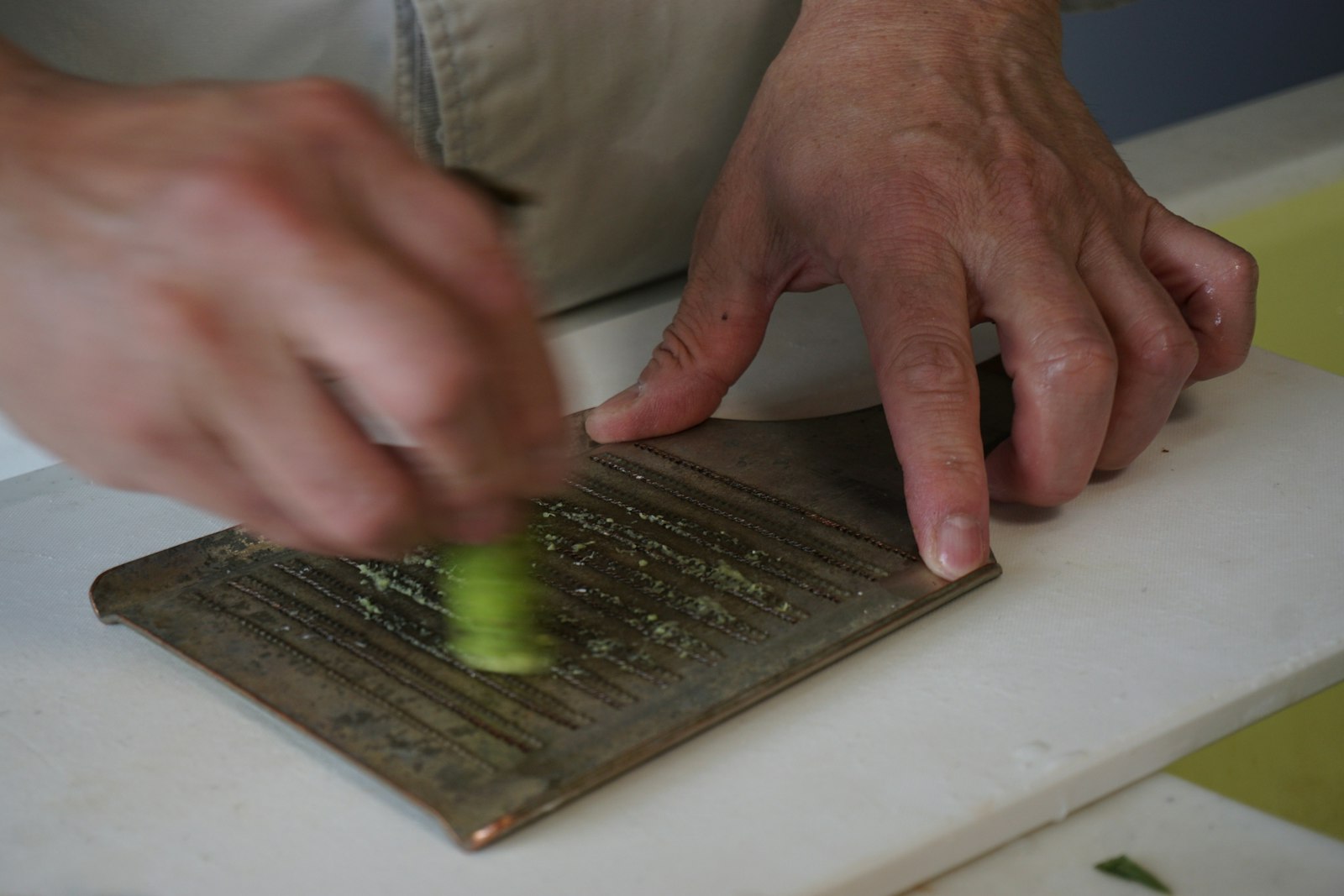
Some kitchen tools announce themselves. The copper pan on its hook, the knife with the pretty handle, the espresso machine gleaming on the counter. The bench scraper is not one of them. It is a plain rectangle of steel with a rolled or wooden handle along one edge, and it costs about as much as a decent sandwich. Yet ask any baker or serious home cook which humble tool they would least like to lose, and this unassuming thing comes up again and again.
Its genius is its simplicity. It does a handful of jobs, does them better than anything else, and asks for nothing in return. Once it lives on your counter, you stop noticing how often you reach for it — which is precisely the mark of a great tool.
The dough it was born for
The bench scraper earns its keep first and most obviously at the bread board. A wet, sticky dough bench scraper is the only civilised way to handle a slack, high-hydration dough that would otherwise cling to your hands and every surface it touches. It lifts, turns and folds the dough cleanly, dividing it into even portions with a single decisive press rather than a ragged tear.
Anyone working through the patient rituals of a sourdough and bread baking practice quickly discovers that the scraper is not optional. Shaping a boule, cutting portions to weight, cleaning the last of a sticky mass from the bench — each of these is transformed from a battle into a clean, controlled motion. It is the difference between fighting your dough and guiding it.
Far more than baking
To think of it only as a baker’s tool is to sell it short. The bench scraper is the fastest, tidiest way to move chopped ingredients from board to pan — scoop, lift, deposit, no rogue onion escaping across the counter. It portions butter, cuts pasta and gnocchi, and squares off the edges of a tray bake. It even doubles as a straight edge for levelling flour or smoothing icing.
Then there is the cleaning, which is where converts are truly made. A single scrape down a wooden board sends flour, trimmings and sticky residue straight into the bin or bowl, leaving the surface ready for the next task. It keeps a working kitchen orderly in a way that a damp cloth never quite manages. This is the same logic of good tools that runs through our thinking on why a good knife changes everything: the right implement does not just perform a task, it changes how you move around the kitchen.
The bench scraper is the tool you did not know you needed until the day you use one, after which cooking without it feels faintly barbaric.
Choosing one that lasts
There is little to go wrong, but a few things separate a good scraper from a frustrating one. Look for a stiff, single piece of stainless steel — flimsy blades flex and lose their authority against a firm dough. A comfortable handle matters, since you will grip it hard when portioning. Some carry a printed measure along one edge, a small convenience for cutting even pieces by eye.
What to look for
- A rigid stainless blade with a clean, straight edge that will not bend under pressure.
- A secure, comfortable handle — rolled steel or riveted wood both work well.
- A generous width, wide enough to lift a good handful of chopped vegetables in one pass.
- Simple construction with no seams or crevices where dough and grime can lodge.
It sits comfortably alongside the other quiet workhorses of a considered kitchen. A cook who values a well-seasoned carbon steel pan for its honesty and longevity will appreciate the same virtues here: no gimmicks, no fuss, just a tool that does one thing supremely well for decades. And if you want to go deeper into the fundamentals, our primer on knife skills and kitchen tools makes the wider case for a small, well-chosen kit.
The luxury of the unremarkable
Metal or plastic, and how to keep one
There are broadly two kinds of bench scraper, and it is worth understanding the difference before you buy. The metal scraper, with its rigid stainless blade, is the workhorse — the tool for portioning firm dough, chopping through soft ingredients and scraping a wooden board clean. The plastic or flexible version, by contrast, has a slight give to it, which makes it better suited to lifting soft dough from a bowl or working batter into the curves of a container. Many serious kitchens keep both, since each does a job the other cannot quite manage.
For most cooks, though, a single good metal scraper covers the great majority of tasks. It is the one to buy first, and if you cook and bake regularly you will find it earns its keep within days. The stiffness that lets it divide dough cleanly is also what makes it such an effective board-clearer, and it doubles happily as a rough-and-ready blade for cutting soft things when a knife would be overkill.
Caring for one asks almost nothing. A stainless blade needs only to be washed and dried after use, and to be kept somewhere it will not knock about against sharp knives. Wooden handles benefit from the occasional wipe with oil to keep them from drying out, much as you would treat a good board or spoon. Beyond that, a bench scraper is essentially indestructible — the rare kitchen tool that will genuinely last a lifetime and never need replacing.
There is a particular satisfaction in the tools that make no claim to glamour and simply work. The bench scraper will never be the centrepiece of a kitchen, and that is rather the point. It is the quiet enabler, the thing that makes the pleasurable jobs easier and the tedious ones quicker. Spend a little on a good one, keep it within arm’s reach, and it will repay you every single day. For more on building a kitchen around a few well-chosen essentials, the rest of our dining and drinks writing returns often to this modest, durable idea of quality.
Renée has covered Singapore's restaurants for over a decade, with a soft spot for the kitchens most people walk past.