Understanding the Design Hotels of Athens
Converted townhouses, rooftop pools framing the Acropolis and a new Greek modernism: how Athens became one of the Mediterranean's most interesting hotel cities.
 By Marcus Lim
1 September 2026 · 6 min read
By Marcus Lim
1 September 2026 · 6 min read
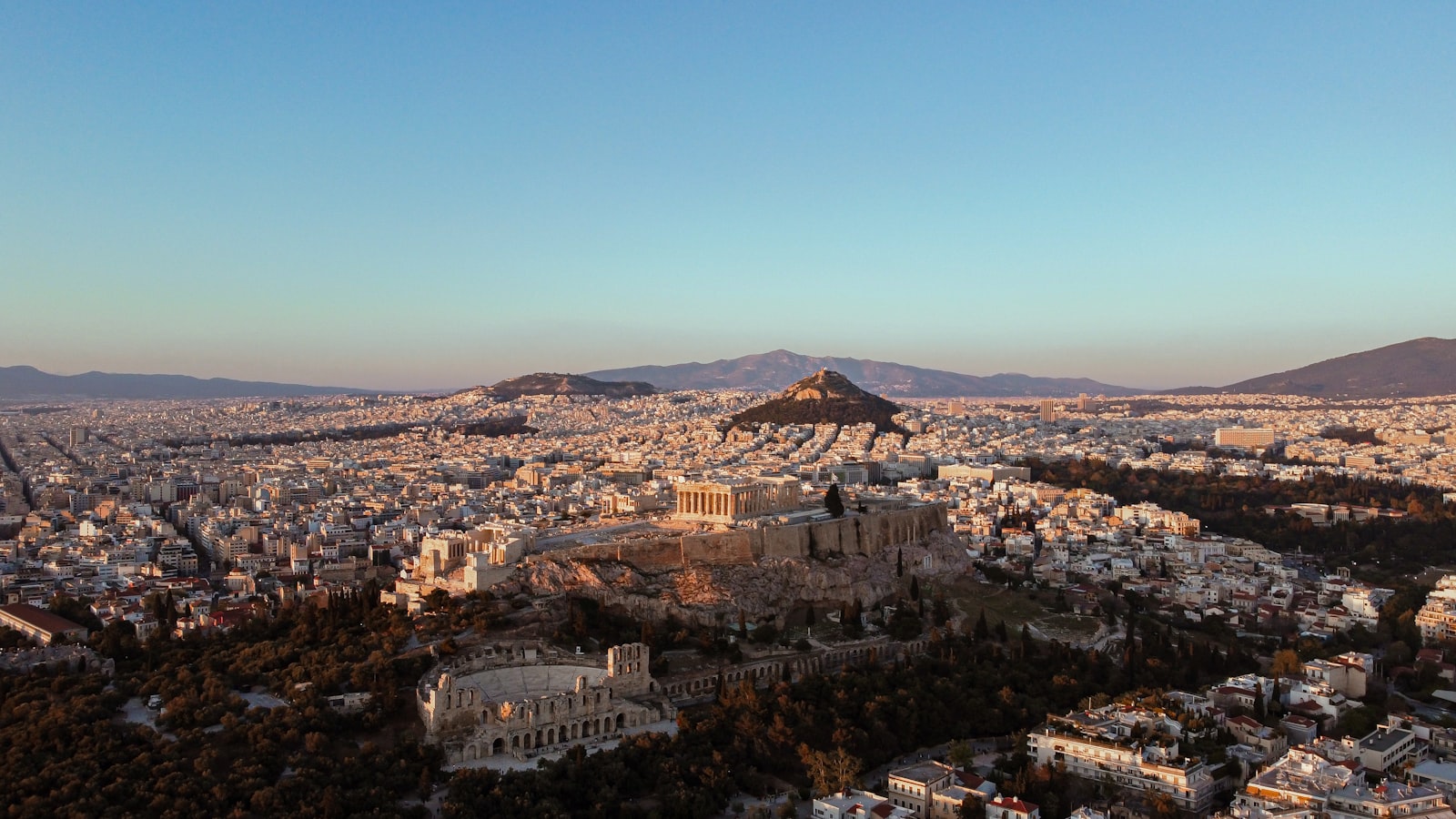
For years Athens was the place you passed through on the way to the islands, a day of ruins and traffic before the ferry. That has changed, and one of the clearest signs of the change is the hotels. In the past decade the Greek capital has grown a genuine design-hotel culture, the kind that gives a city its own reason to visit rather than merely a bed on the way somewhere better. Understanding it means understanding what Athens has been through, and what it has decided to become.
The story starts, as these things often do, with a crisis. When the economy collapsed, buildings emptied, rents fell, and a generation of architects and hoteliers found themselves with beautiful, decaying stock and very little to lose. The result is a city where the interesting places to stay are rarely new towers. They are converted neoclassical townhouses, former offices, tucked-away apartment blocks given a second life by people with taste and time.
The bones of the city
Athens is not a pretty city in the postcard sense, and its best hotels do not pretend otherwise. They work with the raw material: marble, concrete, the hard Mediterranean light, the jumble of the streets. A good Athenian design hotel tends to feel more like a well-edited private home than a branded lobby, with local stone, handwoven textiles and furniture from Greek workshops rather than the international catalogue that makes hotels in a dozen cities interchangeable.
This rootedness is the whole appeal. The materials are the same ones that built the ancient city and the neoclassical one, honed marble and pale plaster and dark timber, handled now with a modern restraint. It is a language that rewards anyone who cares about stone and masonry as the soul of a building, and Athens speaks it fluently because it has never really stopped.
The rooftop is the point
Every serious hotel in the centre has a roof terrace, and the reason is always the same: the Acropolis. To sip something cold at dusk while the floodlights come up on the Parthenon is one of the great free pleasures of travel, and the hotels have organised themselves around delivering it. The best rooftops are not merely bars with a view; they are the emotional centre of the building, where breakfast, drinks and dinner all migrate as the day cools.
You do not so much look at the Acropolis in Athens as live in its company; the whole city arranges itself, hotel by hotel, to keep it in view.
The competition for the best angle has pushed standards up. What was once a plastic-chaired afterthought is now a properly designed space, with planting, good lighting and a serious kitchen. It is worth choosing a hotel for its roof alone, and worth checking exactly which monuments its terrace commands before you book.
Neighbourhoods, not just addresses
Where you stay shapes the trip more than in most cities, because Athens is a collection of villages that happen to share a name. The formerly gritty districts near the old market have become the creative heart, full of galleries, natural-wine bars and the small restaurants that have quietly made the city a serious eating destination. The new confidence of Greek and Mediterranean cooking is on fullest display here, in kitchens that treat the country’s produce with the respect the French long reserved for their own.
Elsewhere the mood shifts. The genteel foothill neighbourhoods offer leafy calm and easy walks to the ancient sites; the port districts are raffish and real. A design hotel in the right area gives you a base that is itself part of the experience, which is the difference between visiting Athens and briefly living in it.
A confident local modernism
What unites the best of these places is a refusal to import. The design vocabulary is drawn from Greek modernism, from the mid-century architects who built the cool, spare villas of the coast, and from an even older tradition of whitewash, shade and courtyard. It shares an instinct with the islands, where the same discipline produces the pared-back beauty of the quieter Cyclades, all cubic forms and blue-shuttered restraint.
This matters because it makes Athens legible as a design city on its own terms rather than a Mediterranean echo of somewhere richer. The hotels are not trying to be Milanese or Parisian. They are trying, successfully, to be Athenian: unfussy, sun-hardened, a little raw, deeply hospitable.
How to choose
Look for the conversions over the new-builds; a hotel in an old townhouse carries a texture no fresh construction can fake. Prioritise the roof, then the neighbourhood, then the room. Do not be seduced by size, because the best of these places are small, often a dozen rooms, run by people who are present. And give the city time, at least three nights, so that the hotel becomes a home rather than a stopover on the way to the ferry. Our broader travel and stays coverage sets out how a city like this rewards the traveller who lingers, and Athens, at last, is a city worth lingering in.
It is worth understanding, too, how recent all of this is. A decade ago the visitor to Athens had a stark choice between grand, dated business hotels and cheap rooms near the station, with almost nothing in between. The design-hotel culture arrived fast, and it arrived because a generation of Greek architects, designers and hoteliers who had trained or worked abroad came home during the lean years and set about remaking the city on their own terms. The result has an energy that more established design cities have long since lost, the sense of a scene still being built rather than merely maintained. You feel it in the willingness to experiment, in the small budgets stretched by ingenuity, in the owners who are often on the front desk. That freshness is part of what makes staying here feel like a discovery rather than a transaction, and it will not last forever, because success tends to smooth away exactly the roughness that makes a place exciting.
The islands will always call, and rightly so. But the capital has quietly earned its own place on the itinerary, and the hotels are the proof. Go for the design, stay for the roof, and let the oldest city in Europe show you how well it has learned to make you comfortable.
Marcus writes on travel and hospitality across Asia, and is happiest a long way from a lobby.