
The Quiet Coast of the Cote Vermeille
Where the Pyrenees tumble into the Mediterranean, terraced vineyards meet red rock and old fishing ports: a guide to the quiet Cote Vermeille of France.
 By Marcus Lim
1 September 2026 · 6 min read
By Marcus Lim
1 September 2026 · 6 min read
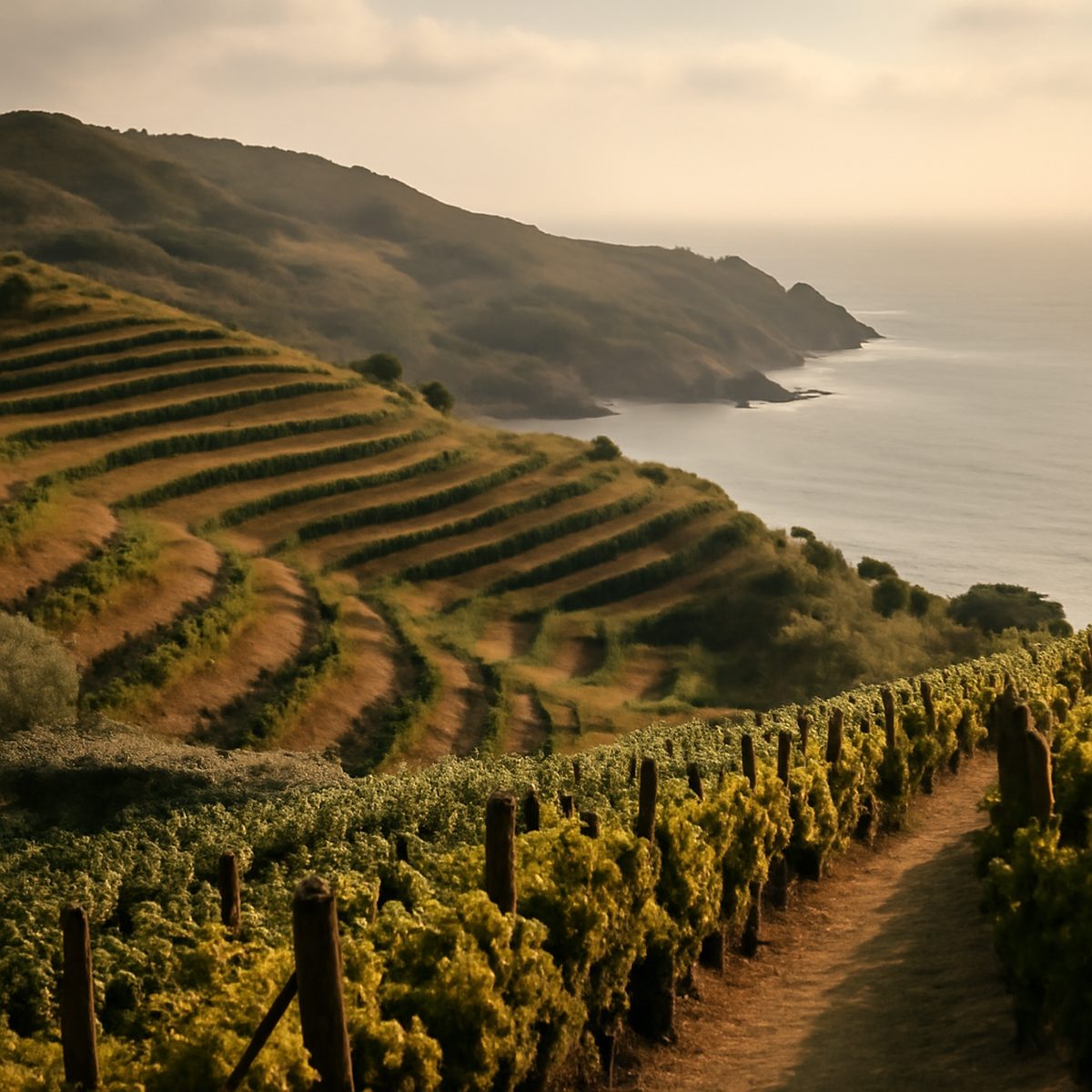
There is a short, dramatic stretch of the French Mediterranean, right down at the southern end where the coast bends towards Spain, that most travellers pass by on their way to somewhere more famous. That is their loss and your gain. The Cote Vermeille, the vermilion coast, is where the last foothills of the Pyrenees tumble straight into the sea, and the result is a landscape quite unlike the flat, developed coast to the north: steep, terraced vineyards falling to the water, small ports tucked into rocky coves, and a warm red-brown rock that gives the coast its name and its glow. It is quieter, wilder and far more characterful than its glossier neighbours, and for the traveller who prefers substance to spectacle, it is a small revelation.
Where mountains meet the sea
What makes the Cote Vermeille special is the collision of landscapes. Almost nowhere else does the Mediterranean meet mountains so abruptly. The Pyrenees run right down to the coast here, so the vineyards are not on gentle slopes but on steep, hand-built stone terraces that climb dizzyingly from the water’s edge, worked by hand because no machine could manage them. The rock is a warm, iron-rich red that seems to hold the sun, and the sea below is a deep clear blue. Stand on a terrace among the vines with the water far below and the mountains behind, and the sense of a landscape pushed up against the sea is extraordinary.
This is a coast to be looked at slowly and walked into. Paths climb through the vineyards and along the cliffs, and the reward for a little effort is a view of terraces, rock and sea that few visitors ever bother to earn. It has the same quiet, rugged appeal as the Costa Brava just across the Spanish border, another coast where the land meets the water in cliffs and coves rather than resorts and promenades.
The old ports
Along this coast sit a handful of small ports and fishing villages, tucked into the few places where the mountains relent enough to allow a harbour. These are working, lived-in places rather than resorts, with brightly painted boats, old churches, waterfront cafés and a slow, southern rhythm. They have long drawn painters, for the light here is famously clear and the colours, the red rock, the blue sea, the coloured boats, are vivid, and something of that artistic association lingers in the villages still.
The pleasure of these ports is their modest, unhurried scale. You come not to be entertained but to sit on a harbour front with a glass of the local wine and a plate of anchovies, to watch the boats and the light, and to wander lanes that have changed little in decades. It is a gentle, human way to spend a day, and it shares its unforced charm with the granite fishing villages of Brittany’s pink granite coast, another corner of France where the sea and the local stone define the whole character of a place.
The Cote Vermeille asks a little of you, a walk up through the terraces, a slower pace, and gives back a coast that its busier neighbours long ago lost.
How to spend a few unhurried days
The Cote Vermeille is small, which is one of its quiet virtues, and the best way to know it is to base yourself in a single port and explore slowly from there rather than dashing along the coast. Take a room in one of the working harbour villages, somewhere with a view of the boats and an easy walk to a café and a place to swim, and let that be your anchor for several days. Spend your mornings walking, up through the vineyard terraces where the paths climb steeply among the vines, or along the cliffs where the red rock meets the blue sea, earning the views that few visitors trouble to reach. Give your afternoons to the water and the shade, a swim from a rocky cove, a long lunch of anchovies and local wine, an hour of doing nothing much at all on the harbour front. Taste the coast’s wines where they are made, on the very terraces that produced them, and eat what the sea and the vines provide. Do this for three or four unhurried days and the Cote Vermeille gives you what its busier neighbours long ago lost: a coast with character, quiet and entirely its own.
The wine of the terraces
You cannot understand this coast without its wine, because the vineyards are the coast, terracing every workable slope. The wines made here are as distinctive as the landscape: warm, sun-drenched reds and, most famously, rich sweet wines made from grapes grown on those steep stone terraces and concentrated by the southern sun. To taste them where they are made, looking out over the very terraces that produced them, is to understand the deep connection between a wine and its place in a way no shop or restaurant can teach.
This makes the Cote Vermeille a natural destination for the traveller who loves to eat and drink locally and to understand where things come from. Spend a few days here and you will drink the coast’s wines, eat its anchovies and its fish, and see the hard, beautiful landscape that produces them, all within a small and walkable stretch of coast. It is the kind of place where a village-based trip, staying put and exploring on foot, pays off richly, in the same way that basing yourself among the linked villages of a coast like the Cinque Terre reveals far more than a hurried drive-through ever could.
Why it rewards the quiet traveller
The Cote Vermeille is not for everyone, and that is exactly why it is worth knowing. It has no great resorts, no long sandy beaches, no nightlife to speak of; what it has is landscape, character, wine and quiet. For the traveller in search of the first three and grateful for the last, it is one of the most rewarding corners of the French coast, precisely because so few people trouble to stop. Base yourself in one of the small ports, walk the terraces, drink the local wine, and let the collision of mountain and sea do its slow work on you. It is the kind of place that stays with you long after the famous coasts have blurred into one. For more quiet coasts and characterful corners worth seeking out, our wider travel and stays writing is the natural place to keep reading.
Marcus writes on travel and hospitality across Asia, and is happiest a long way from a lobby.


