The Philippines, Beyond Boracay
Boracay put the Philippines on the map, but the country's real luxury story is unfolding further south, among islands with barely a road between them.
 By Marcus Lim
29 August 2026 · 6 min read

For a certain generation of traveller, the Philippines began and ended with Boracay — the white sand, the sunset cocktails, the four-kilometre strip that eventually got so crowded the government shut it down for a six-month rehabilitation in 2018. It reopened tidier and more regulated, but the episode did the country’s broader reputation an odd favour: it pushed the more considered end of the travel market to look elsewhere, and elsewhere turned out to be extraordinary.
The Philippines is an archipelago of more than seven thousand islands, and Boracay was always a single, small, over-loved data point within it. The real story, for anyone willing to fly a little further, is playing out across Palawan’s limestone bays and a scattering of private island developments that would not look out of place beside the Maldives or eastern Indonesia.
Palawan’s slow ascent
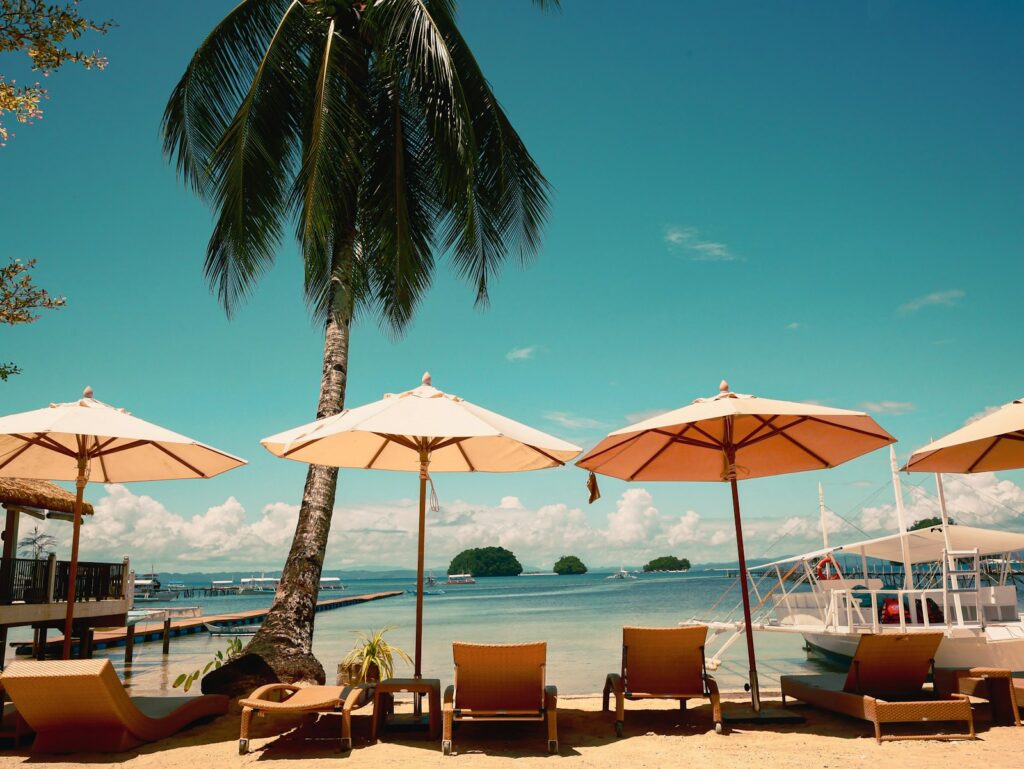
Palawan has spent the last decade quietly becoming the country’s most serious luxury destination, built around a landscape that genuinely earns the comparisons to Halong Bay and Raja Ampat — jagged limestone karsts rising straight out of impossibly clear water, hidden lagoons only reachable by kayak, and a scale of remoteness that makes privacy an operational feature rather than a marketing term. El Nido and Coron anchor the northern end of the province, each with a growing handful of serious eco-resorts built on private or semi-private islands.
What distinguishes the better properties here is restraint in construction — thatched roofs, raised timber walkways, minimal footprint on fragile reef systems — paired with a level of service and kitchen ambition that would surprise anyone still picturing backpacker Boracay. A number of these resorts operate their own marine conservation programmes, which is less a nicety than a necessity given how much of the appeal depends on reef health that mass tourism elsewhere has degraded.
What makes Palawan different
- Access by small plane or long boat transfer only — there is no easy shortcut, and that is largely the point.
- Reef systems still healthy enough for genuinely good snorkelling and diving straight off the beach.
- A near-total absence of large-scale development along much of the coastline, at least for now.
The quieter southern islands
South of Palawan, a handful of smaller archipelagos — Siargao among surfers, the Bohol and Camotes chain for something gentler — offer a version of the Philippines with almost none of the infrastructure of the north, which is either the appeal or the deterrent depending on the traveller. These are destinations for people who want genuinely few other guests, are comfortable with patchy electricity in the more remote spots, and are drawn as much to the diving and the marine life as to the beach itself.
A dive operator who has worked the southern islands for over a decade put the appeal simply: “People come to the Philippines expecting Boracay and leave talking about a reef nobody told them about.” That gap between expectation and discovery is, increasingly, the country’s real selling point.
How it compares to the region’s other archipelagos
The Philippines invites an obvious comparison to the Maldives and the private-island model discussed in beyond the overwater villa cliché, and the comparison mostly holds — limestone in place of coral atolls, denser jungle, and a food culture with far more Spanish and Chinese influence layered through it. It also sits naturally alongside the private-island resorts worth the splurge, since several of Palawan’s newer openings compete directly at that level, at meaningfully lower rates than their Indian Ocean counterparts.
Getting there and getting around
Manila remains the main international gateway, with domestic connections onward to Puerto Princesa or the smaller airstrips serving El Nido directly — worth booking as early as possible given limited daily capacity. Inter-island transfers within Palawan typically involve a mix of small aircraft and boat, and building in a buffer day is wise; weather delays are common and rarely negotiable, however good the resort’s logistics team is.
The dry season from roughly November to May offers the most reliable conditions, with the earlier months carrying the calmest seas for the longer boat transfers between islands. Anyone weighing the Philippines against other Southeast Asian island options should browse the wider selection in Travel & Stays, where several comparable archipelago trips are covered in more depth.
The food worth flying for
The Philippines’ culinary reputation abroad has long trailed its actual quality, overshadowed regionally by louder, more internationally marketed cuisines. That is changing, slowly, as a wave of chefs across Manila and the provinces reclaim and elevate dishes long dismissed as too humble for fine dining — kinilaw, the archipelago’s answer to ceviche, done properly with the day’s catch; slow-cooked adobo variations that differ meaningfully province to province; and a dessert tradition built on coconut, ube and rice that rewards genuine curiosity rather than the tourist-menu shortlist.
Palawan itself, away from the resort kitchens, offers some of the country’s best seafood almost by default given the sheer quality of what comes out of its surrounding waters daily. A grilled fish dinner at a simple beachside restaurant, ordered the way locals order it, frequently outshines anything on a resort’s more elaborate tasting menu, and it is worth building at least one evening of the trip around exactly that kind of unpretentious meal.
A quieter kind of luxury
What ties the Philippines’ best islands together, beyond geography, is a style of luxury built more on remoteness and genuine hospitality than on architectural spectacle. The warmth for which Filipino hospitality is widely known translates directly into how these resorts are run — staff who remember names and preferences after a single conversation, a level of care that feels personal rather than scripted. It is, in its own way, as much a part of the country’s appeal as the limestone islands themselves.
Boracay will likely always be the name most associated with Philippine beaches, and there is nothing wrong with that — it is a genuinely lovely stretch of sand, tidied up considerably since 2018. But the country’s more interesting chapter is being written further south, on islands most of the world has not yet worked out how to pronounce, let alone find on a map.
Marcus writes on travel and hospitality across Asia, and is happiest a long way from a lobby.