The Enduring Style of the Cap-Toe Oxford
The cap-toe oxford is the most formal and enduring of dress shoes. What defines it, how to choose a good pair, and why it remains the benchmark of style.
 By Daniel Koh
2 September 2026 · 8 min read

If a man were to own one pair of good shoes and no others, it should almost certainly be a black cap-toe oxford. No other shoe is so formal, so versatile within its formality, or so completely beyond the reach of fashion. It has looked exactly right for well over a century, from the boardroom to the wedding to the state occasion, and it will look exactly right for a century more. In a world of trends, the cap-toe oxford is a fixed point, and understanding why it endures is a lesson in the nature of true style.
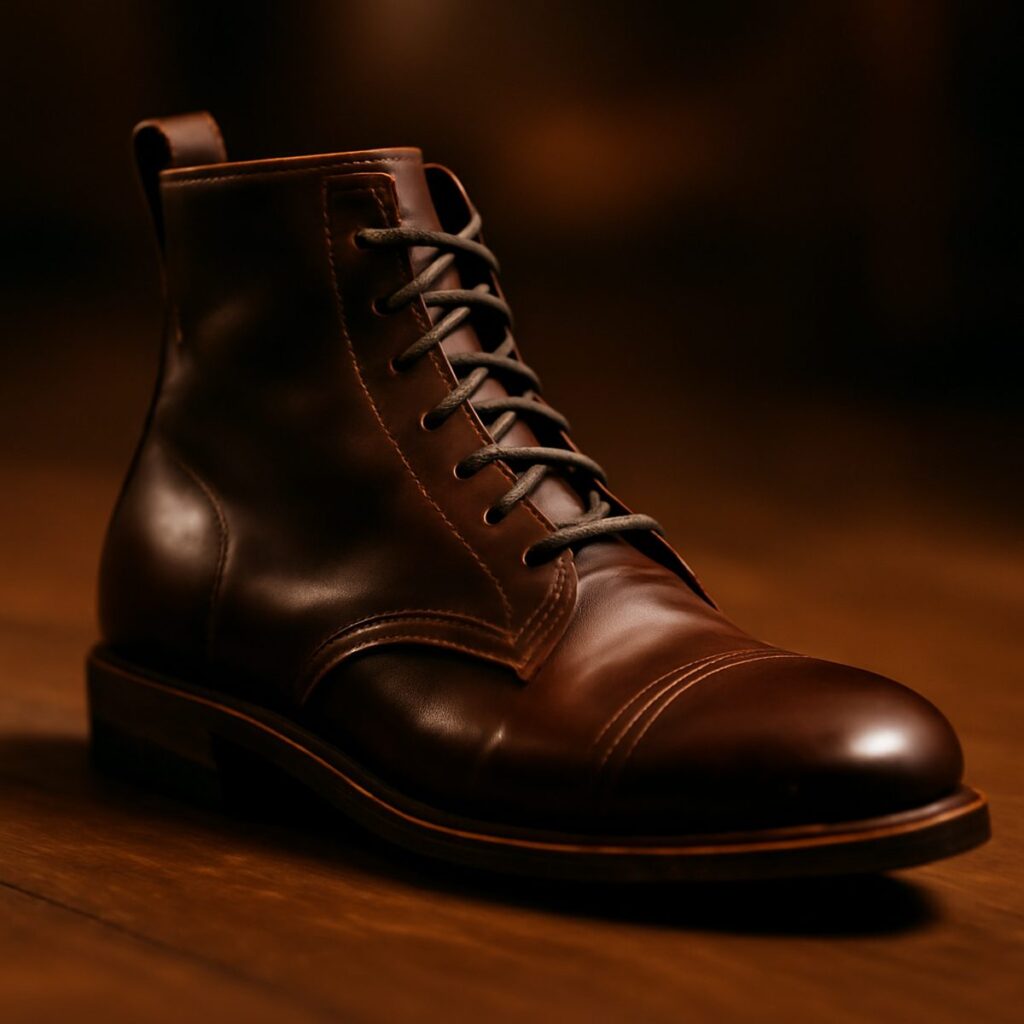
The cap-toe oxford is defined by two features working together: the closed lacing of the oxford, in which the eyelet facings are stitched under the vamp, and the extra piece of leather, the toe cap, stitched across the front of the shoe. The closed lacing gives it its sleek, neat silhouette; the toe cap gives it its clean, architectural line. Together they produce the most refined and formal of all lace-up shoes, and one of the most quietly beautiful objects in a man’s wardrobe.
What defines the oxford
The essential feature of any oxford is its closed lacing. The two flaps that carry the eyelets are sewn underneath the front of the shoe, so that they meet in a neat V and the whole upper reads as one clean, continuous line. This is what gives the oxford its sleek formality and distinguishes it from the more relaxed derby, whose lacing is stitched on top and sits open. It is a small structural difference with a large effect on the shoe’s character. The derby’s more relaxed character is explored further in our piece on the apron-toe derby, the cap-toe oxford’s easier-going counterpart.
The addition of the toe cap refines the form further, breaking up the expanse of the toe with a clean horizontal line. When plain, as in the classic black cap toe, the effect is severe and elegant; the details of that construction, the stitching, the last, the finishing, are what separate a fine shoe from a mediocre one, as explored in any study of the details of a well-made shoe.
The virtue of formality
The cap-toe oxford is the most formal shoe a man can wear short of patent evening pumps, and that formality is its strength. It is the correct shoe for a business suit, a morning coat, a dark lounge suit at a wedding. In black, it is the default footwear for every serious occasion, the shoe that never looks out of place where propriety matters. Nothing else offers quite the same unimpeachable correctness.
Black first, then brown
The black cap-toe oxford is the essential version, but a brown one, in a rich chestnut or dark oak, brings versatility for less formal tailoring. Building outward from the black oxford is the sensible way to assemble proper footwear, the logic set out in any guide to building a shoe wardrobe. Start with the most formal, then add variety as the occasions demand.
Choosing a good pair
A good cap-toe oxford is an investment, and it repays close attention at the point of purchase. Look for a Goodyear-welted or hand-welted construction, which allows the shoe to be resoled and to last for decades. Look for a clean, well-shaped toe cap, neat stitching, and good-quality calf leather that will take a deep polish. Above all, insist on a proper fit, because even the finest shoe is ruined by the wrong size. The same case for considered, traditional pieces extends to the other end of the outfit, as our piece on the return of the flat cap explains.
A well-made oxford is not bought but adopted. Resoled and cared for, it outlasts the fashions that come and go around it, and it looks better for the years.
Such a shoe is made to be maintained, not replaced, and caring for it, the regular polishing, the use of shoe trees, the occasional resoling, is part of the pleasure of owning it. This ethic of care and longevity is the same one that governs the finest footwear of every kind, the philosophy behind the loafers worth resoling for life. Buy once, buy well, and maintain diligently.
The matter of the last
Two cap-toe oxfords can share every feature on paper and still look entirely different, and the reason is the last, the wooden or plastic form around which the shoe is built. The last determines the shape of the toe, the curve of the waist, the height of the instep, everything that gives a shoe its character and its fit. A sleek, elongated last reads as sharp and formal; a rounder one, more traditional and comfortable.
This is why trying shoes on truly matters, and why loyalty to a maker whose last suits your foot is worth cultivating. A beautiful shoe on the wrong last will never feel right, however fine its leather, while a well-shaped last that fits your foot turns a good shoe into one you will reach for daily. The best way to learn is simply to try many and pay attention to which shapes flatter both your foot and your eye.
Why it endures
The cap-toe oxford survives because it solves a problem permanently. It is the definitive formal shoe, and there is simply no need to improve upon it. When the occasion calls for real correctness, a dark suit, a formal event, the sombre solemnity of black tie done right, the black cap-toe oxford is the answer, and it always has been. Fashion cannot touch it because it was never fashionable, only right.
The shoe that completes the suit
A cap-toe oxford does not exist in isolation; it is the foundation on which formal dress is built. A fine dark suit is undermined by the wrong shoe, and elevated by the right one, and nothing finishes tailoring quite like a well-polished black oxford. It is the full stop at the end of a considered outfit, the detail that signals the whole thing has been thought through.
This is why the cap-toe oxford is so often the first serious shoe a man buys. It is the one that unlocks every formal occasion, the shoe that makes the suit make sense. Everything else in a shoe wardrobe, the loafers, the boots, the brown derbies, can be added over time, but the black cap-toe oxford is the non-negotiable starting point, the shoe without which the rest cannot properly function.
To own a fine pair of black cap-toe oxfords is to own a small piece of permanence, a shoe that will serve every formal occasion of your life and look impeccable at each. It asks only that you choose it well and care for it properly, and in return it offers a lifetime of unimpeachable style. That kind of enduring, considered quality is exactly what we champion across our style and watches writing, and few objects embody it more completely than this quiet, perfect shoe.
Frequently asked questions
What is a cap-toe oxford shoe?
A cap-toe oxford is a dress shoe with closed lacing, where the eyelet tabs are stitched under the vamp, and a horizontal seam across the toe forming a cap. It is the most traditional formal shoe for business and ceremonial wear, typically in polished black or dark brown leather.
Is a black cap-toe oxford suitable for every occasion?
It suits almost every formal occasion: business, weddings, funerals, interviews and lounge suit events. It can also work with black tie if highly polished, although patent leather or plain oxfords are more traditional. It is generally too formal for casual clothes such as jeans or chinos.
What is the difference between oxford and derby shoes?
Oxfords have closed lacing, with eyelet tabs sewn beneath the vamp, giving a sleek, formal look. Derbies have open lacing, with tabs sewn on top of the vamp, allowing more adjustability and a slightly more casual appearance. Oxfords are preferred for formal and business wear.
How do you choose a good pair of cap-toe oxfords?
Look for full-grain calf leather, a Goodyear-welted or hand-welted construction that allows resoling, and a last that suits your foot shape. Check that the shoe fits snugly across the instep without pinching. Leather soles are traditional, though rubber soles may suit wet climates and daily commuting.
What colour cap-toe oxford should you buy first?
Black is the most versatile first choice for formal and business wear, appropriate with navy, charcoal and grey suits. Dark brown is a good second pair, suiting slightly less formal settings and lighter suit colours. Burgundy or oxblood adds personality while remaining relatively versatile.
Daniel has spent fifteen years arguing that the best watch is the one you never take off.