The Enduring Appeal of the Alcove Bed
The alcove bed sets sleep into an architectural embrace — panelling, shadow and shelter. A considered look at why the cocooning built-in bed still endures.
 By Priya Nair
1 September 2026 · 6 min read
By Priya Nair
1 September 2026 · 6 min read
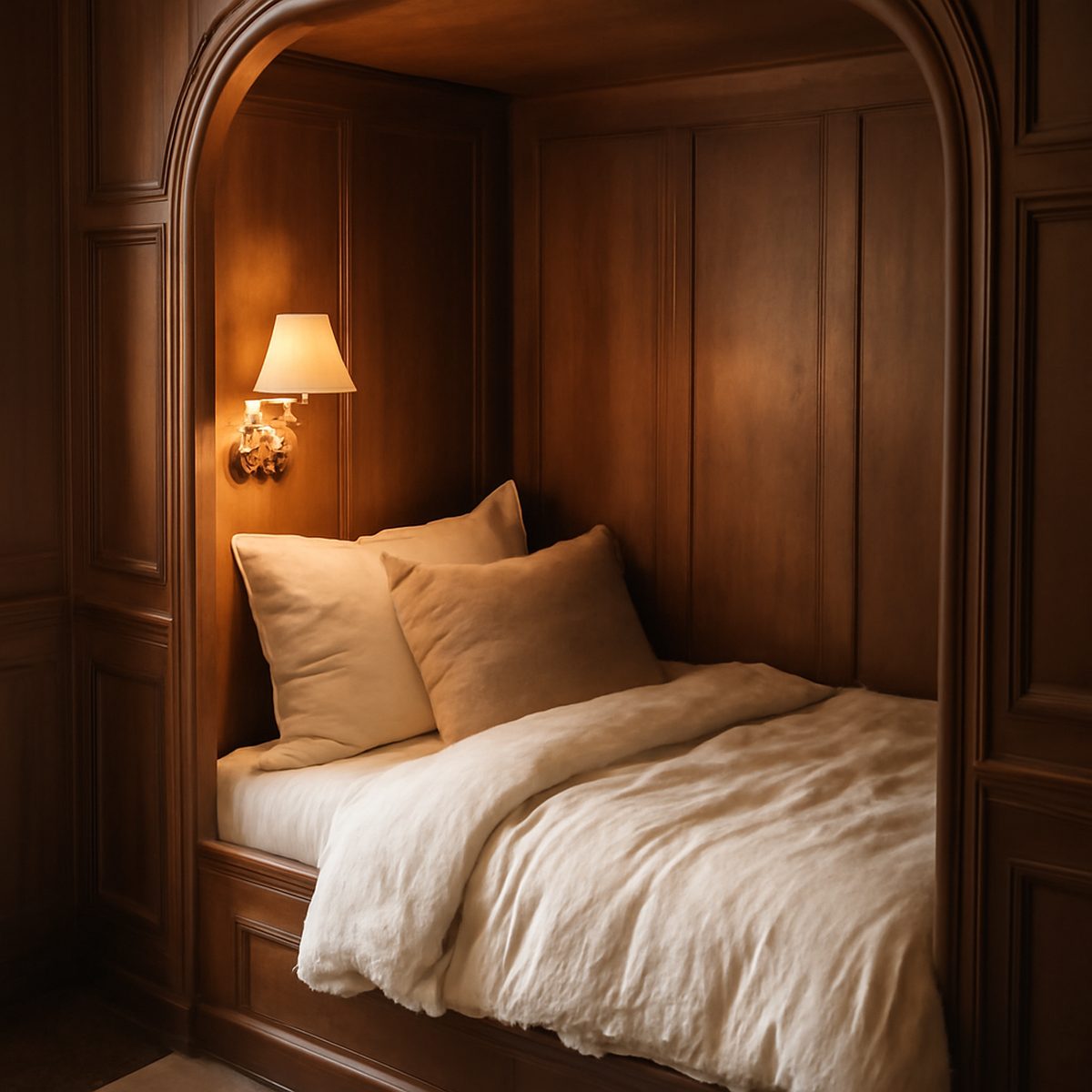
There is a particular kind of comfort that a bed standing alone in the middle of a wall can never quite offer: the comfort of being held. The alcove bed — set into a recess, framed by panelling or masonry, tucked under a lowered ceiling — supplies exactly that. It is one of the oldest ways humans have arranged sleep, found from the box-beds of the Scottish Highlands to the sleeping niches of old Mediterranean farmhouses, and it endures for a reason that has nothing to do with fashion and everything to do with the way we feel when the walls come close.
The instinct for enclosure
We are, at some deep level, creatures who sleep better with our backs protected and a roof close overhead. The open bedroom is a relatively modern luxury; for most of history sleep happened in the smallest, most sheltered space available, and the alcove is the refined descendant of that instinct. Setting a bed into a recess draws on the same primitive satisfaction as a den or a cabin — the sense of a space just large enough for its purpose, with the wider room held at a slight, comforting distance.
This is the psychology that has kept the built-in bed alive across cultures. It is close kin to the box bed, that fully enclosed sleeping cupboard of northern Europe, and it shares a family with every recessed nook we instinctively gravitate toward. The pleasure is architectural before it is decorative: the room offers you a place that is unmistakably, exclusively yours.
How the alcove reshapes a room
Pushing a bed into an alcove does something clever to the rest of the room. By claiming the depth of the recess for sleep, it frees the open floor for everything else — a chair, a desk, a run of wardrobes — so that even a modest bedroom gains a sense of generosity. In a child’s room or a spare room the trick is transformative; in a principal bedroom it lends a layered, considered quality that a freestanding bed against a blank wall can never achieve.
The freestanding bed sits in a room. The alcove bed belongs to it. That difference — of belonging — is the whole appeal.
The recess also creates natural opportunities. The sides of the alcove become shelves for books and a glass of water; the panelling above can carry a reading light; the lowered ceiling makes room overhead for storage. It is the same logic of intelligent, built-in use of odd space that animates the considered alcove and recess throughout a house — the conviction that the corners and set-backs of a room are opportunities, not problems.
Panelling, shadow and light
An alcove bed lives or dies by its detailing, and the materials do most of the work. Panelling is the classic treatment — tongue-and-groove or framed panels lining the recess, painted a shade or two deeper than the surrounding walls to draw the eye in and settle the space into shadow. That deliberate darkening is important; the alcove wants to read as a pocket of calm, not a bright box, and a slightly moody colour inside the recess makes the bed feel cocooned.
Lighting is where the mood is won. Overhead light flattens an alcove; the answer is soft, low, adjustable pools of it — a swing-arm lamp on each side, a strip hidden behind a valance, a candle-warm bulb rather than a cool one. The aim is the same warmth and shelter that a well-lit reading nook achieves, and the two ideas overlap almost entirely with the considered window seat, that other great built-in refuge. Both are about carving out a small, cherished, low-lit place to be still.
Making one work at home
An alcove bed can be built from scratch or conjured from what a room already offers. The essentials are consistent.
- Depth and headroom: the recess needs to swallow the bed comfortably without trapping the sleeper; leave breathing room above the pillows.
- Ventilation and access: a fully enclosed niche needs air and an easy way to change the linen; a three-sided alcove is often the practical sweet spot.
- Built-in storage: use the flanks and the base for drawers and shelves, so the bed earns its footprint twice over.
- Layered bedding: the alcove flatters generous, tactile layers — linen, wool, a heavy throw — far more than a crisply made open bed.
Where a true recess does not exist, one can be suggested with a low bulkhead, a pair of flanking wardrobes and a panelled headboard wall — enough architecture to imply the embrace without rebuilding the room. The canopy achieves something similar in soft form; anyone drawn to the enclosed bed will find a related pleasure in the canopy bed, which wraps the sleeper in fabric rather than joinery.
A room for every age
One of the quiet virtues of the alcove bed is how well it serves across a whole life. For a child, the enclosed bed is a den, a fort, a private world with its own low light and its own rules, and children adore the sense of a burrow that is entirely theirs. For a teenager it becomes a retreat, the recess screening the bed from the rest of a room given over to desk and clutter. For an adult it is a sanctuary, the deliberate darkness and shelter of the alcove making it easier to wind down and sleep. And in a guest room it is pure generosity, offering a visitor not just a bed but a small, defined place of their own within the house. Few pieces of built-in joinery repay their cost across so many stages of a household’s life.
A place, not just a piece
The lasting appeal of the alcove bed is that it turns sleep from an object into a place. A freestanding bed is furniture; an alcove bed is architecture, a small room within a room, a nightly return to somewhere that feels made for you. In an age of open plans and flexible spaces, that specificity — this corner, this shelter, this pocket of shadow — is a rare and quiet luxury. For more of the built-in ideas that make a house feel considered rather than furnished, our Homes & Culture section is where to linger. The best beds do not merely sit in the bedroom. They are held by it.
Priya tours the homes most people only glimpse from the road, and asks how they are really lived in.