The Considered Nursery
The best nurseries are designed to grow with a child, not just welcome one. Here is how to build a nursery with restraint, warmth and real longevity.
 By Priya Nair
29 August 2026 · 6 min read

The instinct with a first nursery is almost always to do too much — a themed mural, a matching set bought entirely from one catalogue, every surface accounted for before the baby has even arrived. The nurseries that age well, by contrast, tend to be the restrained ones: rooms built around good materials, soft light and a handful of pieces that will still make sense when the child is seven, not just seven weeks old.
A considered nursery treats the room as a small, serious design project rather than a decorating exercise, applying many of the same principles that govern the rest of a well-designed home — quality of material, calm of palette, and a clear sense of what each object is actually for.
Design for Year Three, Not Just Week Three
The single most useful discipline in nursery design is resisting anything that will look dated or simply wrong once the baby becomes a toddler. A cot that converts into a toddler bed, storage that will hold books and toys as easily as nappies and muslins, and a palette built on neutrals rather than a specific licensed character all pay off within eighteen months, when the temptation to redo the whole room from scratch would otherwise set in. Furniture in solid wood, chosen for its own quality rather than its nursery branding, tends to transition into a “big kid” room with only minor adjustment — a principle worth carrying over from our broader thinking on a family home that grows with its owners.
Light, Softened but Not Lost
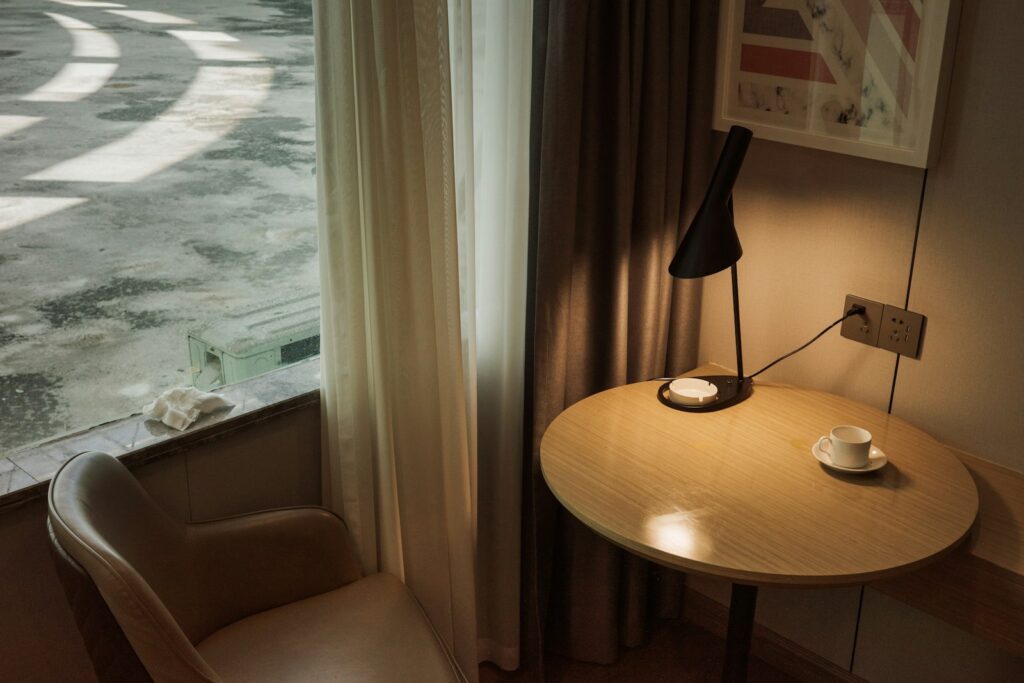
A nursery needs to do two contradictory things well: stay bright and cheerful during the day, and darken effectively for naps and early bedtimes. Layered window treatments solve this better than a single solution — a sheer linen curtain for daytime softness, paired with a proper blackout blind behind it for sleep. This is one of the few rooms in a home where blackout performance genuinely matters more than aesthetics, though the two need not be in conflict; a well-chosen blackout lining sits invisibly behind an attractive curtain rather than replacing it. For the broader principles at play, see our guide to choosing curtains and window dressing.
For evening light, a single dimmable lamp on a warm colour temperature does more for a calm bedtime routine than any amount of overhead lighting, which tends to feel clinical and unhelpfully alerting at exactly the moment a child needs the opposite.
Materials That Are Actually Safe to Live With
Low-VOC paints, solid wood or FSC-certified furniture, and natural fibre rugs and bedding are not simply an aesthetic preference in a nursery — they meaningfully reduce the volume of off-gassing and synthetic materials a very young child is breathing in and lying against for most of the day. This is a room where the usual luxury calculus flips: the most expensive choice is very often also the healthiest one, because natural materials and careful, small-batch manufacturing tend to command a premium precisely because they are harder to produce cheaply.
Storage That Doesn’t Read as Storage
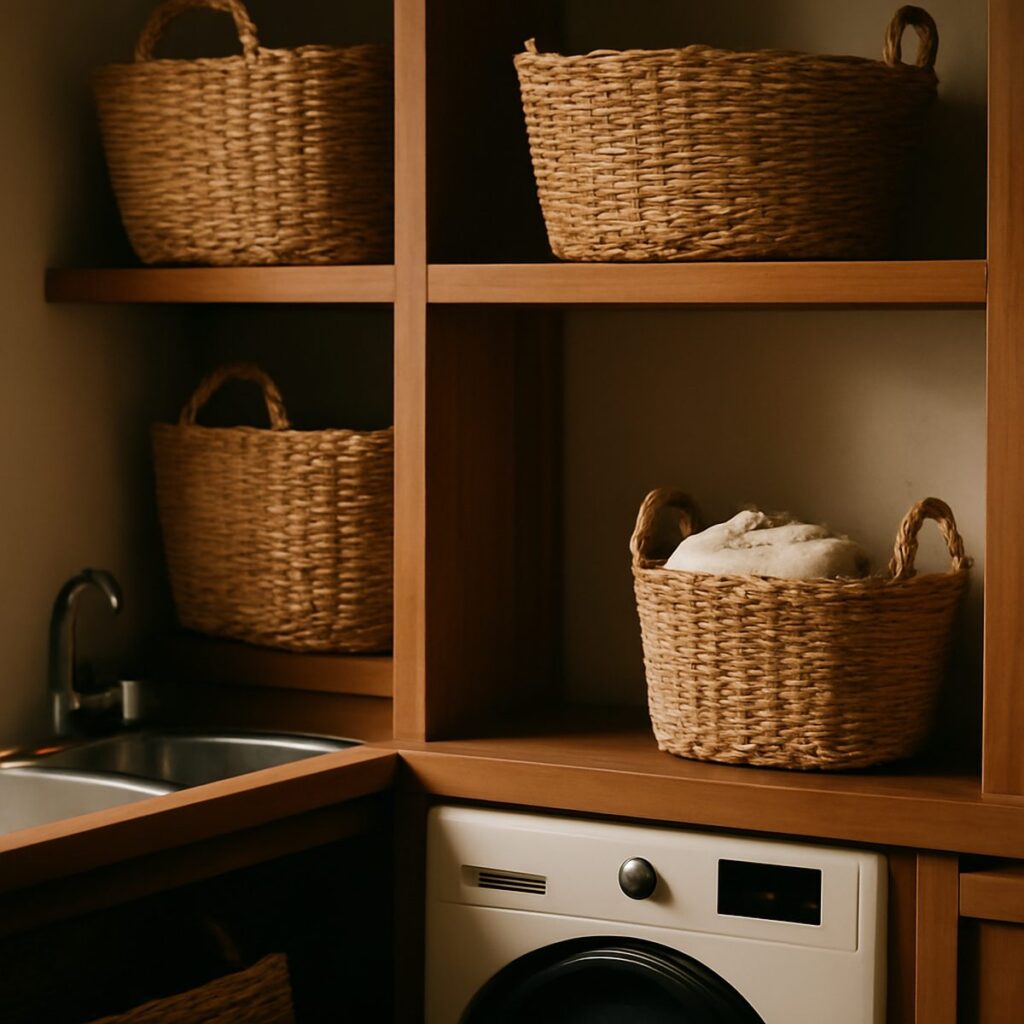
A nursery accumulates possessions faster than almost any other room in a home, and the considered ones hide this accumulation well. Closed cabinetry, woven baskets and a single well-proportioned wardrobe do more for a calm-feeling room than open shelving crowded with toys and equipment, however neatly arranged. Readers renovating more broadly might find useful overlap with our piece on the case for custom built-ins, since a nursery, more than almost any other room, benefits from storage designed specifically for its awkward mix of small and bulky items.
The best nurseries feel less like a themed room and more like a particularly gentle version of the rest of the house.
Practical Details Often Missed
A few unglamorous decisions do a great deal of work in a functioning nursery. Positioning the changing area away from direct window light avoids the awkward glare that makes late-night changes harder than they need to be, while keeping it close enough to the cot that a tired parent is not carrying a startled newborn across a dark room at three in the morning. Power outlets, planned early rather than added as an afterthought, should be positioned to serve a sound or light machine, a lamp and a phone charger without a tangle of extension leads crossing the floor — a genuine safety consideration once a child begins to crawl. Flooring deserves equally practical thought: a soft rug over a durable, easy-to-clean base copes far better with the inevitable spills and later toy-related wear than either surface alone, and it adds a welcome layer of warmth underfoot for barefoot late-night visits.
Ventilation and airflow matter more in Singapore’s climate than in temperate countries, where a nursery might simply rely on a radiator and a closed door. A gentle, quiet fan or a well-positioned air-conditioning vent, angled away from the cot directly, keeps the room comfortable without the noise or draught that can disrupt sleep, and it is worth testing at the exact temperature the room will run overnight before finalising furniture placement.
A Palette That Won’t Need Undoing
Soft, warm neutrals — oat, sand, the palest sage or dusty blue — provide a calm backdrop that suits a newborn and a school-age child equally well, without requiring a repaint in between. Colour and personality are far better introduced through artwork, textiles and toys, all of which can be swapped out as tastes change, rather than through wall colour or fixed cabinetry, which cannot. This restraint is not about suppressing joy in the room — a beautifully chosen mobile or a single striking piece of art can do more for a nursery’s character than an entire themed colour scheme ever could.
A Room Built to Last, Not Just to Charm
A considered nursery understands that its first job is comfort and safety, and its second, quieter job is to still make sense in three years’ time. Choose materials honestly, layer light thoughtfully, and resist the urge to theme the room around a single fleeting idea, and the nursery you build will do far more than welcome a newborn — it will grow alongside the child who lives in it. Continue exploring considered home design in our Homes & Culture section.
Priya tours the homes most people only glimpse from the road, and asks how they are really lived in.