The Case for the Pestle and Mortar
The oldest tool in any kitchen, and still the best at what it does. A pestle and mortar bruises and releases in ways that no spinning blade can quite match.
 By Renée Tan
1 September 2026 · 6 min read
By Renée Tan
1 September 2026 · 6 min read
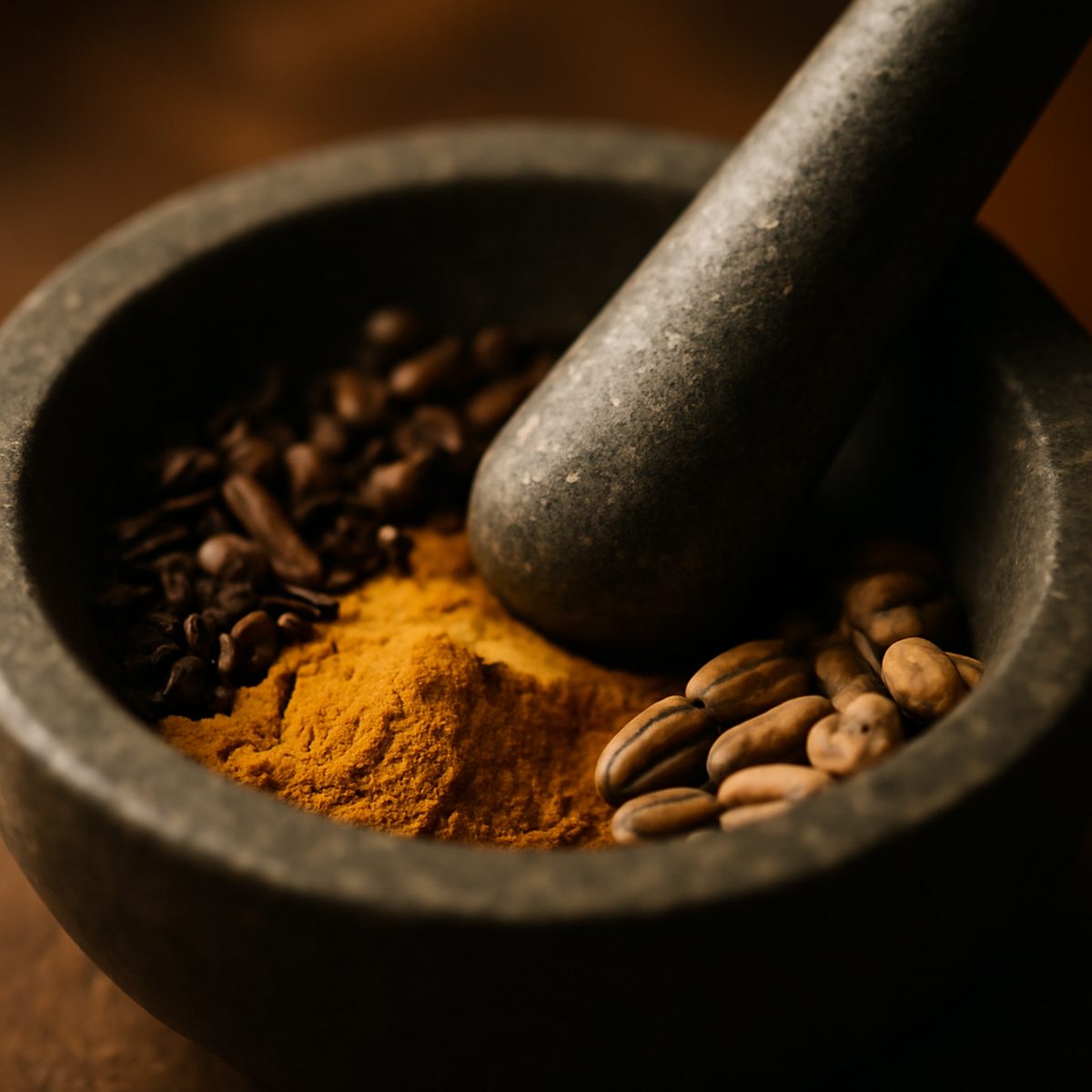
The pestle and mortar is the oldest tool in the kitchen, older than the pan and older than the knife in any recognisable form, and it has survived every wave of gadgetry that promised to replace it. That endurance is not nostalgia. A pestle and mortar does something no machine can quite reproduce, and once you understand what that is, you stop seeing it as a rustic ornament and start seeing it as essential.
A blade cuts, and cutting is not the same as crushing. When you grind a spice or pound a paste in stone, you bruise and tear the ingredients, rupturing cell walls and releasing oils in a way that a spinning blade, for all its speed, cannot match. The result tastes different: rounder, more integrated, more alive. The difference is real, not romantic, and a single side-by-side test will convince the sceptic.
Why crushing beats chopping
Consider a paste of garlic, salt and herbs. In a blender it becomes a wet purée, sharp and slightly bitter, cut cleanly into fragments. In a mortar it becomes something else entirely, a smooth emulsion where the salt acts as an abrasive and the pounding coaxes out flavour rather than merely dividing it. The garlic mellows, the herbs give up their oils, and the paste binds into a single glossy thing.
The same is true of whole spices. Toasting seeds and then crushing them releases aromatics that pre-ground powders lost long ago, which is why serious cooks grind to order. If you care about choosing and using dried spices well, a mortar is the tool that lets you use them at their peak rather than their fade.
The tools it works beside
A mortar does not replace your other equipment; it completes it. There is work best done with a blade, and here a good knife changes everything, giving you clean, precise cuts a mortar never could. There is pepper, where the ritual and consistency of a proper pepper mill earn their place at the table. And there is the deep, layered spice work of a braise or a tagine, where you might grind a paste in stone before it goes anywhere near the tagine pot to cook. Each tool has its province, and the mortar rules the crushing of aromatics.
A blade divides. A pestle releases. Only one of those actions makes the kitchen smell of what you are about to eat.
Choosing the right one
Not all mortars are equal, and the material determines the task. Choose for weight, roughness and size rather than looks alone.
- Granite or hard stone: heavy, rough-textured and the best all-rounder, ideal for spices and pastes that need real grip.
- Ceramic or porcelain: smoother and better for fine grinding, though less forgiving of heavy pounding.
- Wood: gentle and lightweight, suited to delicate herbs but prone to absorbing strong flavours.
Size matters more than people expect. Too small and ingredients leap out with every strike; too large and small quantities rattle uselessly around the base. A medium, heavy granite mortar with an unglazed, textured interior is the one most cooks reach for again and again, and it is the one to buy if you buy only one.
The dishes that depend on it
Some of the world’s most beloved dishes simply cannot be made properly any other way, and to taste them at their best is to understand the mortar’s value at once. A pesto pounded in stone, from which the dish takes its very name, is a different and better thing than a food-processor purée, glossy and emulsified rather than merely chopped. The curry pastes of Southeast Asia, built from lemongrass, galangal, chillies and shrimp paste, release their fragrance only under the sustained pressure of a pestle, which is why cooks there guard their granite mortars so jealously. Mexico has its own volcanic-stone answer to the same problem, and our piece on the case for the molcajete explains why it deserves a place in the kitchen.
Closer to home, a mortar transforms everyday cooking in small ways that add up. A clove of garlic crushed to a paste with salt melts into a dressing rather than floating in harsh fragments. A few toasted spices ground on the spot lift a stew beyond anything a jar of pre-ground powder could manage. Even a compound butter or a rough dip comes together more sweetly when the ingredients have been persuaded rather than chopped. Once you own one and use it, you begin to notice how often a recipe quietly assumes it. The guacamoles and salsas of Mexico take their name and their texture from the volcanic stone mortar in which they are made, and a spice-heavy North African or Indian kitchen without one is hard to imagine at all. Even a simple dish of new potatoes is transformed by a paste of garlic, salt and herbs pounded to smoothness and stirred through while they are still warm. These are not obscure or fussy preparations; they are everyday food that simply happens to depend on a tool most kitchens have forgotten they need.
The pleasure of the ritual
Beyond the results, there is the act itself. Grinding spices by hand is a slow, rhythmic, almost meditative task, and it puts you in contact with your food in a way that pressing a button never will. You smell the aromatics as they release, you feel the paste change texture under your hand, and you learn to judge doneness by touch. That sensory feedback is part of becoming a better cook.
In a kitchen full of things that plug in, whirr and eventually break, the pestle and mortar is refreshingly honest. It has no motor to burn out, no blade to dull beyond repair, and no fashion to fall out of. It will serve your grandchildren as well as it serves you. That quiet permanence, and the better flavour it delivers, is exactly the sort of considered value we champion across our dining and drinks writing. Buy a good heavy one, learn its rhythm, and it will earn its place on the counter for a lifetime and very likely well beyond your own, passed on like the good tool it is.
Renée has covered Singapore's restaurants for over a decade, with a soft spot for the kitchens most people walk past.