
The Best Winter Escapes in Yamanashi
Yamanashi in winter trades the crush of nearby ski resorts for something quieter: still lakes, hot springs and vineyard hills, with Mount Fuji watching over it.
 By Marcus Lim
1 September 2026 · 6 min read
By Marcus Lim
1 September 2026 · 6 min read
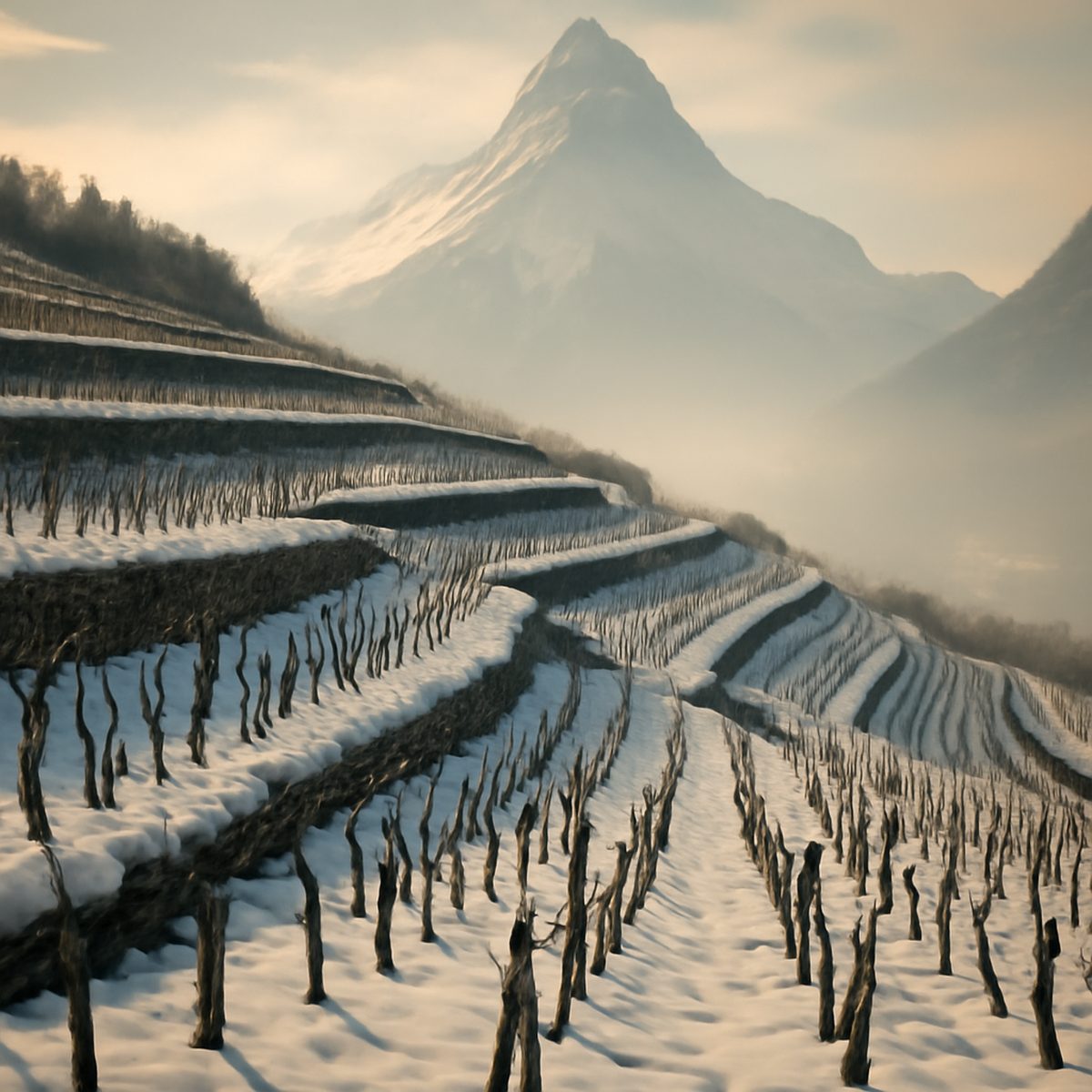
Most winter itineraries to this part of Japan aim straight for the ski slopes further north, treating Yamanashi as little more than a viewing platform for Mount Fuji on the drive through. This does the prefecture a real disservice. Yamanashi in the colder months has a stillness that its more famous, more crowded neighbours have long since traded away: lake towns where the water turns glass-flat and mirrors the mountain on windless mornings, vineyard slopes gone the colour of rust under a dusting of snow, and hot spring towns where the steam rises visibly into freezing air. It rewards travellers willing to slow down rather than tick off a peak.
The lakes, at their most honest
The Fuji Five Lakes region is at its best in winter, when the summer crowds have thinned and the air clears enough for the mountain to appear properly, snow-capped and sharp against a pale sky, rather than hazed over as it often is in warmer months. A composite lakeside ryokan near one of the smaller lakes keeps its onsen bath open to the cold air deliberately, so guests soak in water close to body temperature while their exposed shoulders sting pleasantly in the winter chill, watching Fuji reflected in the lake below. Early morning is the hour to book for; the water is calmest then, and the light hits the mountain’s eastern face first. For snowier, more dramatic winter landscapes on the other side of Honshu, our guide to the best winter escapes in Toyama is worth reading.
Vineyards under snow
Yamanashi is Japan’s most established wine region, its valleys given over to koshu grapes since long before wine tourism became fashionable, and a handful of small producers stay open through winter for tastings that feel considerably less rehearsed than a summer visit. Vines pruned back to bare wood against snow-covered rows make an odd, striking landscape, closer to a European wine region gone quiet for the season than the image most travellers hold of Japan. A composite family estate we visit regularly pours its winter tastings inside a converted barn heated by a single wood stove, which does more for the mood of the afternoon than any amount of styling could.
A short winter itinerary
- Morning at a lakeside onsen with an outdoor bath and a clear Fuji view.
- Midday tasting at a small koshu producer in the Katsunuma valley.
- Afternoon walk through a quiet shrine town before the light drops.
- Evening back at a ryokan for a kaiseki dinner built around winter vegetables and river fish.
Where the crowds go instead
It helps to understand what Yamanashi is not: it is not a ski destination in the way Nagano or Hokkaido are, and travellers chasing serious powder should look elsewhere. Our guides to the best winter escapes in Nagano and the best winter escapes in Hokkaido cover that end of the country’s winter offer in more depth, and both make sensible pairings with a Yamanashi stay for travellers building a longer Japan itinerary, since Nagano in particular sits only a couple of hours away by road. What Yamanashi offers instead is proximity to Tokyo without any of Tokyo’s pace, and a version of winter built around hot water, wine and mountain views rather than lift passes.
“People come for one afternoon on their way to somewhere else,” a composite innkeeper near Lake Kawaguchi told us, “and then they call to extend the booking.”
Illuminations and the quieter light
Winter in Japan also means illumination season, and while the major cities compete for scale and spectacle, several of Yamanashi’s smaller towns run more modest, more atmospheric versions, strings of light wound through orchard trees rather than mounted on office towers. For travellers keen on the bigger, more theatrical displays, our roundup of the best winter illuminations in Japan covers the national picture, but the local versions here are worth seeking out specifically for their scale, or lack of it. A short walk through a lantern-lit orchard on a cold night, breath visible, Fuji occasionally appearing between the trees, is a different kind of pleasure entirely from a city light show.
Getting the timing right
The best window falls from late December through February, after the fierce cold has properly set in and before the plum blossoms of very early spring start pulling attention elsewhere. Weekday visits matter more here than in most of Japan, since Yamanashi draws a heavy weekend crowd from Tokyo, arriving by car for a single night at the lakes before heading home; midweek, the same towns empty out considerably. Travellers building a broader cold-season trip through the country will find plenty more to pair it with in our full Travel & Stays section, but Yamanashi deserves to be treated as more than a drive-through stop on the way to somewhere louder.
The food of a cold valley
Yamanashi’s winter table has its own quiet logic, built around what a mountain valley actually produces rather than what a tourist board wishes it produced. Hoto, a thick, flat-noodle stew simmered with pumpkin, root vegetables and miso, is the dish every local swears by on the coldest nights, and the better versions are found not in the towns nearest the lakes but in small family kitchens further up the valley, where the noodles are still cut by hand. Freshwater fish from the rivers feeding the lakes turn up grilled whole over charcoal at smaller inns, salted plainly enough that the fish itself, not the seasoning, is the point. A composite izakaya near one of the smaller lakes keeps its menu to a handful of dishes through winter, all built around whatever came off the boat or out of the valley that morning, and it is precisely this narrowness of focus that makes the meal memorable.
Getting there without the crowds
Access is part of the appeal. Yamanashi sits close enough to central Tokyo that a direct highway bus or limited express train gets travellers to the lakes in under two hours, considerably faster than the journey to Nagano or Hokkaido, yet it remains conspicuously under-visited by international travellers in winter, most of whom pass straight through en route to a ski resort further north. Renting a car for a couple of days opens up the smaller wine villages and shrine towns that public transport skips entirely, and winter driving conditions here are generally manageable, snow tends to be lighter and less persistent than in the mountains further north, though a sensible traveller still checks conditions before setting out on the smaller mountain roads. For those without a car, several of the lakeside towns run small shuttle loops connecting the main onsen, wineries and viewpoints, slow but perfectly serviceable for a traveller in no particular hurry. Travellers prepared to venture further north for deeper snow may find our guide to winter escapes in Yamagata a rewarding next step.
Marcus writes on travel and hospitality across Asia, and is happiest a long way from a lobby.


