The Best Portuguese Seafood and Marisco
Cataplana, salt cod and char-grilled octopus: the marisqueira-style rooms doing honest Portuguese seafood well, without leaning on cliché or heavy sauce.
 By Renée Tan
31 August 2026 · 6 min read
By Renée Tan
31 August 2026 · 6 min read
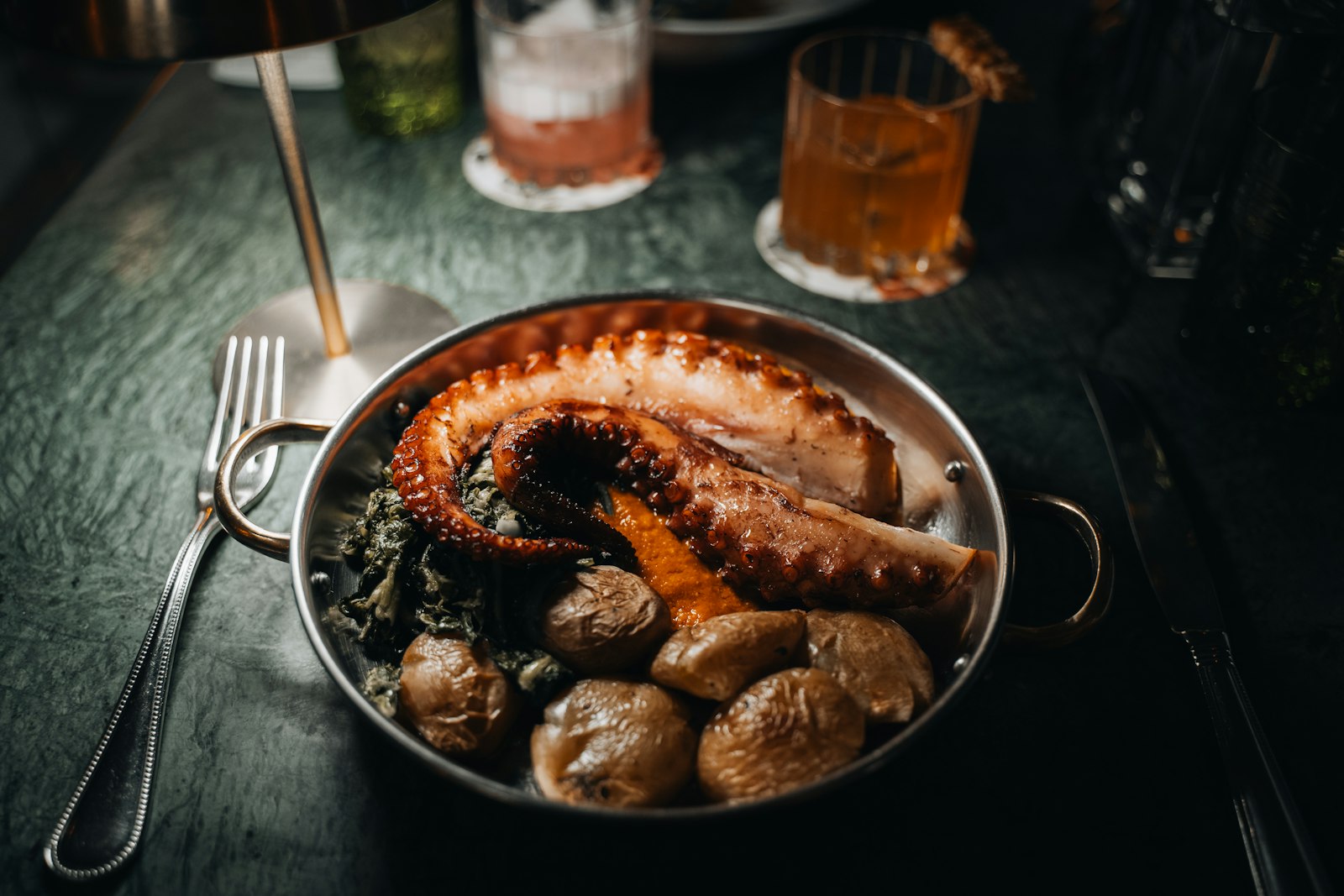
Portuguese seafood cookery is built on a simple premise: buy well, then interfere as little as possible. It is a cuisine forged by proximity to the Atlantic — bacalhau salted for preservation on long voyages, octopus grilled over embers until char and tenderness meet in the same bite, clams steamed in little more than garlic, olive oil and white wine. Transplanted to Singapore, where the seafood arrives fresher than any Iberian fishing village could dream of, that same restraint takes on a slightly different character: less about preservation, more about proving that a lighter hand still produces the most satisfying plate.
The Case for Salt Cod
Bacalhau — dried, salted cod, rehydrated slowly over days — remains the emotional centre of Portuguese cooking, and any kitchen serious about the cuisine treats it with real reverence. Done well, it flakes into soft, almost custardy pieces that hold their own savoury depth even before seasoning; done badly, it tastes of little beyond salt and a faint fishy sourness that no amount of olive oil can rescue. The better local kitchens import their bacalhau from established Portuguese suppliers and soak it meticulously, changing the water two or three times over as many days, a level of patience that shows up unmistakably on the plate.
Bacalhau à Brás — shredded cod folded through matchstick potatoes, egg and onion — is the dish worth using as a benchmark; its simplicity leaves nowhere for a kitchen to hide a poor-quality fish.
Grilled Over Embers
Octopus, grilled Portuguese-style, is perhaps the dish most travellers associate with the cuisine, and for good reason: properly tenderised — traditionally through slow braising before a hard sear, sometimes still beaten against rock in the old coastal manner — it achieves a texture few other preparations manage, char on the outside, yielding almost custard-soft within. A scattering of smoked paprika, a generous pour of good olive oil, and little else is needed. The temptation to over-season is one the better kitchens resist entirely.
- Bacalhau à Brás: shredded cod, potato and egg, a test of ingredient quality above all
- Polvo à lagareiro: whole grilled octopus leg with olive-oil-crushed potatoes
- Amêijoas à Bulhão Pato: clams in garlic, white wine and coriander, simple and unforgiving
The Cataplana Ritual
No discussion of Portuguese seafood is complete without the cataplana — the hinged copper pot, native to the Algarve, that steams shellfish, chourico and tomato together and arrives at the table still sealed, opened with a small flourish that releases a burst of fragrant steam. It is as much theatre as technique, but the technique matters: a proper cataplana seals in enough moisture that the seafood essentially poaches in its own liquor and the rendered fat of the chourico, producing a broth worth mopping up with bread long after the shellfish is gone. Kitchens that use a cheap, poorly sealing pot lose that effect entirely, which is often the clearest tell of how seriously a restaurant takes the format.
“People expect Portuguese food to be heavy,” one chef working in this style said. “It’s the opposite. It’s some of the lightest-handed cooking there is — the sea does most of the work.”
Reading the Room
A genuinely good marisqueira-style room in Singapore tends to source its fish from the same wet-market and auction networks that supply the city’s better seafood restaurants, adapting Iberian technique rather than importing frozen product wholesale to chase authenticity on paper. The better rooms also tend to stock a genuinely Portuguese wine list — vinho verde for the shellfish, a structured Alentejo red for the grilled octopus — rather than defaulting to a generic European list that misses the point of the pairing entirely.
Those drawn to this style of cooking often find natural common ground with the city’s growing appetite for raw bars and seafood towers, another corner of the dining scene built on the same principle: buy the best possible seafood, then get out of its way. And for those who want the fuller Iberian picture rather than the Portuguese slice alone, a wider survey of Portuguese and Iberian dining across the city is worth reading alongside this guide.
The Wine Question
Vinho verde deserves more attention than it usually gets outside Portugal — young, slightly effervescent, low in alcohol, it is built almost precisely for shellfish and grilled fish, cutting through richness without overwhelming delicate flavour. A serious marisqueira-style room will stock at least two or three producers rather than a single token bottle, and will happily pour it slightly colder than a still white would normally be served, which is correct practice rather than an oversight. For the cataplana and heavier grilled dishes, a structured red from the Alentejo or Douro brings enough tannin and fruit to stand up to chourico and smoke without fighting the seafood itself.
Port, meanwhile, remains criminally underused as a pairing outside dessert — a chilled, dry white port with a bowl of grilled prawns is a combination worth requesting even where it does not appear on the printed list, since many of the better rooms keep a bottle behind the bar for exactly this purpose.
What to Order, and What to Skip
Order the bacalhau if the kitchen makes a point of ageing and soaking its own; order the cataplana if the room has invested in proper copper pots rather than a stainless-steel substitute; order the grilled sardines in season, simply salted, if the kitchen is confident enough to serve them without adornment. Skip anything described as “Portuguese-inspired fusion” — the cuisine’s appeal lies almost entirely in its restraint, and dishes that layer on unnecessary flourishes tend to lose exactly what makes the tradition worth seeking out in the first place.
Bread, too, is worth judging closely: a proper Portuguese broa, made from cornmeal and rye, should arrive slightly dense and faintly sweet, ideal for mopping up the last of a cataplana’s broth. A room that serves generic white bread instead has usually cut a corner worth noticing, since bread this central to the meal is rarely an afterthought in a kitchen that takes the rest of the menu seriously. For more of the city’s better dining rooms and bars, the Dining & Drinks section is worth returning to often.
Renée has covered Singapore's restaurants for over a decade, with a soft spot for the kitchens most people walk past.