The Best Pendant Lights for the Kitchen
Few single purchases change a kitchen's character as much as its pendant lights. Here is how to choose the right size, height and style for the room.
 By Priya Nair
30 August 2026 · 6 min read
By Priya Nair
30 August 2026 · 6 min read
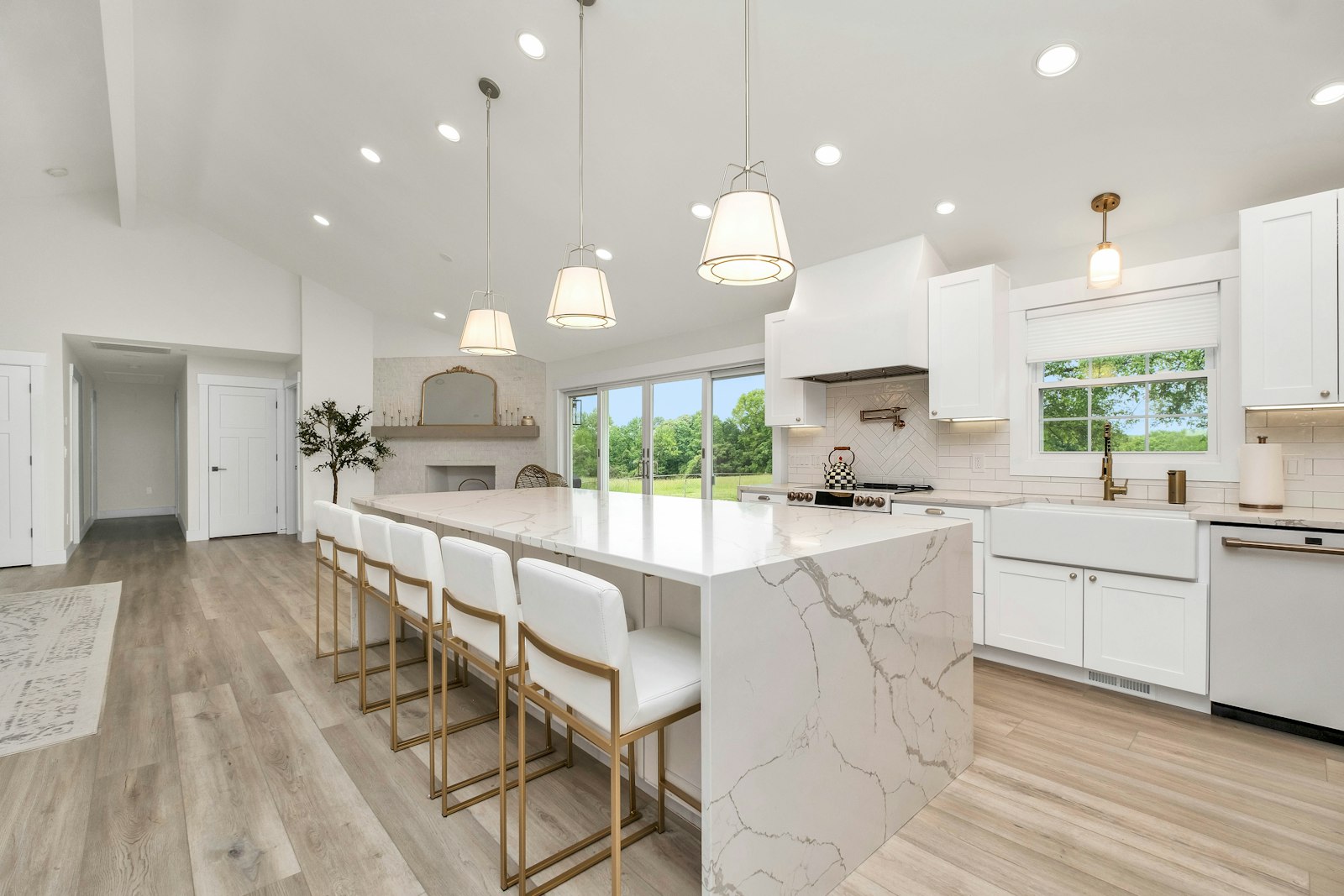
Of all the decisions involved in fitting out a kitchen, the pendant light hanging above the island or the sink is one of the few that does double duty as both essential function and genuine visual statement. Get it right and it becomes the single object that ties the whole room together, glimpsed from the living room, the hallway, even the street outside a well-lit window at night. Get it wrong — too small, too low, the wrong finish against the cabinetry — and it becomes one of those quietly irritating design mistakes that is expensive and disruptive to correct once the electrical work is finished.
Sizing the pendant to the space it lights
The most common mistake with kitchen pendants is choosing fixtures that are simply too small for the space they are meant to anchor, a natural instinct when viewing a single fixture in a showroom rather than imagining it above a full-scale island. A useful rule of thumb is to add the room’s length and width in feet together and use that number, converted to inches, as a rough guide for a single central pendant’s diameter — a genuinely simplified formula, but one that reliably steers people away from undersized fixtures. For a row of multiple pendants over an island, spacing matters as much as individual size; aim for pendants spaced roughly 24 to 30 inches apart, leaving enough visual breathing room between them that the row reads as considered rather than crowded.
Getting the height right
- Over an island: roughly 75 to 80 centimetres above the counter surface, adjusted for the ceiling height and the fixture’s own size.
- Over a dining table nearby: slightly lower, since the eye should not have direct sightline to the bulb while seated.
- In a room with high ceilings: consider a longer drop or multiple tiers rather than simply raising a single small fixture higher, which can leave it looking lost in the space.
- Always check clearance for the tallest household member walking past or reaching across the island underneath.
Choosing a style that will actually last
Pendant lighting trends move faster than almost any other element of kitchen design, which makes it worth choosing a fixture with a genuinely timeless silhouette rather than chasing whatever shape is currently everywhere. A simple dome, a classic glass globe, or a clean cylindrical shade all tend to age better than a highly specific, trend-driven form that can look dated within a few years. Metal finish matters just as much as shape; matching or deliberately contrasting the pendant’s finish with the kitchen’s existing hardware and taps is one of the more effective ways to make the lighting feel like a genuine part of the room’s design rather than an accessory added on afterward, a coordination that runs through layered lighting design more broadly.
Layering pendant light with the rest of the room
A pendant over the island should rarely be the only source of light in a kitchen, however striking it is on its own. Task lighting under cabinets, ambient overhead lighting for general use, and the pendant itself as a focused, decorative source over a specific work or gathering zone together create a kitchen that functions well at every hour and every task, from early morning coffee to a dinner party well after dark. A kitchen lit only by a single statement pendant tends to feel unevenly lit and slightly theatrical rather than genuinely functional, which is worth remembering before committing an entire lighting budget to one dramatic fixture. Choosing a fixture that also complements the island it hangs above in scale and material keeps the whole room feeling like one considered decision rather than several unrelated ones.
“A pendant light is one of the few kitchen decisions people actually notice every single day — it deserves more thought than the tenth cabinet handle sample,” says a Singapore lighting designer who works primarily on residential kitchens.
Dimming, bulb temperature, and the details that affect daily comfort
The fixture itself gets most of the attention, but the bulb inside it does a surprising amount of the actual work in how a kitchen feels through the day. A warm colour temperature, generally somewhere around 2700 to 3000 kelvin, suits most residential kitchens far better than the cooler, bluer light often associated with commercial kitchens, which can make a home kitchen feel clinical rather than inviting, however striking the pendant hanging above it. Fitting the pendant on a dimmer, where the fixture allows it, is one of the more genuinely useful small upgrades available, letting the same light that supports focused meal preparation at full brightness soften considerably for a quiet evening drink at the island afterward.
Multiples versus a single statement piece
Whether to hang a single dramatic pendant or a row of two or three smaller matching ones depends largely on the island’s proportions and the room’s overall character. A long island generally suits a row of two or three pendants better than a single central fixture, which can look stranded and undersized against a generous run of counter. A shorter island or a single sink area, by contrast, often works better with one confident, larger fixture rather than multiples that would feel cramped in a tighter space. Neither approach is inherently superior; the decision should follow the room’s actual proportions rather than whatever look happens to be most photographed at the moment.
A fixture that earns its visibility
Because a kitchen pendant is on display constantly, hanging in clear view whether switched on or off, it rewards more careful selection than almost any other light fixture in the home. Choose the right scale for the space, the right height for genuine daily use, and a finish and silhouette that will still feel considered in a decade rather than dated within two years. Get the sizing, height and bulb temperature right, and a kitchen pendant becomes one of the best-value decisions in the entire renovation, quietly doing its job well every single day for years to come. Explore more considered lighting and kitchen guides across our Homes & Culture section.
Priya tours the homes most people only glimpse from the road, and asks how they are really lived in.