The Best Everyday Jewellery for Men
Men's jewellery has quietly shifted from occasion-only to everyday wear. Here is what earns a permanent place on the wrist and hand, and what to skip.
 By Daniel Koh
30 August 2026 · 6 min read
By Daniel Koh
30 August 2026 · 6 min read
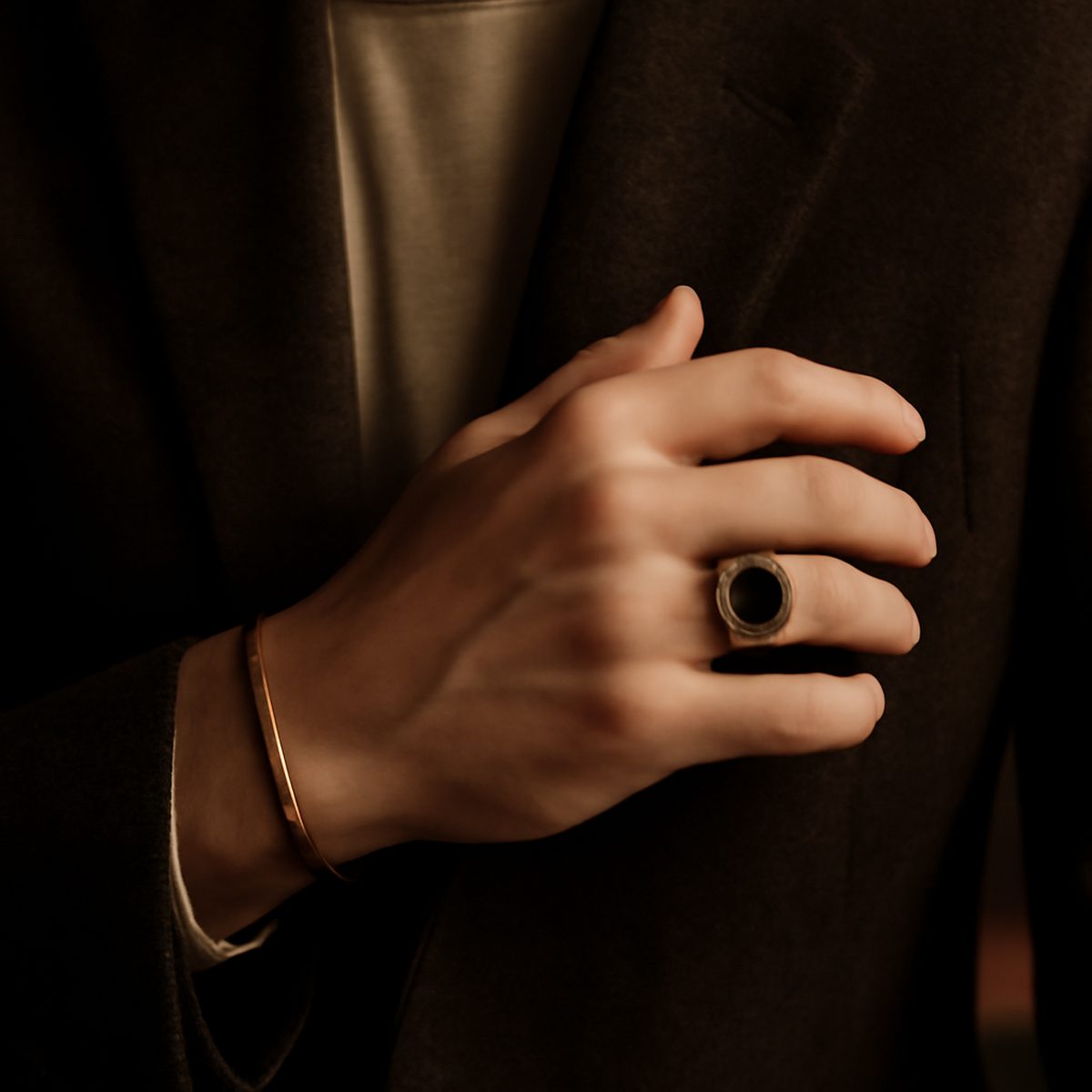
Men’s jewellery has spent decades occupying an awkward, oddly self-conscious middle ground — reserved for special occasions, or avoided entirely by anyone worried about overdoing it. That reticence has genuinely eased in recent years, as a quieter, more considered approach to jewellery has taken hold: fewer pieces, chosen with intent, worn every day rather than saved for a wedding or a black-tie dinner that comes around only once every few years. Done well, it reads as considered rather than showy.
The signet ring’s quiet resurgence
Few pieces have made a stronger comeback than the signet ring, historically used to seal letters and signify family or personal identity, now worn largely for its understated presence rather than any practical function. A well-proportioned signet in a warm gold or brushed silver sits comfortably on the little finger without shouting for attention, and works whether engraved with a personal detail or left plain. Our fuller guide to the signet ring and men’s jewellery covers sizing and engraving considerations in more depth.
Bracelets: less is more
A single, well-made bracelet — a slim metal chain, a woven leather cord, or a simple beaded piece in a considered material — does more for an outfit than a stack of competing pieces ever could. The instinct to layer several bracelets at once tends to read as trying too hard; one thoughtfully chosen piece, worn consistently, builds a stronger personal signature over time than a rotating collection.
Where to start if you own nothing yet
For anyone entirely new to the category, resist the urge to buy several pieces at once. A single well-chosen ring, worn consistently for several months, gives a far clearer sense of personal taste and daily comfort than an entire starter set purchased in one sitting. Jewellery habits form gradually, and the pieces that end up mattering most are usually the ones added slowly, once the first purchase has genuinely earned its permanent place.
A sensible starting collection
- One signet or signature ring, chosen for daily wear rather than special occasions
- One slim bracelet in a metal or material that complements your watch
- A simple chain necklace, if worn at all, kept short enough to sit under a collar without showing
Matching metals with intent
The old rule against mixing gold and silver has softened considerably, but a degree of consistency still reads as more considered than a random assortment. Choosing a dominant metal tone — and matching it loosely across a ring, bracelet and watch — creates a coherent look without requiring every piece to match exactly. This same logic underpins broader thinking on choosing a signature colour across a wardrobe more generally.
“The best men’s jewellery looks like it’s always been there,” a Singapore-based jeweller told us. “Not like it went on this morning.”
Pairing jewellery with a watch, not against it
A watch remains the anchor piece for most men’s daily accessories, which means any other jewellery worn alongside it should complement rather than compete. A gold watch case paired with a silver ring or bracelet tends to look inconsistent rather than deliberately mixed, whereas matching the tones — or choosing pieces in a neutral metal like brushed steel that sits comfortably between the two — resolves the tension without requiring an entirely new jewellery wardrobe each time the watch changes. Anyone building out a rotation across several watches is better served by a small set of neutral-toned jewellery than trying to match every piece to every watch individually.
Necklaces: worn, not seen
A simple chain, worn under rather than over a shirt collar, offers a personal, private form of jewellery that never risks looking excessive in professional settings. This is a meaningfully different choice from a visible pendant or a thicker chain worn deliberately on display, which reads considerably more casual and works better in relaxed, off-duty contexts than in a boardroom.
Understanding materials before buying
Gold, in its various karats and colours, remains the most versatile and durable long-term investment for daily-wear jewellery, though it comes at a higher price point than silver or plated alternatives. For anyone unfamiliar with the specifics, understanding gold: karats, colours, care is worth reading before a first purchase, since karat weight affects both durability and appearance considerably more than most first-time buyers expect.
Caring for daily-wear pieces
Jewellery worn every day accumulates oils, sweat and general wear far faster than pieces reserved for occasions, which means a simple care routine matters more than it might for a jewellery box kept mostly closed. A soft cloth wipe after wearing, occasional professional cleaning, and removing pieces before swimming or intense exercise all extend the life of daily-wear jewellery considerably, particularly for anything set with stones or delicate engraving.
Where to draw the line
Restraint remains the defining principle of considered men’s jewellery, and it is worth resisting the temptation to add pieces simply because they are individually attractive. A useful test before any purchase: would this piece still feel right worn alongside everything else already in rotation, every single day, without drawing attention to itself for the wrong reasons? If the honest answer is that it would compete for attention rather than sit quietly within the existing collection, it is probably better left in the shop, however handsome it looked on its own under the display case lighting.
Buying with longevity in mind
Because these pieces are meant to be worn constantly rather than occasionally, it is worth prioritising build quality over trend — a well-made ring or bracelet in a classic silhouette will still look considered a decade from now, while a fashion-forward piece risks feeling dated far sooner. For guidance on making that kind of considered purchase, how to buy fine jewellery that lasts covers the broader principles worth applying here.
The case for wearing it daily
Everyday jewellery, chosen well and worn consistently over years rather than months, becomes part of a man’s personal signature in a way that occasional pieces never quite manage. It asks for restraint rather than accumulation — a small number of considered pieces, worn with confidence, rather than a drawer full of options saved for a special occasion that rarely comes around often enough to justify the purchase in the first place. For more on building a considered personal style, browse the rest of our Style & Watches coverage.
Daniel has spent fifteen years arguing that the best watch is the one you never take off.