The Art of the Statement Kitchen Dado
A dado rail in the kitchen is a small architectural detail with outsized effect, dividing the wall with genuine intent rather than mere decoration.
 By Priya Nair
1 September 2026 · 6 min read
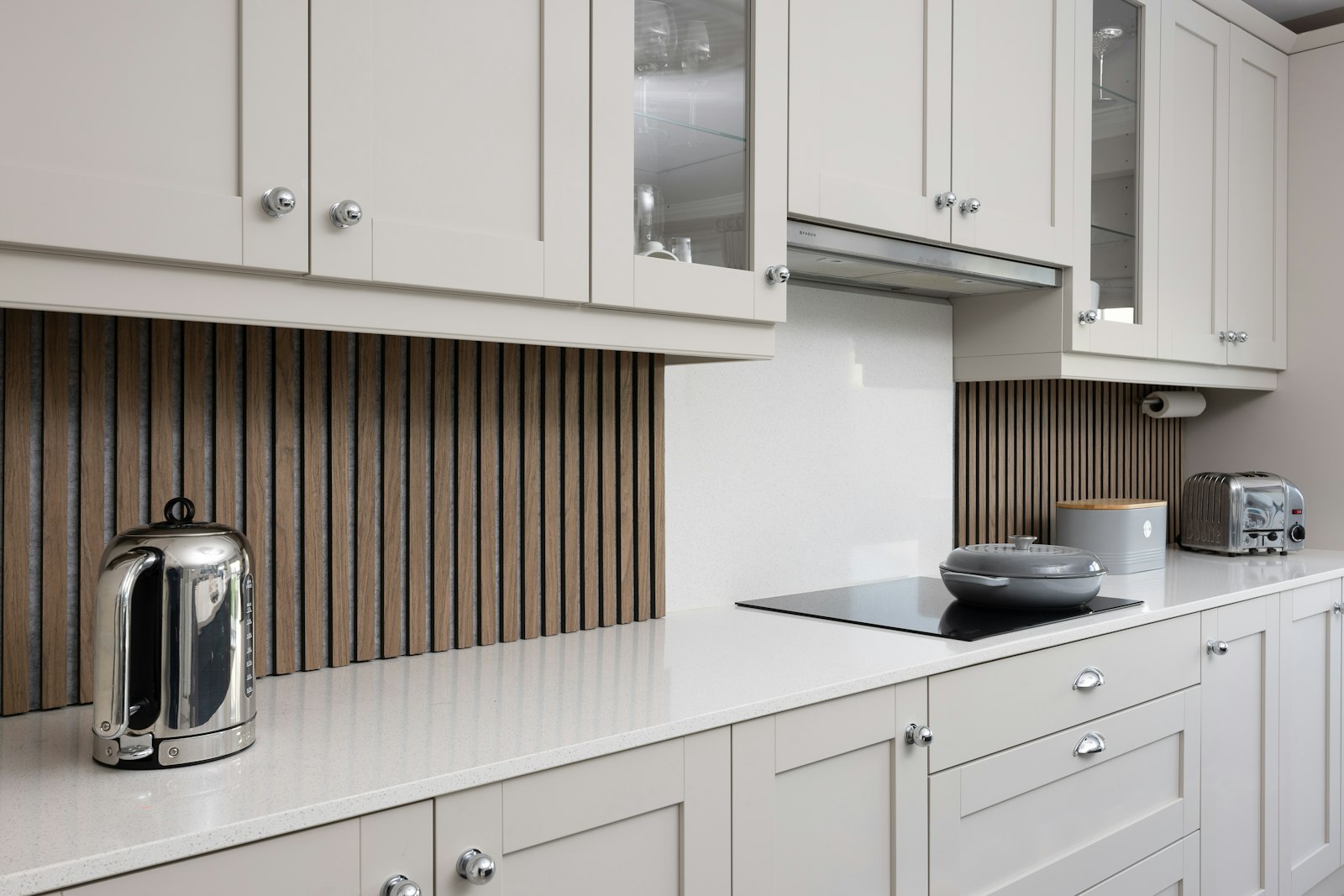
The dado rail has an old-fashioned reputation, associated for many with a particular era of period conversion rather than a genuinely contemporary kitchen. That reputation undersells what the detail can actually do when reconsidered with intent: a well-proportioned dado in a kitchen divides the wall into two zones with entirely different practical demands — a lower zone that takes daily knocks, splashes and spills, and an upper zone that can be treated with a softer, more decorative finish — and does so with a genuine architectural gesture rather than simply a change in paint colour with no physical trim to mark the line.
Why the dado suits a kitchen specifically
Few rooms in a home experience the daily physical wear a kitchen does — chair backs scraping against a wall, splashes from a hob or sink, the general friction of a room used constantly and often by more than one person at once. A dado rail gives a genuine, practical reason to specify a more durable, easily cleaned material below the line — tile, a washable painted finish, timber panelling — while allowing a softer, more decorative treatment above, where daily wear is considerably less of a concern. This practical logic is what separates a well-considered kitchen dado from a purely decorative flourish borrowed from a different kind of room. The same rail has a longer history elsewhere in the home, which our piece on the quiet craft of the dado rail traces in more detail. Higher up the wall, a different rail serves a more decorative purpose, as our piece on the statement kitchen picture rail explains.
Proportion, the detail that decides everything
- A dado set too low reads as an odd, truncated skirting rather than a genuine architectural division.
- Set too high, it can make a kitchen feel visually squeezed, particularly in a room with standard ceiling heights.
- As a general guide, a third of the way up the wall reads as classically proportioned; slightly lower suits a kitchen with lower cabinetry runs.
Material pairings that work
Timber dado rails, painted to match the trim elsewhere in the kitchen or left in a contrasting natural finish, remain the most versatile choice, working equally well against tile, paint or wallpaper above the line. Below the dado, hardwearing materials earn their keep here more than almost anywhere else in a kitchen — tongue-and-groove panelling, painted in a durable eggshell or full-gloss finish, or a run of handmade tile, both give the lower zone genuine resistance to the daily wear a kitchen inflicts. We cover a related zoning logic, applied to a different part of the kitchen wall, in our piece on the statement kitchen frieze, which sits at the opposite end of the wall and works well as a complementary detail to a dado below.
Above the line — where the decoration lives
Once the practical lower zone is settled, the wall above a dado is where a kitchen can afford genuine decorative ambition — a bolder wallpaper, a softer paint colour, even framed art or plates displayed on a shelf running just above the rail. This upper zone is protected, practically speaking, from the splashes and knocks that would rule out such treatments if applied across a full, undivided wall, which is really the whole functional argument for installing a dado in the first place. Our piece on the statement kitchen cabinet trim covers a similar logic of protecting decorative detail through smart material zoning, worth reading alongside this piece for a fuller picture of how trim details work together across a kitchen.
A dado rail should look like it is doing a job, not merely decorating a wall — the best examples make the practical division genuinely legible at a glance.
Colour strategy across the line
A tonal approach — the same colour family above and below the dado, varied only in finish or a shade or two of depth — tends to read as more sophisticated than a strongly contrasting scheme, though a considered contrast can work well in a kitchen aiming for a bolder, more characterful statement. Where a contrast is chosen, keeping the dado rail itself in a neutral tone, rather than matching either the upper or lower colour exactly, gives the eye a clean resting point between the two zones and prevents the wall from feeling visually competitive with the cabinetry and countertops nearby.
Installation notes worth knowing
A dado rail in a kitchen needs to be fitted with genuinely water-resistant materials and sealants, particularly near a sink or hob wall, since the junction between rail and wall is a natural place for moisture to collect if not properly finished. Solid timber, well-primed and sealed on all faces before installation, generally outperforms MDF in a kitchen’s humid, splash-prone environment, even though MDF is the more common and less expensive choice in drier rooms elsewhere in a home. This is a detail worth raising directly with a joiner or decorator familiar with kitchen-specific conditions, similar to the durability considerations discussed in our piece on the statement kitchen corbel, another small architectural detail that performs differently in a kitchen than it would elsewhere in a home.
Reconsidered with genuine intent rather than borrowed wholesale from a period template, a kitchen dado is a detail that earns its place through function as much as looks — a small architectural line that quietly organises how a busy wall actually gets used day to day. For more on the small details that separate a considered kitchen from a merely well-equipped one, browse our full Homes & Culture section.
Working the dado around openings and cabinetry
The trickiest part of specifying a kitchen dado is rarely the straight runs of wall but the junctions — where the rail meets a doorway, a window reveal, or the top of a run of cabinetry that may sit slightly above or below the dado’s intended height. Resolving these junctions cleanly, ideally by aligning the dado height with the top of a nearby cabinet run or a window sill where possible, prevents the rail from looking like it was applied without regard for the room’s existing architecture. A good joiner will typically produce a full elevation drawing before installation specifically to catch these junction problems on paper, rather than discovering them once the rail is half-installed.
A modern reinterpretation
Some of the most successful contemporary kitchen dados dispense with a traditional moulded profile altogether, using instead a simple flush reveal or a change in material with no raised trim at all — a genuinely modern reading of the same zoning logic, suited to kitchens with a more minimalist overall design language. This version still delivers the practical benefit of dividing hardwearing and decorative zones but reads as considerably more contemporary than a classical moulded rail, and is worth discussing explicitly with a designer if the rest of the kitchen leans toward a pared-back aesthetic rather than a more traditional one.
Priya tours the homes most people only glimpse from the road, and asks how they are really lived in.