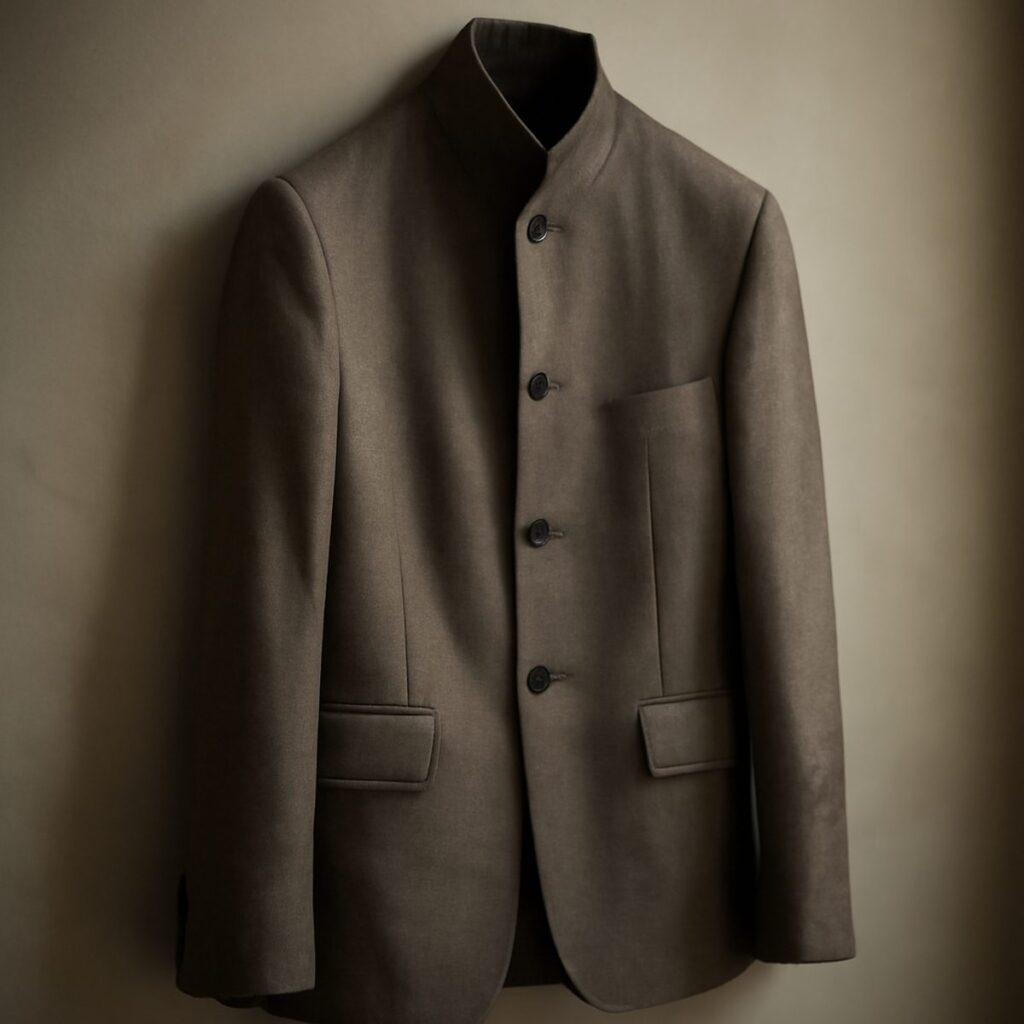
The Art of the Mac and Raincoat
The mac has none of the trench's swagger, and that is precisely its appeal. Here is what makes a proper mackintosh worth owning, decades after it was cut.
 By Daniel Koh
30 August 2026 · 5 min read
By Daniel Koh
30 August 2026 · 5 min read
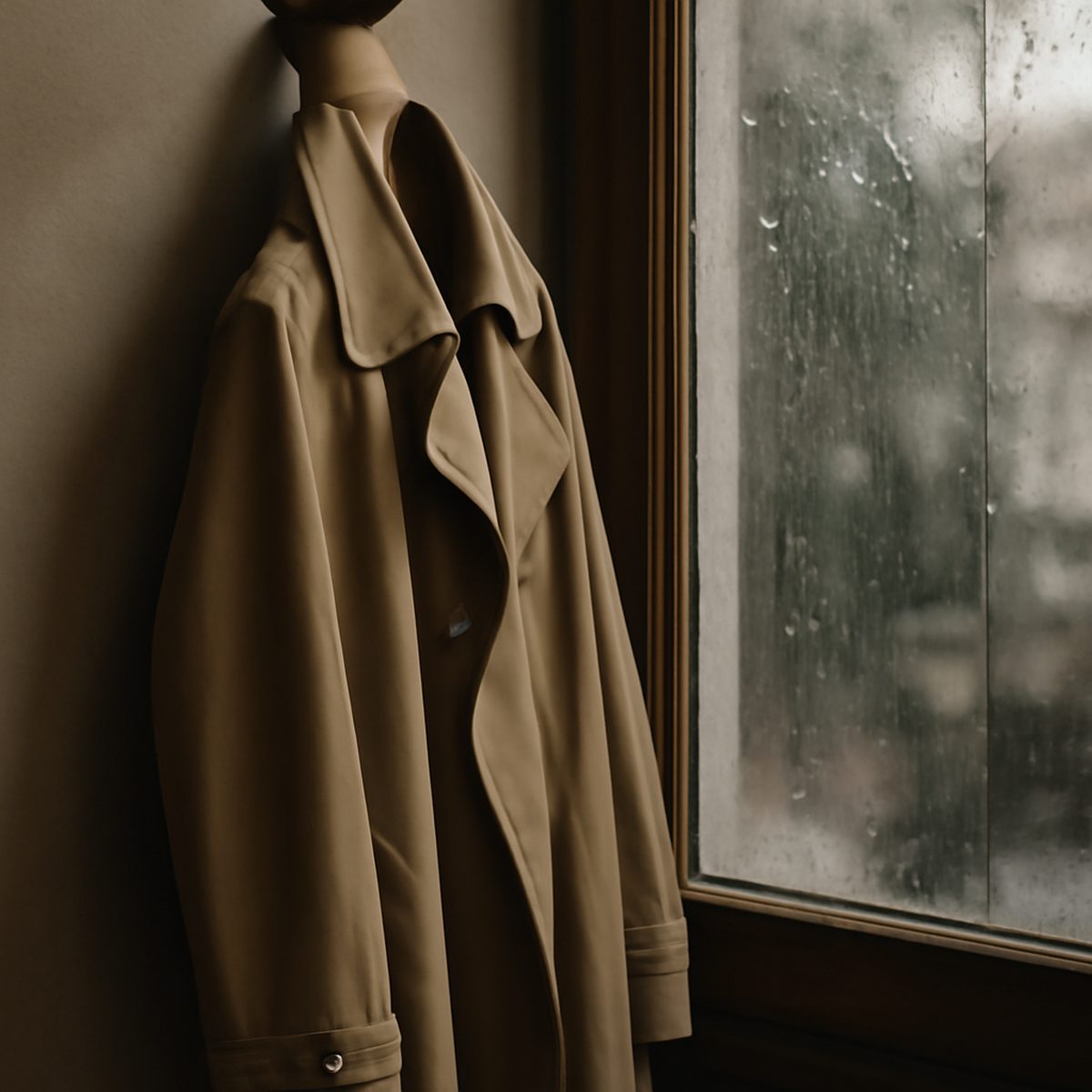
The mackintosh has always suffered slightly for its practicality. Where the trench coat carries a certain cinematic swagger — belted, epauletted, built as much for effect as for weather — the mac has remained determinedly unglamorous, a garment designed first to keep rain off a person’s shoulders and only secondarily to look good doing it. This is, perversely, exactly why it has endured through nearly two centuries of shifting menswear fashion while flashier rainwear has come and gone.
The name itself carries a specific origin worth understanding before anything else. A true mackintosh refers to a particular rubberised or waxed cotton construction developed in the early nineteenth century, distinct from the more general use of “mac” that has since come to describe almost any lightweight raincoat. This distinction matters more to some collectors than others, but it explains why a genuine mackintosh, properly made, behaves so differently on the body than a modern synthetic raincoat — heavier, stiffer at first wear, and considerably more durable over a long ownership.
What separates a proper mac from a cheap raincoat
The single clearest signal of quality in a mackintosh is the seam construction. Because the fabric is rubberised or heavily waxed, standard stitched seams tend to leak at the needle holes over time, which is why the better examples use taped or welded seams instead — a detail invisible on a hanger but immediately apparent the first time the coat is tested in a genuine downpour. A coat that has skipped this step will look identical in a shop but perform very differently after a year of actual Singapore rain.
Fit and proportion
Unlike a trench, which is traditionally cut with room for a belt to define the waist dramatically, a well-made mac tends towards a straighter, less fitted silhouette — closer to a raglan-sleeved overcoat than a tailored garment. This is partly practical, allowing room for a jacket or knitwear underneath without the coat pulling at the shoulders, and partly a matter of the fabric itself, which does not drape or tailor in quite the same forgiving way as wool. Readers building a considered approach to outerwear more broadly may find our piece on the trench coat, reconsidered a useful companion, since the two garments are so often confused for one another despite their genuinely different design intentions.
What to check before buying
- Taped or welded seams rather than simple stitching, particularly at the shoulders and underarms.
- A genuinely breathable lining, since rubberised fabric traps heat considerably more than wool.
- Storm flaps at the shoulders and cuffs, designed to shed water away from the coat’s openings.
- Enough room in the cut to layer a jumper underneath without the coat pulling across the back.
Colour and versatility
The classic mackintosh palette runs narrow by design — tan, olive, navy and black cover the vast majority of well-regarded pieces, and for good reason. These colours age gracefully, hide the inevitable water spotting that rubberised fabric shows more readily than wool, and pair easily with the rest of a considered wardrobe rather than demanding to be built around. A tan mac, in particular, has become something of a quiet signal among those who know to look for it — understated, practical, and entirely uninterested in trend.
“A good mac should look slightly severe on the hanger and completely right once it’s actually raining,” a Singapore-based tailor told us. “That’s the whole point of the garment — it wasn’t designed to be admired standing still.”
Caring for a mackintosh properly
Rubberised and waxed fabrics require a different care regime to conventional wool outerwear, and getting this wrong is the single most common way a good mac is ruined prematurely. Dry cleaning, in particular, can damage the rubberised coating on some constructions, so it is worth checking the specific care instructions for the fabric used rather than assuming standard coat-cleaning rules apply. Waxed versions benefit from periodic re-waxing, a straightforward process that restores water resistance as the original treatment wears thin with use — a small maintenance ritual that, done properly, can extend a coat’s working life by decades rather than years — a rare thing in modern outerwear, where most pieces are simply replaced rather than restored.
Where the mac sits in a working wardrobe
A mackintosh earns its place best as a genuine workhorse rather than an occasional statement piece — the coat reached for on the mornings when the forecast looks uncertain, thrown over office clothes without a second thought, and expected to perform regardless of how it is treated in the interim. This is quite different from how most people treat outerwear generally, where a good coat is often saved for the occasions that seem to deserve it, kept pristine in a wardrobe rather than actually put to work in the weather it was designed for. The mac rewards the opposite instinct: wear it often, let it earn the marks and creases of genuine use, and it will only look better for the wear over time, in the same way a good leather bag or a well-worn pair of boots does. Pairing it with the rest of a considered wardrobe is straightforward precisely because it was never designed to be the centrepiece of an outfit; it sits happily over tailoring, over knitwear, or over the kind of casual weekend layering covered in our guide to wearing tailoring casually.
Why it earns a place in a considered wardrobe
The mackintosh will never carry the trench’s easy glamour, and it was never meant to. Its appeal lies instead in a kind of quiet reliability — a coat that does exactly what it claims to do, built to a standard that rewards genuine use rather than occasional display. For a traveller or commuter facing Singapore’s unpredictable downpours, this practicality is not a compromise on style but, properly understood, a style statement in its own right. For more on building a wardrobe around genuinely useful pieces, browse our guide to building a travel wardrobe, and explore the wider Style & Watches section for further reading.
Daniel has spent fifteen years arguing that the best watch is the one you never take off.