The Art of the Covert Coat
The covert coat began as a practical hunting garment and became one of tailoring's quieter classics, understated, weatherproof and built to be worn hard.
 By Daniel Koh
31 August 2026 · 6 min read
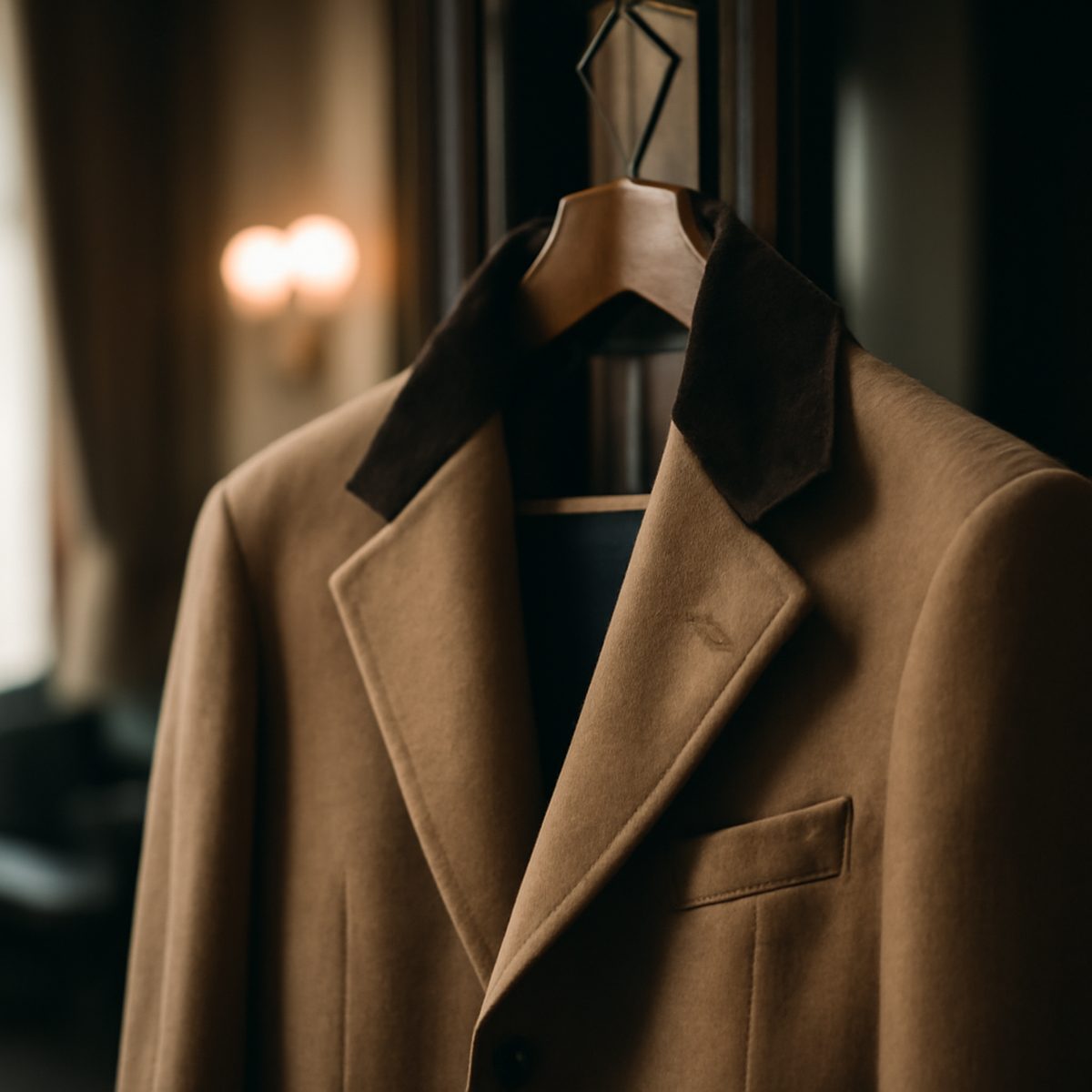
Few coats carry a name as literally descriptive as the covert coat, which takes its title directly from “covert,” the patch of woodland or undergrowth where game birds were traditionally driven for a shoot. It was built for exactly that setting — a hard-wearing, weatherproof overcoat that could take branches, brambles and a full day outdoors without falling apart, and its enduring appeal lies precisely in how well that field-born practicality translates to city wear a century and more later.
The Anatomy of a Covert Coat
A true covert coat is defined by a specific set of construction details, each rooted in its original working purpose rather than decoration. The front closes with a fly front — buttons concealed behind a placket — keeping the closure clean against wind and rain rather than snagging on undergrowth. A velvet collar, traditionally in a contrasting dark shade, protects the coat’s main fabric from the friction of a scarf or turned-up collar, extending the garment’s working life. Most distinctively, the coat carries several rows of stitching around the hem and cuffs — originally a practical reinforcement to prevent fraying on rough terrain, now read almost universally as the coat’s signature decorative detail, even on versions that will never see a hedgerow.
The Fabric, and Why It Matters
Covert cloth itself is a distinctive woven fabric, traditionally a tightly woven wool twill in a warm, mid-brown or fawn tone, sometimes flecked subtly with another colour to add depth and camouflage against autumn woodland. The tight weave was originally intended to shed water and resist tearing, and a genuine covert cloth coat still performs noticeably better against light rain than a more loosely woven wool. Buyers should be wary of coats marketed as “covert style” that use a lighter, softer fabric purely for the silhouette; the cloth is not incidental to the garment’s identity, and a covert coat made from the wrong material loses much of what made the original design worth preserving in the first place.
Covert Coat Versus Its Overcoat Relatives
The covert coat sits within a broader family of English tailored overcoats, each shaped by a slightly different original purpose. Where the chesterfield is formal and urban by design, and the ulster heavier and built for genuinely severe weather, the covert occupies a middle ground — smarter than a barn coat, more relaxed than a chesterfield, and shorter in length than most of its relatives, typically finishing around the top of the thigh rather than the knee. Readers comparing the full family of options should look at our related pieces on the art of the chesterfield coat and the art of the ulster coat, both useful for placing the covert’s particular character in context.
How to Wear One Well
- Over tailoring, where the coat’s structured shoulder and clean line complement a suit without competing with it
- Over casual knitwear, where the velvet collar adds just enough formality to lift the whole outfit
- With sturdy leather boots rather than anything too polished — the coat’s working heritage suits a slightly rugged shoe
- Buttoned to the top in genuinely cold weather; the fly front is most effective fully closed
“It’s meant to look a little worn,” a tailor once told me, running a thumb along a coat’s stitched hem. “A pristine covert coat has usually never been outdoors in its life, which rather misses the point of owning one.”
Buying and Care
A well-made covert coat should last decades with basic care, and the investment is generally worth making in a classic fawn or camel shade rather than a fashion colour that will date faster than the garment itself. Brushing after wear, rather than frequent dry cleaning, keeps the cloth’s natural water resistance intact for longer, and any repairs to the stitched hem detail should go to a tailor experienced with the specific construction rather than a general alterations service. Readers building a wider coat wardrobe around this kind of considered piece should also look at our guide to the quiet power of a great overcoat and, for a country-adjacent alternative in a different register, the best tweed and country jackets. Our broader Style & Watches section carries further detail on building a coat wardrobe with genuine longevity in mind.
What keeps the covert coat relevant, long after its original hunting-field purpose has faded from most owners’ lives, is how honestly its details still work. Nothing about it is purely decorative, even now, and that quiet functional integrity is precisely what separates it from coats designed to merely look the part.
A Note on Colour and Cut Variations
While the traditional fawn shade remains the most historically faithful choice, contemporary versions of the covert coat appear in a wider range of tones, from deep olive through to charcoal and navy, each shifting the coat’s character noticeably. A navy covert coat leans considerably more formal and urban, suiting a city wardrobe built primarily around tailoring, while the traditional fawn retains a warmer, more countryside-adjacent feel even when worn with a full suit. Cut length also varies more than it once did; while the classic covert finishes above the knee, some contemporary interpretations extend the length slightly for a more modern silhouette, a change worth considering carefully against your own height and the rest of your outerwear collection before committing to a purchase. For a darker, more formal take on the town overcoat, the Crombie coat makes a natural point of comparison.
Investment and Longevity
Because the covert coat was built from the outset to withstand genuinely rough use, a well-made example represents unusually good value across its lifetime relative to its initial cost. The dense, tightly woven cloth resists the kind of pilling and thinning that lighter wools develop within a few seasons, and the coat’s relatively simple construction — free of excessive lining or padding — means repairs, when eventually needed, are usually straightforward for a competent tailor. Buyers should view a genuine covert coat less as a seasonal purchase and more as a semi-permanent addition to a considered wardrobe, one that, properly cared for, should comfortably outlast several changes in prevailing menswear trends.
Daniel has spent fifteen years arguing that the best watch is the one you never take off.