The Art of the Considered Home Snug
A snug succeeds or fails on a handful of small decisions. Here is how to design a room a household actually retreats to, rather than merely admires.
 By Priya Nair
30 August 2026 · 6 min read
The snug is one of the few rooms in a home whose entire brief is emotional rather than functional. It does not need to host guests, display a collection, or perform any of the representational work a formal living room typically carries. Its only job is to be the room a household actually wants to retreat into at the end of a day — smaller, quieter, more forgiving than anywhere else in the house. That modest brief is deceptively easy to get wrong, because a snug designed with the same instincts used for a formal living room almost always ends up feeling merely smaller, rather than genuinely cosier.
Scale Is the Whole Design Problem
A snug lives or dies on proportion in a way larger rooms do not. Furniture scaled for a formal living room — tall-backed sofas, oversized coffee tables, generous side tables — overwhelms a smaller space almost immediately, leaving no room to actually move or settle in. The furniture that works in a snug tends to sit lower and closer together than convention suggests: a deep, low sofa rather than a tall one, a smaller ottoman that doubles as both table and extra seating, chairs pulled in close enough that a conversation does not need raised voices to carry across the room.
This deliberately intimate scale is really the opposite instinct to the art of warm minimalism practised at a larger scale elsewhere in a home — where restraint and negative space do much of the work, a snug instead leans into density and closeness as the actual source of its comfort.
Texture Over Colour
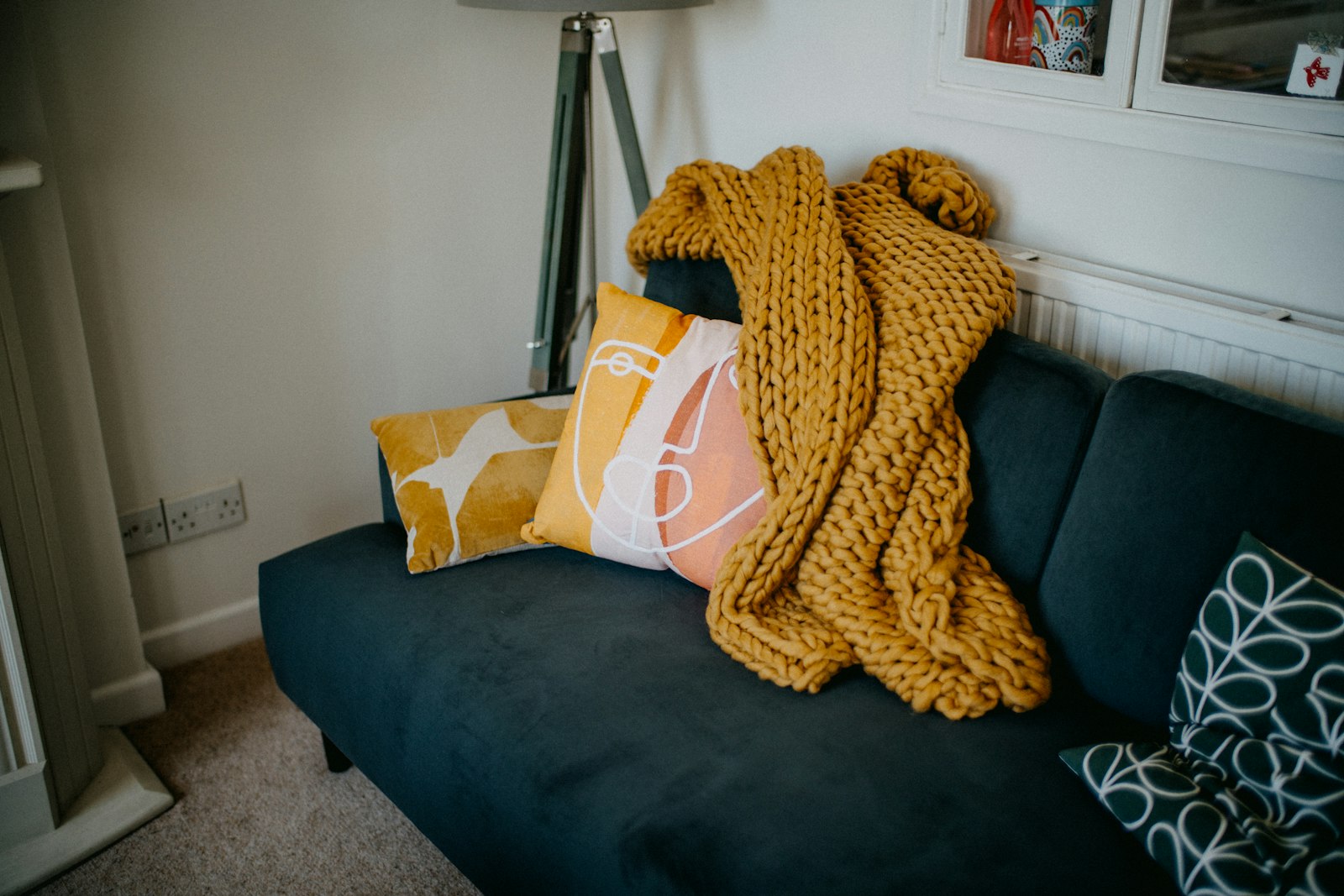
Where a living room might rely on colour or a statement piece to create visual interest, a snug’s warmth comes almost entirely from texture layered generously across every surface. Boucle or wool upholstery, a deep-pile rug rather than a flat weave, cushions and throws in varied but related textures, timber with visible grain rather than a smooth lacquered finish — all of this does the emotional work that in a larger room might be handled by architecture or a striking view. The palette itself can stay genuinely restrained, even entirely tonal, provided the textural variety is doing enough work to keep the room from feeling flat.
This is closely related to the layering approach covered in how to layer textiles for warmth and depth, just applied with more intensity than a larger, more formal room would typically call for.
The Elements a Snug Needs Most
- Seating with genuine depth — a sofa you can curl into, not just sit upright on
- At least two lighting sources at seated eye level, never a single bright overhead fixture
- A surface within arm’s reach of every seat for a cup, a book, or a phone set face down
- A door that closes, since part of a snug’s function is genuine separation from the rest of the household’s noise
Lighting That Never Feels Like a Room You Work In
Perhaps the single most common mistake in snug design is lighting it like any other room — one central source, evenly bright, functional rather than atmospheric. A snug wants pools of warm light rather than even illumination: a table lamp beside each seat, perhaps a floor lamp in a reading corner, all on a warmer colour temperature than the rest of the home. Dimmable fixtures matter more here than almost anywhere else in a house, since a snug’s mood needs to shift easily between a bright enough setting for reading and a dim, near-firelight warmth for an evening spent doing very little at all.
A living room performs for guests. A snug performs for no one. That single difference should shape almost every decision made inside it.
A Fireplace, Real or Otherwise
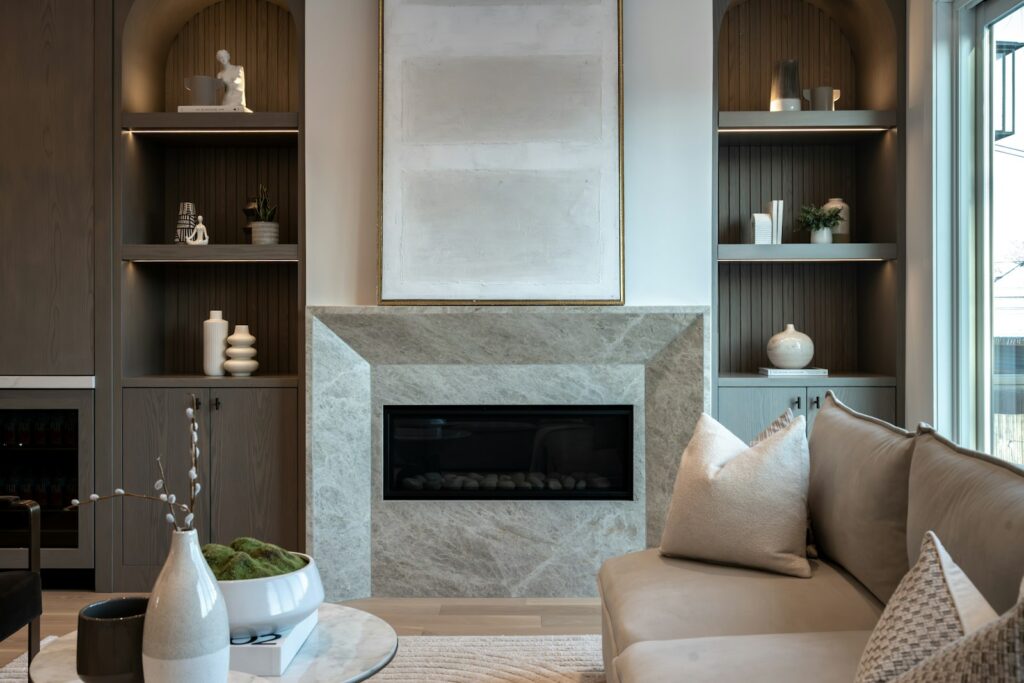
Where a home has the good fortune of a working or decorative fireplace nearby, the snug is very often the room built around it, and for good reason — nothing anchors a small, cosy space quite as effectively. Even without a working fireplace, the same anchoring effect can be achieved with a considered mantel treatment or a single strong architectural focal point that gives the eye somewhere to settle, an idea explored further in the return of the sitting room fireplace, where the fireplace functions as much as a psychological anchor for a room as a source of actual heat.
The Room That Justifies the Rest of the House
It is worth remembering that a snug’s success is measured entirely differently from every other room in a home — not by how it photographs, or how it impresses a visitor on a first tour, but by how often a household genuinely chooses to spend an evening in it over anywhere else available to them. Get the scale, texture and lighting right, and a snug becomes the room a home is quietly built around, even if it is the smallest and least remarkable on any floor plan, a small but telling counterpoint to the grander rooms covered elsewhere across Homes & Culture.
Sound Matters as Much as Sight
An often overlooked element of a genuinely successful snug is how it handles sound, not just light and texture. A room lined with hard surfaces, however beautifully finished, can feel oddly unsettling to relax in, since sound bounces and carries in a way that keeps the nervous system faintly alert even when everything visually reads as calm. Soft furnishing does double duty here — the same deep-pile rug, upholstered seating and layered cushions that create visual warmth also absorb sound, giving the room a genuinely hushed, cocooned quality that a harder-surfaced space simply cannot replicate regardless of how well it is lit or furnished. Where books are the main event, the return of the snug library shows how the same hushed quality can be built around a reading collection.
A door that closes properly, ideally with a reasonably solid core rather than a hollow one, does more for a snug’s sense of retreat than most households anticipate before living with the room. It is the difference between a space that merely looks separate from the rest of the home and one that genuinely feels acoustically apart from it, which matters considerably more than it sounds once a household has actually experienced both versions side by side.
Priya tours the homes most people only glimpse from the road, and asks how they are really lived in.