Inside Singapore’s Most Ambitious New Tasting Menu
Eighteen unhurried courses, one narrative thread, and not a single wasted gesture. Inside a new tasting menu that genuinely earns its ambition.
 By Renée Tan
29 August 2026 · 6 min read
By Renée Tan
29 August 2026 · 6 min read

Ambition, in a tasting menu, usually announces itself — the liquid nitrogen, the course served on a slab of volcanic rock, the eighteen-minute explanation of a single scallop. This new counter, tucked into a shophouse a short walk from the CBD, does none of that, and it is precisely the restraint that makes it the most genuinely ambitious opening of the year. Eighteen courses arrive over three unhurried hours, and the ambition is entirely in the editing: what has been left off the plate, not what has been added to it.
A menu with a single, sustained idea
Most degustation menus read as a tour — a course for the sea, a course for the land, a nod to the chef’s hometown. This one instead pursues a single idea across all eighteen plates: the relationship between fermentation and freshness, old technique applied to ingredients still cold from the market that morning. A raw hokkaido scallop arrives beside a spoonful of three-year-old fish sauce made in-house; a slice of aged duck breast is balanced against a bright, barely-set yuzu granita. It is a menu that rewards attention across the whole meal rather than any single showpiece course, in the same spirit celebrated in at the chef’s counter, Singapore rewrites its own menu.
Three courses worth the seat alone
- A cold soup built from three different alliums, served in a bowl deliberately too shallow to hide any imprecision
- A single langoustine, barely cooked, resting on a broth reduced for eleven hours
- A dessert built almost entirely from aged soy and brown butter, with no added sugar
The room itself is part of the argument
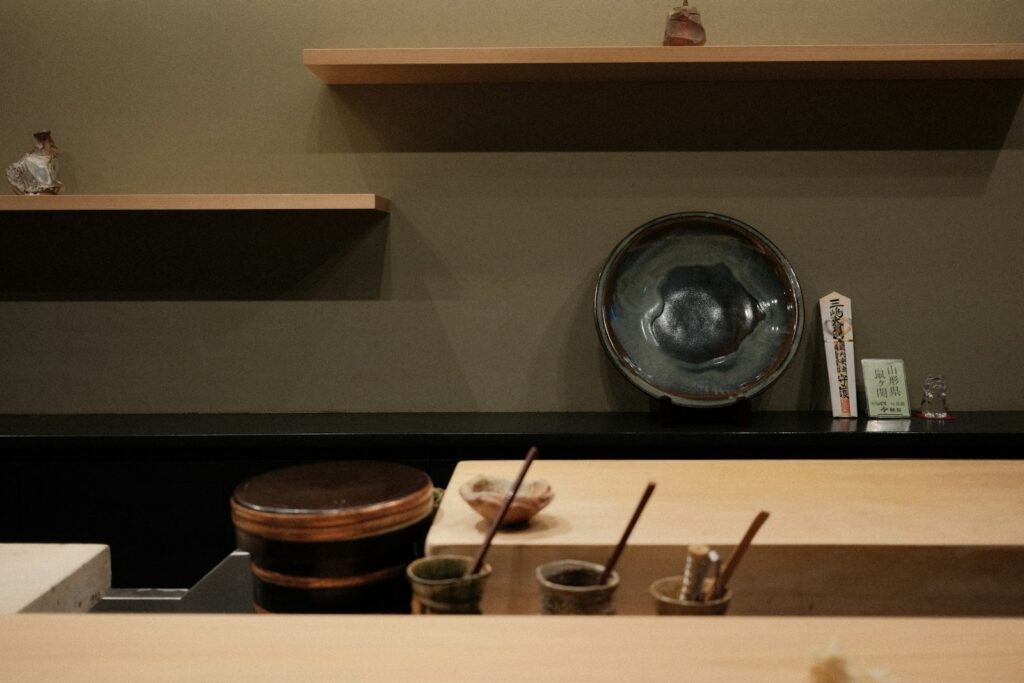
Twelve seats, arranged around an open kitchen finished in the same brushed steel throughout, with almost no decoration beyond the plating itself. It is a deliberate rebuttal to the idea that ambition requires spectacle in the room as well as on the plate — a philosophy shared by the chef profiled in the chef who cooks only what the tide brings, where the ingredient, not the interior, carries the meal.
We didn’t want a restaurant people photographed. We wanted one they thought about on the drive home.
The wine list, built to match the food’s restraint
A menu this considered demands a wine and pairing programme willing to match its ambition rather than defaulting to familiar, crowd-pleasing labels. The list here leans deliberately toward smaller, low-intervention producers, several working with grape varieties rarely seen on Singapore wine lists, chosen specifically for their ability to sit alongside fermented and umami-forward flavours without being overpowered. It is a programme built by someone who has clearly tasted through the entire menu repeatedly rather than assembling pairings from a generic playbook.
What the pairing programme gets right
- Restraint in alcohol level, favouring lighter wines that do not fatigue the palate across eighteen courses
- A genuine willingness to pour something unfamiliar rather than defaulting to a safe, recognisable label
- Staff able to explain each pairing’s logic rather than simply announcing the producer and vintage
For diners who prefer to opt out of the full pairing, a shorter, three-glass version is available on request, though it inevitably loses some of the narrative thread that makes the full programme worth the additional cost.
Pacing, and why it matters more than people think
Eighteen courses sounds exhausting on paper, and at a lesser kitchen it would be. Here, the pacing is the real technical achievement: portions calibrated so precisely that the final course lands with genuine appetite intact rather than the glazed fullness that afflicts most extended tasting menus. Courses arrive roughly every nine minutes, timed to conversation rather than to the kitchen’s convenience, and the effect is a meal that never once drags despite its length.
What to know before booking
- Reservations open six weeks out and move fast; a waitlist is genuinely worth joining
- The wine pairing leans heavily on small Japanese and Australian producers rather than the expected European names
- Allow the full three hours — arriving with a hard stop undermines the entire structure of the meal
The service that carries the meal
Ambition on the plate counts for little if the room serving it cannot match the pace and precision of the kitchen behind it, and this is where the restaurant separates itself most clearly from its peers. Each of the twelve seats is served by a dedicated member of staff who tracks not just the course sequence but each guest’s individual pacing — refilling water unprompted, clearing at the precise moment a fork is set down rather than a beat too early or too late. It is a level of attentiveness that never once tips into intrusiveness, which is its own kind of technical achievement.
What separates the service here from the merely polished
- Staff who can discuss the sourcing and technique behind every course without reading from a script
- Pacing adjusted visibly to the table, not run on a fixed kitchen clock
- A genuine willingness to accommodate dietary requirements without diminishing the structure of the tasting menu itself
This attentiveness extends to the small details easy to overlook: cutlery reset silently between courses, temperature-appropriate glassware swapped without announcement, a genuinely warm welcome that never curdles into performance. It is the sort of service that becomes invisible precisely because it is done so well.
Where it sits against the rest of the city
Singapore’s tasting-menu scene has, in the last few years, split roughly into two camps: rooms chasing scale and spectacle, and a smaller, quieter group chasing precision instead. This opening belongs firmly in the second camp, alongside the handful of counters explored in two Michelin stars, one very small room, where the size of the room has become, almost paradoxically, a marker of ambition rather than a limitation on it.
A meal worth the wait
What makes this tasting menu genuinely ambitious is not any single technique on display but the discipline behind the whole structure — a kitchen confident enough to let eleven hours of stock reduction speak louder than any flourish of theatre. It is a meal that trusts the diner to notice restraint, which is, in this city’s current dining climate, the harder and more interesting bet. For more of the openings reshaping the city’s dining landscape this quarter, our Dining & Drinks section tracks them as they arrive.
Book it for an occasion, not a passing Tuesday. This is a menu that wants your full attention, and it earns every minute of it. Go in with an appetite and without a hard stop on the evening, and the eighteen courses will feel, by the final plate, like they arrived in half the time they actually took.
Renée has covered Singapore's restaurants for over a decade, with a soft spot for the kitchens most people walk past.