How to Wear a Suit Without a Tie
Losing the tie should sharpen a suit, not soften it. A guide to the small decisions that separate a deliberately open collar from one that looks unfinished.
 By Daniel Koh
29 August 2026 · 5 min read
By Daniel Koh
29 August 2026 · 5 min read
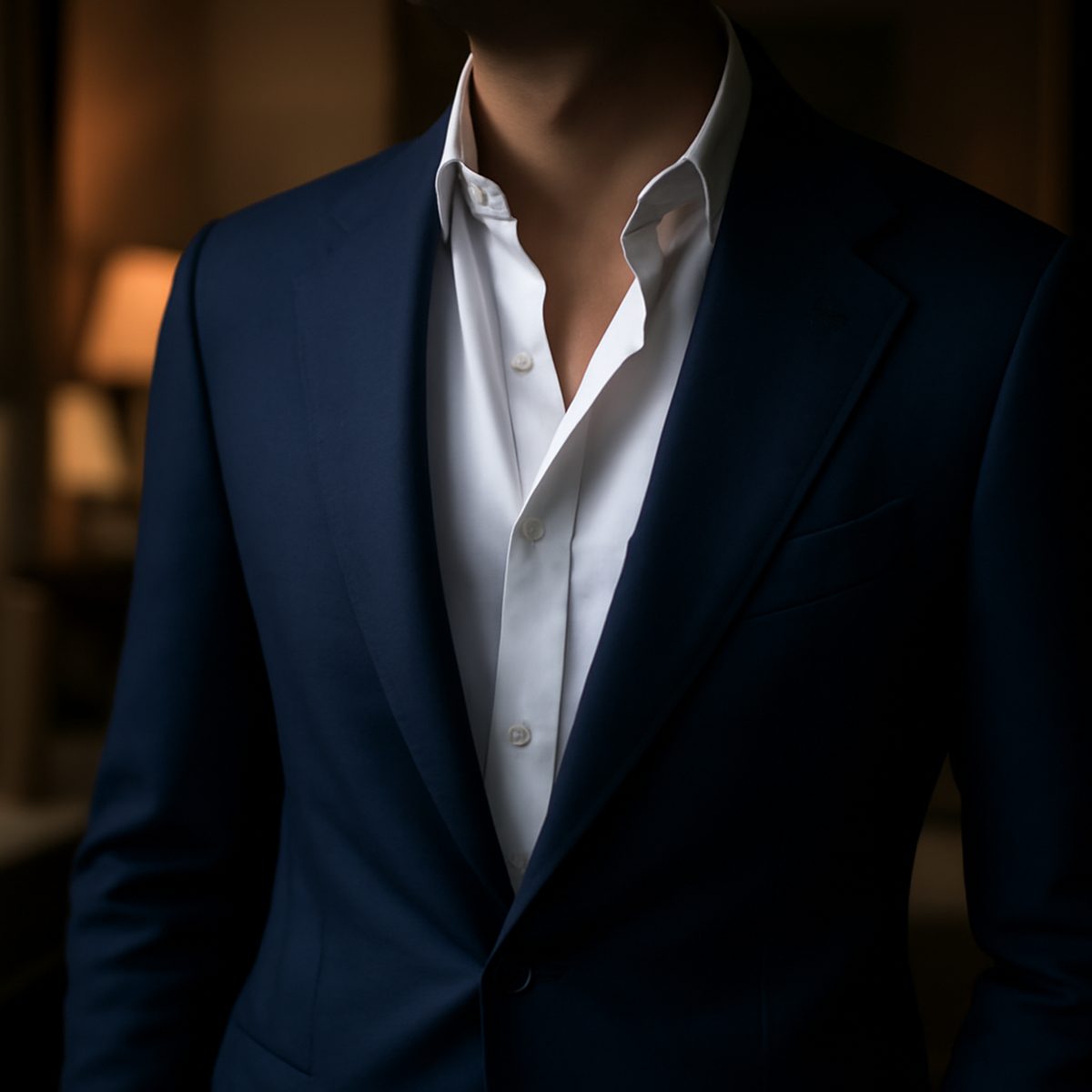
Removing a tie ought to be a simple subtraction, and yet it is one of the more commonly botched moves in modern menswear. Done well, an open collar under a well-cut jacket reads as deliberate, even sharper than the fully buttoned alternative — a considered choice rather than a compromise. Done poorly, the same outfit looks like a suit its wearer simply forgot to finish dressing, tie left at home rather than left out on purpose. The difference between the two rarely comes down to the tie’s absence itself. It comes down to everything else being adjusted to compensate.
Why the collar becomes the whole outfit
A tie does a huge amount of quiet structural work in a traditional suit outfit, anchoring the eye at the neck and giving the collar a reason to sit exactly as it does. Remove it, and the collar suddenly has to do that work alone, which means the shirt itself becomes considerably more important than it was a moment before. A collar cut for tie-wearing — soft, unstructured, prone to gaping — tends to look sloppy without one. The better solution is a shirt with a slightly firmer, more structured collar, cut specifically to hold its shape open, which several shirtmakers now offer as a distinct style precisely for this purpose.
Buttoning strategy matters more than it seems
The top button question is the detail most people get wrong. One undone button, exposing a small triangle of chest, generally reads as the most versatile choice across business and smart-casual contexts alike. Two buttons undone pushes the look considerably more relaxed and works best for genuinely casual evening settings rather than anything resembling business. Beyond that verges into territory better suited to a beach holiday than a tailored jacket. The safe, broadly correct default for most occasions remains a single button undone — enough to signal intent without looking like the tie was abandoned mid-outfit.
- One button undone: the most versatile choice, appropriate for business and smart-casual settings alike.
- Two buttons undone: notably more relaxed, best reserved for evening or genuinely casual contexts.
- A structured, tie-optional collar: holds its shape without a tie, avoiding the gaping look of a standard soft collar.
- A slightly shorter tie-space collar point: keeps proportions balanced against an open jacket lapel.
What to add in the tie’s place
An open collar leaves a visual gap that benefits from being filled thoughtfully rather than left entirely empty. A simple pocket square in a complementary tone restores some of the structural interest a tie once provided, without reintroducing the formality. A well-chosen watch becomes considerably more visible and important to the overall look once a tie is removed, since the wrist becomes one of the few remaining points of detail in an otherwise simplified outfit — our guide to the case for one very good watch is worth reading in this context, since a single excellent piece does more work here than several mediocre ones.
“Losing the tie is supposed to relax the formality by one notch, not three,” one Singapore tailor told us. “If the rest of the outfit doesn’t tighten up slightly to compensate, it just looks undone.”
Fit becomes non-negotiable
A suit with a slightly loose or imprecise fit can hide some of its shortcomings behind a tie’s visual anchor at the neck. Remove the tie, and those shortcomings have nowhere left to hide — a collar that gaps, a jacket that sits imperfectly through the shoulder, all become considerably more noticeable without the tie’s distraction. This is, in effect, the entire argument for why fit matters more here than almost anywhere else in tailoring, and our broader piece on why fit beats everything else is essential reading before attempting this look with anything less than a properly fitted jacket.
Choosing the right suit for the job
Not every suit translates equally well to a tieless outfit. A sharply formal, high-contrast navy or charcoal suit can look slightly incomplete without a tie in genuinely formal settings, while a suit in a softer fabric or more textured weave — a subtle herringbone, a lightly textured wool — carries the relaxed styling more naturally. This is part of the broader case for grey as a genuinely versatile suiting colour, which our guide to the perfect grey suit explores in more depth, since grey handles the transition between formal and open-collar styling with less visual disruption than navy typically manages.
Occasions where this works, and where it doesn’t
This look earns its versatility across a genuinely wide range of contexts, but it is not a universal replacement for a tie. A business meeting with a genuinely conservative client, a formal wedding, or an evening event with an explicit black-tie dress code all still call for the full traditional treatment, and attempting to substitute an open collar in these settings reads as a misjudgement of the occasion rather than a stylish choice. Where it works exceptionally well is in the considerable middle ground most modern professional and social life actually occupies — a smart dinner, a networking event with no strict dress code, a business meeting in a genuinely relaxed industry. Reading the room correctly matters as much as executing the look itself, and the two skills develop together with practice.
A small change that demands full attention
The paradox of losing a tie is that it should, in theory, simplify an outfit, and yet it actually demands more careful attention to every remaining detail rather than less. Get the collar, the buttoning, the fit and the finishing touches right, and an open-collar suit reads as more confident and more contemporary than the fully done-up alternative. Get any one of them wrong, and the whole outfit reads as unfinished. Readers refining this look further will find additional guidance across the wider Style & Watches section, particularly around the shirt collar and fit decisions that quietly determine, more than anything else in the outfit, whether the whole thing succeeds or simply looks like an unfinished afterthought.
Daniel has spent fifteen years arguing that the best watch is the one you never take off.