How to Choose the Right Landing Lighting
A landing has to do more lighting work than any other transitional space in a home. Here's how to layer light so it stays safe and still feels considered.
 By Priya Nair
31 August 2026 · 6 min read
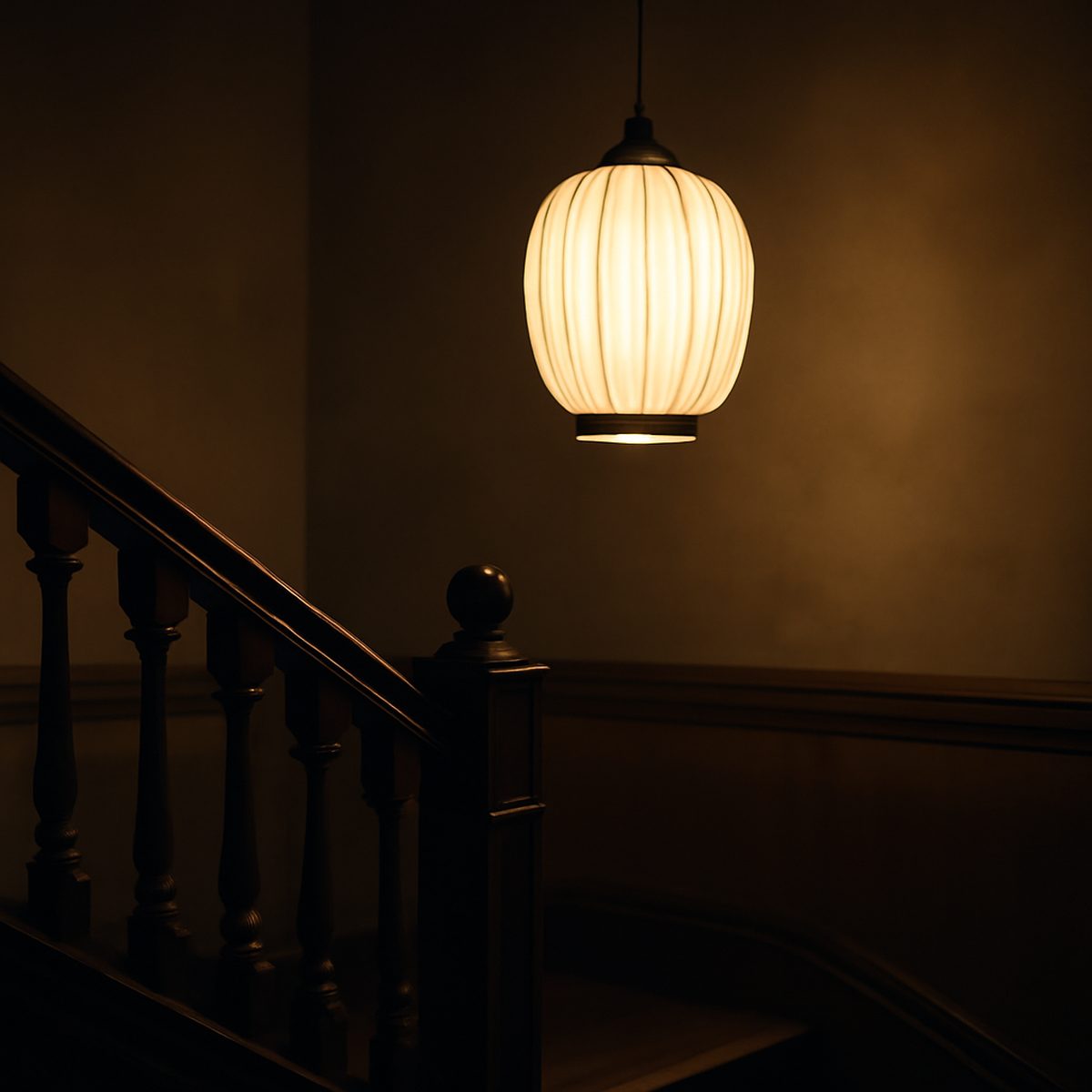
Landings occupy a strange position in most homes’ lighting plans: too transitional to be treated as a proper room worth real design attention, yet too safety-critical to be left underlit the way a hallway sometimes can be. Someone descending a dimly lit staircase at night is at genuine risk in a way someone crossing a slightly dim living room is not, which makes landing lighting one of the few areas in a home where atmosphere and safety cannot be traded off against each other — both have to work simultaneously, and getting that balance right takes more thought than most renovation plans give it.
Why landings are hard to light
The core difficulty is verticality. Unlike a single-storey room where one ceiling height determines every fixture’s throw and shadow pattern, a landing typically spans two or more floors, meaning light needs to reach both the upper landing surface and the full run of stairs below without creating harsh shadow lines across individual treads — precisely where a shadow is most dangerous, since it can obscure the edge of a step. A single central fixture, however handsome, rarely solves this problem alone, and many landings end up either uncomfortably bright directly beneath the fixture and gloomy at the stair’s foot, or evenly dim throughout in an attempt to avoid glare.
Readers dealing with a landing that also functions as a small library or reading nook should consult the art of the considered landing library alongside this piece, since a landing doing double duty as a reading space adds a layer of task-lighting requirement on top of the baseline safety lighting discussed here.
Layering the scheme
The most reliable approach treats the landing as several distinct lighting zones rather than one. A central pendant or flush fixture provides general ambient light across the landing platform itself; dedicated stair lighting, whether recessed step lights set into the stringer or small wall-mounted fixtures spaced down the wall, illuminates the treads directly and eliminates the shadow problem that overhead light alone creates; and a softer accent layer, perhaps a wall sconce at the landing’s midpoint, adds warmth and prevents the space from feeling clinically lit even once the safety requirements are fully met.
This layered thinking mirrors good practice throughout a home’s lighting scheme, and readers building a fuller plan may find it useful to compare notes with our guide to choosing the right hallway lighting, since a landing frequently connects directly into a hallway and benefits from a coordinated rather than disjointed approach across the transition.
A practical layering checklist
- General ambient: a central pendant, flush mount, or well-placed downlights across the landing platform.
- Stair-specific: recessed step lights or low wall-mounted fixtures illuminating each tread directly.
- Accent: a sconce or picture light at a mid-landing wall, softening the overall scheme.
- Control: dimmers and, ideally, motion-triggered low-level night lighting for safe late-night use.
Fixture choices
A tall stairwell often becomes the natural home for a statement pendant or chandelier, since the vertical space rewards a fixture with genuine visual drama in a way a low-ceilinged room cannot accommodate. This works beautifully as the ambient layer but should never be relied upon as the sole light source for the stairs themselves, since a fixture hung centrally in a tall void inevitably casts long, uneven shadows down onto the treads below. Dedicated, lower-mounted step or wall lighting remains essential regardless of how impressive the central fixture is. The particular demands of the stairs themselves are explored further in our guide on choosing the right stairwell lighting.
For landings with a gallery or open balustrade overlooking a hall below, our piece on the art of the considered galleried landing covers how lighting needs to work in both directions — illuminating the landing itself while also contributing usefully to the room below, a genuinely different brief from a simple enclosed stairwell.
“We had a beautiful pendant and terrible stair light for years before someone finally pointed out they weren’t the same job,” one homeowner admitted after a near-miss on a poorly lit lower tread prompted a full relighting of the stairwell.
Switching and control
Control matters as much as the fixtures themselves on a landing, since it is used constantly, at all hours, often by someone carrying something in both hands. Two-way or three-way switching, allowing the light to be turned on and off from both the top and bottom of the stairs, is close to essential rather than a luxury, and a genuinely well-planned landing adds a third, low-level control for late-night use — either a dimmed setting or dedicated small night-lights near floor level, so a trip to the kitchen at 2am does not require flooding the whole stairwell with full brightness.
Motion sensors have become increasingly popular for exactly this purpose, triggering a low, warm glow automatically rather than requiring a switch to be found in the dark. Combined with a well-layered fixture plan addressing both ambient atmosphere and tread-level safety, a landing can finally do the two jobs it has always been asked to do at once — look considered, and keep everyone on their feet. Explore more lighting guidance across our Homes & Culture section.
Colour temperature and glare
Consistency of colour temperature across the different fixture types on a landing matters more than most homeowners expect, since mismatched tones between a central pendant and step-level lighting can make the space feel unfinished even when every individual fixture is attractive in isolation. A warm 2700 to 3000 kelvin range across all layers tends to suit residential landings best, echoing the same domestic warmth recommended for hallways and living spaces, rather than the cooler tones sometimes favoured in purely functional stairwells such as those in commercial buildings.
Glare deserves equal attention, particularly with recessed step lights, which sit at a height and angle where an unshielded bulb can shine directly into the eyes of someone descending the stairs. Fixtures with a recessed or angled lens, directing light downward onto the tread rather than outward towards a descending face, solve this reliably and are worth specifying explicitly rather than assuming any step light will do the job safely.
Priya tours the homes most people only glimpse from the road, and asks how they are really lived in.