How to Choose and Use Lemongrass
Lemongrass rewards proper handling — knowing which part to use, how to bruise or mince it, and when to leave the fibrous stalk whole in a simmering pot.
 By Renée Tan
31 August 2026 · 5 min read
By Renée Tan
31 August 2026 · 5 min read
Lemongrass is one of those ingredients that home cooks tend to either overuse or barely use at all, and both mistakes come from the same misunderstanding: treating it like a garnish rather than a genuine flavour foundation. Handled properly, it delivers a bright, citrusy top note and a subtler, almost floral depth that underpins much of Southeast Asian cooking, from a simmering pot of tom yum to a quietly fragrant Vietnamese marinade. Handled carelessly, it turns fibrous, woody and faintly unpleasant to chew through, which is usually the fault of preparation rather than the plant itself.
Choosing the right stalk
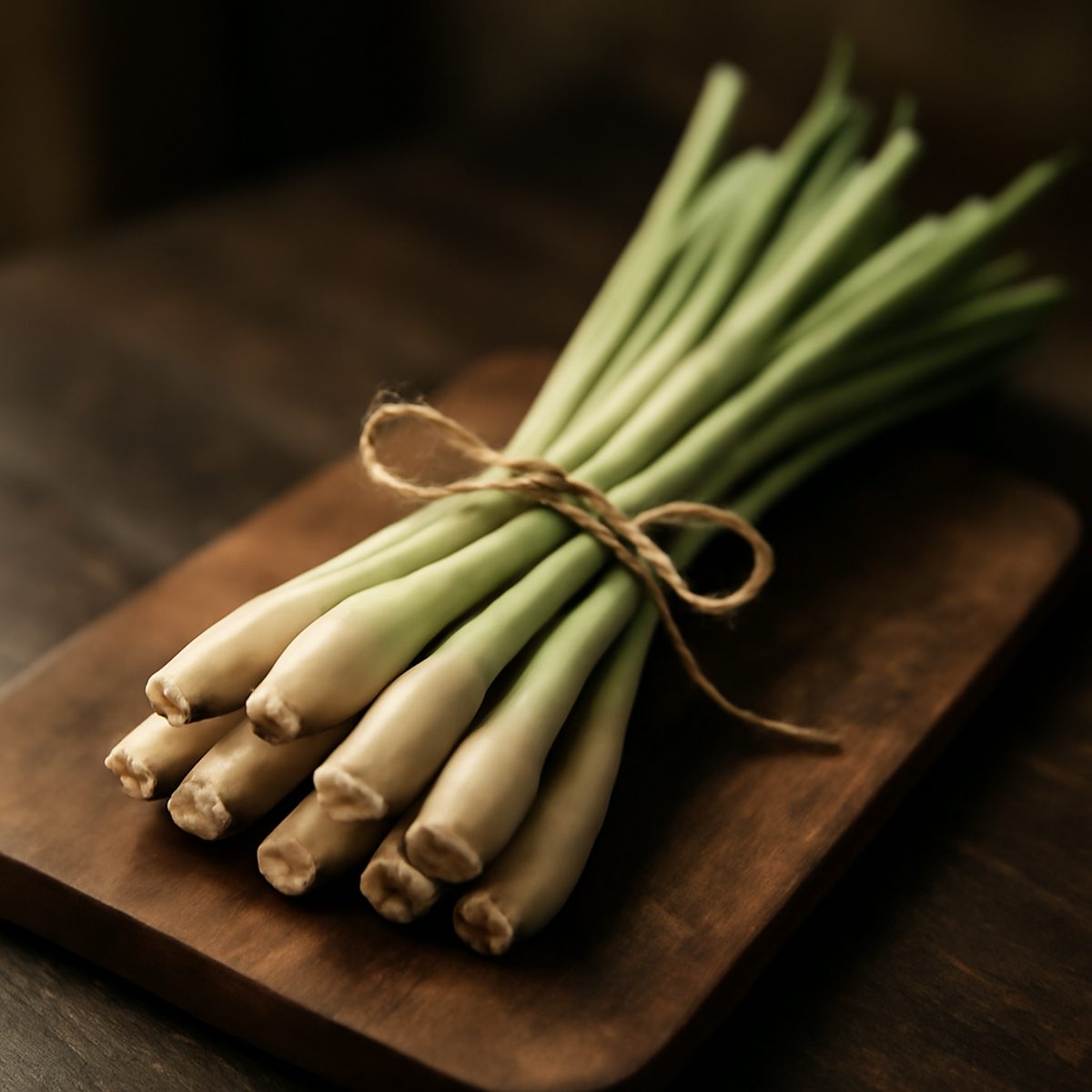
Fresh lemongrass should feel firm and heavy for its size, with a pale, tightly bound base that gradually shades into looser green blades further up the stalk. Avoid anything that feels dry, papery or hollow at the base — a sign the stalk has been sitting too long and has lost most of the essential oils that make lemongrass worth cooking with in the first place. A fresh stalk, bruised or bent, should release a distinct citrus aroma almost immediately; if it doesn’t, put it back and choose another.
Most of the usable flavour lives in the bottom third of the stalk, the pale, densely layered bulb, rather than in the greener upper stem, which is far too fibrous to eat but still useful for infusing broths and stocks before being strained out and discarded. Think of lemongrass, in this sense, as two ingredients in one plant — a tender, mincible base for pastes and marinades, and a tougher, aromatic stem better suited to long, slow infusion.
Preparation, matched to purpose
- For pastes and marinades: peel away the tough outer layers, use only the pale base, and mince or pound it finely — a food processor works, though a mortar and pestle releases more oil
- For broths and soups: bruise whole stalks firmly with the flat of a knife to crack the fibres, then simmer whole and remove before serving, much as you would a bay leaf
- For infusions and teas: slice the stalk into short lengths and steep in hot liquid for as long as ten minutes; the flavour builds slowly rather than releasing all at once
- For skewers: the tougher upper stalks make surprisingly effective, edible-adjacent skewers for grilled meat or seafood, imparting flavour as they char
A common mistake worth avoiding
The single most common error we see in home kitchens is treating lemongrass as if it behaves like a herb — chopped fine and stirred directly into a finished dish at the last minute, the way you might add coriander. Lemongrass needs time and heat to release its oils fully; added raw and late, it contributes almost nothing beyond an unpleasant, fibrous texture. If a recipe calls for fresh lemongrass flavour without cooking, it should be pounded into a paste first, releasing the oils mechanically rather than relying on heat to do the work.
“People throw whole stalks into a stir-fry at the end and wonder why it does nothing,” a home cook who’s taught informal cooking classes told us. “It’s not basil. It needs to be either crushed hard or cooked long. There’s no in-between that works.”
Where lemongrass earns its place
Beyond the obvious applications in curry pastes and simmered soups, lemongrass does quietly excellent work in less expected places — infused into a simple syrup for cocktails, steeped into a poaching liquid for chicken or seafood, or bruised and added whole to a pot of steamed rice for a subtle, background lift that most guests won’t identify but will notice is missing if you leave it out. It’s a genuinely versatile ingredient once you stop treating it as a single-purpose curry component.
This kind of considered approach to a single ingredient sits well alongside our broader look at Southeast Asian spice as a whole, which covers lemongrass’s usual companions — galangal, kaffir lime, turmeric — in similar detail, and our more general primer on choosing and using dried spices for the pantry staples that round out most of the dishes lemongrass appears in. For a specific application worth trying, lemongrass pairs beautifully with the char and smoke covered in our guide to otah and other grilled seafood snacks, where it often does quiet, essential work inside the spice paste itself.
Storing it properly
Fresh lemongrass keeps reasonably well wrapped tightly in the refrigerator for one to two weeks, but for longer storage, freeze whole stalks or pre-minced paste in small portions — it holds its flavour far better frozen than dried, which tends to lose most of the essential oils that make the fresh version worth seeking out. A small stash of frozen, pre-pounded paste is one of the more useful things a regularly cooking household can keep on hand, ready to drop straight into a simmering pot without any last-minute prep at all.
One further habit worth adopting: freeze the woodier upper stalks separately from the tender minced base, in a labelled bag reserved purely for stocks and infusions. It’s a small piece of kitchen discipline, but it means you’re never tempted to mince a fibrous top section into a paste by mistake, and never left digging through a single mixed bag trying to judge by eye which piece is tender enough for which purpose. Ingredients that reward this kind of small, consistent care tend to earn a permanent place in a considered kitchen, rather than sitting forgotten in the crisper drawer until they’ve dried past usefulness. It costs nothing beyond a moment of forethought, and it means the next curry paste or simmering pot begins with exactly the right cut of stalk already at hand, rather than a rushed decision made mid-recipe under time pressure.
Treated with this much care, an ingredient most people reach for absentmindedly becomes something closer to a genuine flavour foundation — worth the extra few minutes it asks for. For more considered approaches to the pantry, our Dining & Drinks section carries further reading worth returning to.
Renée has covered Singapore's restaurants for over a decade, with a soft spot for the kitchens most people walk past.