Forty-Eight Hours in Fukuoka
Japan's most relaxed major city rewards a short, unhurried visit. A forty-eight-hour itinerary for Fukuoka, from ramen stalls to quiet shrines.
 By Marcus Lim
30 August 2026 · 6 min read
Fukuoka rarely tops the first-timer’s list of Japanese cities, which is precisely what makes it worth the detour. Sitting on the northern shore of Kyushu, it has none of Tokyo’s overwhelming scale or Kyoto’s tourist density, and moves instead at a genuinely relaxed pace that rewards a visitor willing to walk rather than schedule. Two full days is enough to get a real sense of the city’s particular charm — its famous yatai food stalls, a compact and walkable centre, and a food scene that locals will argue, with real conviction, rivals anywhere else in the country.
Day one: the city centre and Hakata’s old streets
Begin in Hakata, Fukuoka’s historic merchant district, where narrow lanes still trace the outline of the original castle town. Kushida Shrine, the city’s spiritual anchor for well over a millennium, is worth an unhurried visit early in the day before the crowds build, particularly for anyone interested in the elaborate floats used during the city’s famous summer festival, several of which remain on permanent display nearby. From there, the covered arcades of Kawabata Shopping Street offer a genuinely local shopping experience, largely untouched by the international brands that dominate similar streets in bigger cities.
Fukuoka’s food identity is inseparable from tonkotsu ramen, the rich, pork-bone broth style the city effectively invented and still does better than anywhere else. An afternoon spent working through a couple of the city’s most respected counters, rather than rushing to see everything else, is time well spent — this is a city where the food genuinely is the main attraction, not a break between sights. Those wanting to understand the wider category before arriving may find our guide to the best modern Japanese, beyond sushi a useful primer on how far Japanese regional cuisine extends past the more familiar Tokyo staples.
Day one, evening: the yatai stalls
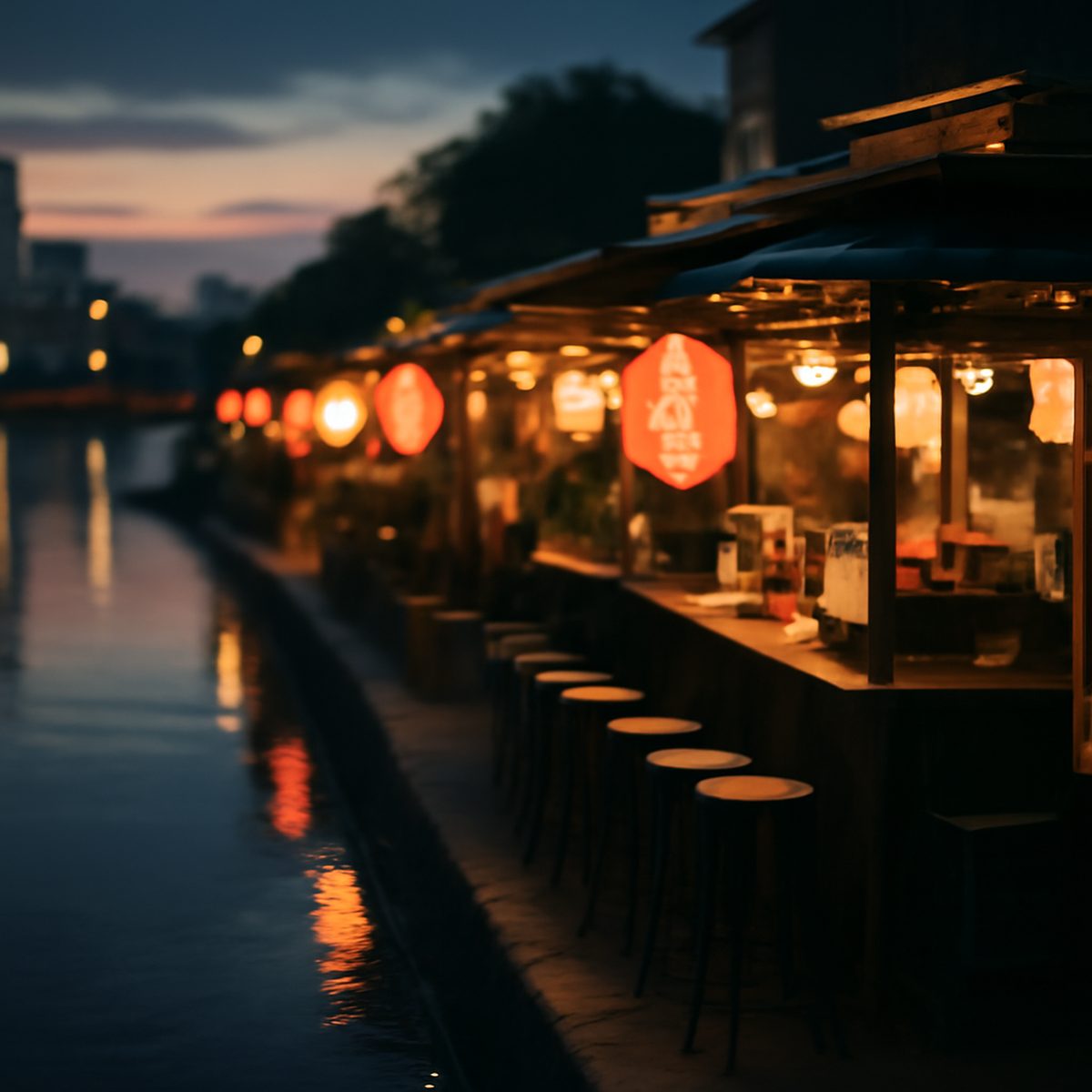
No visit to Fukuoka is complete without an evening spent at the yatai — small, mobile food stalls that set up each evening along the riverside and in the Nakasu and Tenjin districts, seating perhaps eight to ten people at a time along a narrow counter. The format is unlike anything else in Japan: intimate, slightly chaotic, and genuinely conducive to conversation with strangers in a way most Japanese dining rarely is. Order a little from each stall rather than settling into one for the whole evening — a bowl of ramen at one, grilled skewers at another, a plate of gyoza at a third — and the night takes on its own unplanned rhythm.
Day two: temples, gardens, and the coast
- Start at Ohori Park, a large landscaped garden built around a former moat, offering a genuinely peaceful contrast to the previous night’s yatai energy.
- Visit Fukuoka Castle ruins nearby, where little remains structurally but the elevated grounds offer some of the city’s best skyline views.
- Head to Nokonoshima Island by short ferry for an afternoon among seasonal flower fields and coastal views back toward the mainland.
- Return for an early dinner at a specialist motsunabe restaurant, the city’s other great culinary claim to fame — a hotpot built around beef or pork offal, garlic, and chives that sounds unlikely and tastes extraordinary.
“Tokyo people come here and can’t believe how relaxed everything feels,” one Fukuoka-based chef has said. “We take our food just as seriously. We just don’t feel the need to rush.”
Beyond the city, if time allows
Fukuoka also functions as an excellent gateway to the wider Kyushu region, and travellers with an extra day or two should consider extending outward rather than treating the city purely as a standalone destination. It sits comfortably within a broader itinerary exploring Japan beyond Tokyo and Kyoto, and travellers with an interest in Japan’s onsen culture will find some excellent, less-visited options within a couple of hours by train — worth reading alongside our feature on the onsen ryokan worth the journey, several of which sit conveniently within reach of Fukuoka’s excellent rail connections.
Whisky enthusiasts passing through should also note that Kyushu has its own small but growing distilling tradition worth exploring during a longer stay, a subject touched on more broadly in our field guide to Japanese whisky.
Practical notes
Fukuoka’s compact size makes it one of the more walkable Japanese cities, with a small, efficient subway system covering the rest comfortably. The best time to visit tends to fall in either spring or autumn, avoiding the height of summer’s heat and humidity, which can make the yatai experience considerably less comfortable than intended. Two nights is genuinely sufficient to experience the city properly, though visitors who fall for its unhurried rhythm often find themselves wishing they had built in a third.
Where to stay
Fukuoka’s Tenjin and Hakata districts both offer convenient bases, each within easy walking distance of the city’s main sights, restaurants, and transport links. Tenjin leans slightly more toward shopping and nightlife, while Hakata, being closer to the train station, suits travellers planning day trips further into Kyushu. Neither district requires more than a short taxi ride to reach the yatai stalls or the riverside, which makes choosing a base here less consequential than in a larger, more sprawling city — a small but genuine relief for a weekend trip where every hour matters.
A composite of the kind of considered, design-forward small hotels increasingly opening across the city’s quieter streets is worth seeking out over the larger international chains clustered near the station — the difference in atmosphere between the two, for a trip built around slowing down, is considerable — smaller properties tend to offer better local recommendations, quieter corridors, and a far more personal welcome than a larger, more anonymous chain hotel ever quite manages to provide.
The verdict
Fukuoka rewards exactly the kind of unhurried, food-led travel that defines the best short city breaks — a place where the itinerary can bend easily around a good bowl of ramen or an unplanned evening at the yatai without feeling like anything essential has been missed. It remains one of Japan’s most underrated weekend destinations. More considered city guides and itineraries can be found across Travel & Stays.
Marcus writes on travel and hospitality across Asia, and is happiest a long way from a lobby.