A Slow Weekend in George Town, Penang
George Town rewards the unhurried. A weekend of kopitiam mornings, shophouse shade and clan-jetty dusk, walked slowly with nowhere in particular to be.
 By Marcus Lim
1 September 2026 · 6 min read
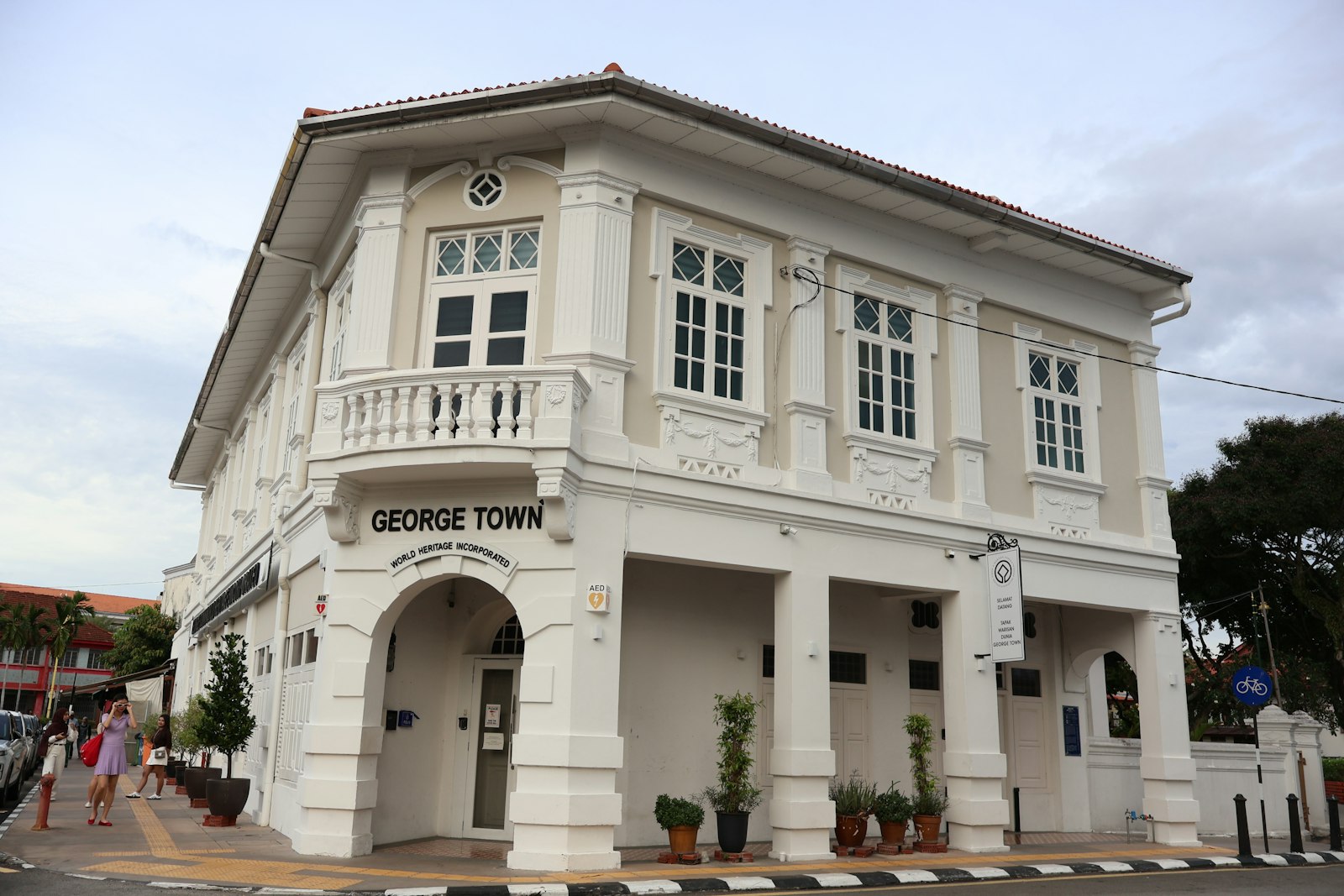
There is a particular kind of heat that settles over George Town by mid-morning, thick and unhurried, and the only sensible response is to slow down to meet it. This is not a city that rewards a checklist. It rewards the walker who is willing to be diverted, to follow a five-foot way into shade, to sit at a marble-topped table for longer than strictly necessary. A weekend here is less an itinerary than a change of tempo, and the sooner you surrender to it, the more the place gives back.
Begin with the morning ritual
The Penang day is built around its first cup. In a corner kopitiam, the coffee arrives dark and sweetened with condensed milk, poured from a height into a thick porcelain cup, and it is served without ceremony to men reading newspapers and aunties conducting the day’s business. Order kaya toast, charcoal-edged and thin, and a pair of soft-boiled eggs to be doused in white pepper and dark soy. Eat slowly. Watch the street wake. This is the hour when George Town is most itself, before the tour groups arrive and the shophouses open their shutters to the trade of the day.
From there, the walking begins. The old quarter is compact enough to cross on foot, and the pleasure lies in the wandering rather than the arriving. The shophouses lean into one another in faded ochre, jade and dusty rose, their façades softened by decades of monsoon. Louvred windows, carved timber, the occasional glazed tile imported a century ago from a distant port — the detail is everywhere, and it repays a slow eye.
The texture of a trading town
George Town was a port before it was anything else, and the layers of its trade are still legible. A Chinese clan temple sits a few doors from an Indian Muslim eatery; a Hindu temple’s gopuram rises above a lane of hardware shops; the call to prayer threads through the clatter of a coffee shop at dusk. This is not heritage preserved under glass but heritage still in use, still argued over, still cooked in. The best way to understand it is to eat your way across it — a plate of char kway teow from a wok-hei counter here, a bowl of assam laksa there, sour and pungent and unforgettable.
By early afternoon the heat insists on a pause. This is the moment for a long lunch, or for the shade of a restored mansion, its air-well drawing a cool draught up through the house. The considered traveller learns to build these stillnesses into the day rather than fighting them, much as one learns the rhythm of any good slow weekend away, where the point is not to see everything but to see a little, properly.
Where to stay, and how
The accommodation that suits George Town best is the kind that lives inside its history rather than beside it. A restored shophouse hotel, its rooms arranged around an internal courtyard, gives you the town’s architecture as a daily experience: the high ceilings, the timber staircase, the light falling through a jack-roof. Some of the region’s finest examples sit within a broader tradition of heritage hotels across Asia, buildings that treat their age as an asset rather than an obstacle. Choose a room that opens onto the courtyard and you will wake to birdsong and the smell of the first coffee below.
Penang has long been a place travellers return to rather than merely visit, and the appeal is best understood as accretion — each stay adding a favourite counter, a preferred lane, a coffee shop where you are eventually recognised. Those who have written about Penang taken slowly tend to agree that the island reveals itself in inverse proportion to your hurry.
You do not conquer George Town in a weekend. You are simply granted a longer look, and if you are wise you leave a little undone, so there is reason to come back.
The long dusk
Late afternoon belongs to the clan jetties, the timber settlements built out over the water by Chinese immigrant communities more than a century ago. Walk the planks as the light goes gold, past homes on stilts and shrines the size of a cupboard, and watch the fishing boats come in. It is one of the few places in the town where the sea reasserts itself, a reminder that this was always a waterfront settlement, made and remade by tides and trade.
Dinner is best kept simple and local. A hawker centre at night, its stalls glowing, offers the full spectrum: oyster omelette, Hokkien mee in a dark prawn broth, cendol for something cold and sweet. Sit at a plastic stool, order across several stalls, and let the meal assemble itself. This is luxury of a specific and unpretentious kind — abundance, expertise and the absence of any need to impress.
The rhythm of a second day
If the first day is for the old quarter, the second is best given over to the margins, where the town loosens and the pace slows further still. A morning at a quiet coffee roaster, a slow browse through a bookseller’s shophouse, an hour in a small museum that tells the island’s trading history through porcelain and photographs — none of it urgent, all of it worth the time. The heat, again, sets the schedule; the trick is to work with it rather than against it.
What George Town teaches, above all, is that a place gives most to the visitor who asks least of it. You do not extract the town in a weekend so much as fall into step with it. The most vivid memories are rarely the sights but the incidental hours: the second coffee that turned into a conversation, the lane you turned down for no reason, the plate of noodles eaten standing up because there was nowhere to sit and it did not matter. That is the tempo the island rewards, and it is worth travelling a long way to relearn.
Leaving room to return
A weekend well spent in George Town ends with the sense that you have barely begun. There are lanes unwalked, counters untried, murals unfound down alleys you did not turn into. That is the correct feeling. The island is close enough to the rest of the peninsula that a longer regional loop is always tempting; many travellers pair it with a night or two in the capital, treating a short stay in Kuala Lumpur as the contrast that makes George Town’s slowness feel deliberate. For more of the same considered approach to the region, the wider Travel & Stays archive is a good place to plan the next unhurried escape. Go once, and you will understand why people keep going back — not for the sights, exactly, but for the tempo.
Marcus writes on travel and hospitality across Asia, and is happiest a long way from a lobby.