
A Guide to Collecting Vintage Cameras
A guide to collecting vintage cameras: the classic formats worth starting with, what to inspect before buying, and how to build a kit you will shoot.
 By Priya Nair
2 September 2026 · 6 min read
By Priya Nair
2 September 2026 · 6 min read
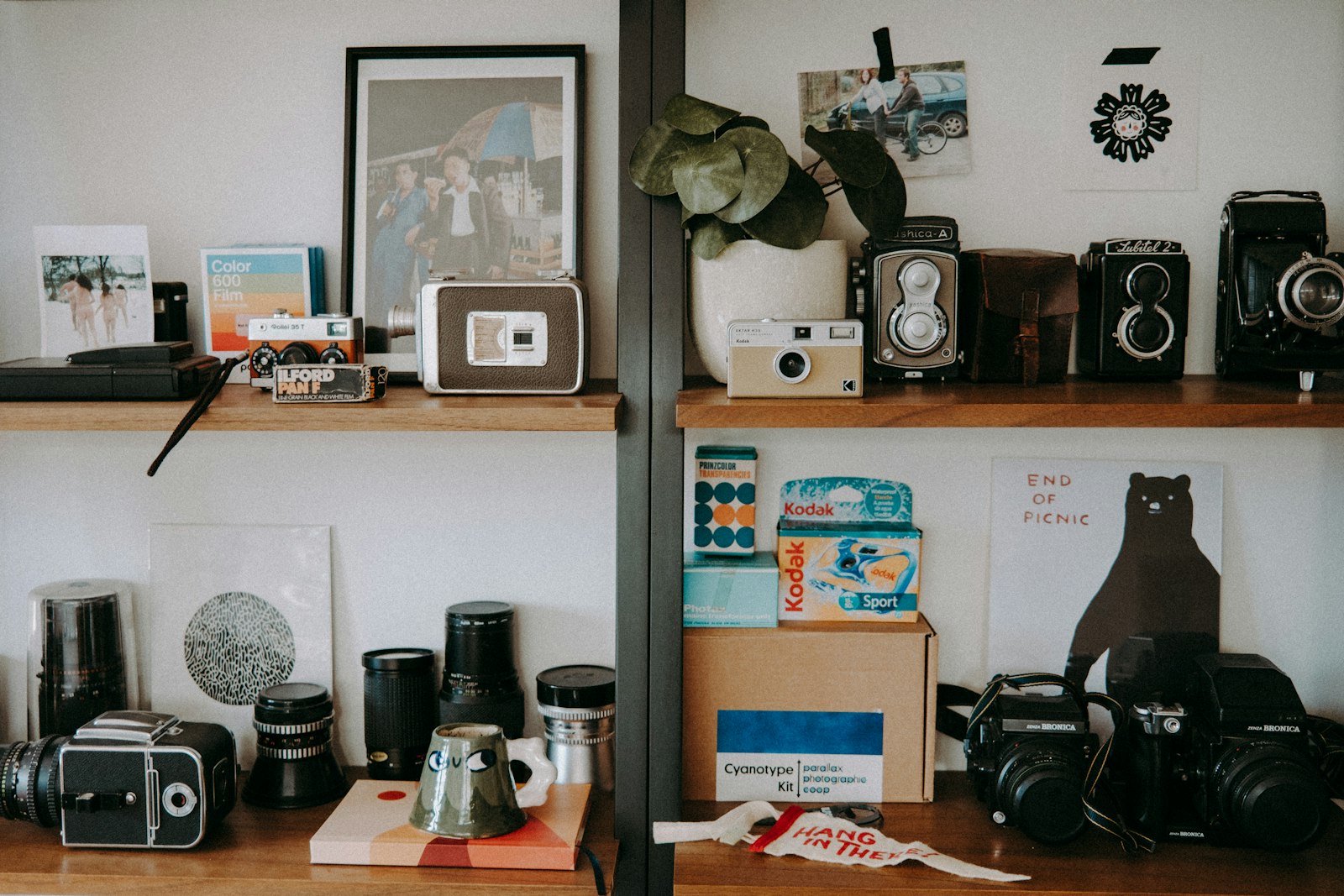
A vintage camera is one of the most satisfying things a person can collect, because unlike most antiques it still does the job it was built for. A well-kept mechanical camera from sixty years ago will make a photograph today, and often a better-feeling one than the phone in your pocket. That combination, a beautiful object that also works, makes camera collecting unusually rewarding. But it is also a field with pitfalls, and a little knowledge before you buy saves both money and disappointment. This is where to begin.
Decide what kind of collector you are
The first question is whether you want to shoot your cameras or shelve them. Both are legitimate, but they point to different purchases. A shooter wants working shutters, clean lenses and formats that still have film and processing available. A display collector can chase rarer, more decorative or non-functional pieces for their form and history. Most people, sensibly, land in between: a small working collection they actually use, plus a few beautiful objects kept for their own sake. That instinct, to collect things that are used as well as admired, is the same one that animates our guide to collecting mid-century furniture.
The formats worth starting with
Three families make the best foundation. The 35mm rangefinder and SLR are the classic entry points: compact, plentiful, well-supported by film, and the source of most of photographic history’s great images. The twin-lens and single-lens medium-format cameras, shooting larger 120 roll film, give a bigger negative and a wholly different, more deliberate way of working, waist-level finder and all. And the folding cameras of the earlier twentieth century, which collapse into a pocketable slab of leather and nickel, are gorgeous objects that still surprise you with their picture quality.
Buy the camera you will actually pick up. A shelf of unused rarities is an inventory; a small kit you shoot every month is a collection.
Whichever you choose, the appeal is partly tactile: the weight, the wind-on lever, the mechanical shutter’s precise click. These are objects engineered to a standard we rarely see now, and handling a good one is its own pleasure, of a piece with the appeal we describe in collecting vintage clocks, where the mechanism is half the point.
What to check before you buy
A few minutes of inspection separates a bargain from a paperweight. Work the shutter at every speed and listen: the slow speeds should sound audibly slower, not stick or hang. Look through the lens against a bright light for haze, fungus (fine web-like threads) and separation (rainbow patches where the glued elements are failing); haze and fungus are the deal-breakers. Check the light seals, the foam strips around the film door, which perish to a sticky mess and cause light leaks, though these are cheap to replace. Wind and fire repeatedly to feel for smoothness. And handle the aperture blades: they should be dry and snappy, not oily.
Where to buy, and how to store
Camera fairs, specialist dealers and the estate sales of old photographers are the happy hunting grounds; a reputable dealer who guarantees a working camera is worth the premium when you are starting out. Online, buy from sellers who show honest fault photographs and describe the shutter’s condition specifically. Prices climb fast for the famous names, but the field is deep, and many superb, lesser-known cameras remain genuine bargains.
Storage matters enormously in Singapore, where humidity is the collector’s real enemy: it breeds the lens fungus that destroys value. A dry cabinet, the electronic dehumidifying kind, kept around forty to fifty per cent relative humidity, is not optional here, it is essential, and it is the single best investment you can make after the cameras themselves. Keep leather cases separate, as they hold moisture, and let the cameras breathe rather than sealing them in bags. The same environmental care that protects a collection of vintage prints applies here, doubly so.
Building a collection with a thread
The most satisfying collections are the ones with a point of view. Rather than accumulating one of everything, the seasoned collector picks a thread and follows it: the cameras of a single maker across the decades, the evolution of one iconic model, the folding cameras of a particular era, the quirky and the experimental. A thread gives the hunt direction and turns a shelf of objects into an argument, a small illustrated history of an idea. It also makes you a sharper buyer, because you learn one corner of the field deeply rather than knowing a little about all of it.
There is a pleasure, too, in learning to service the simpler mechanisms yourself. Replacing perished light seals, cleaning contacts and giving a sticky shutter a careful exercising are within the reach of a patient amateur with the right small tools, and every camera you coax back to working life deepens your understanding of how these beautiful machines are put together. The serious internal work, the shutter overhaul, the rangefinder calibration, is best left to a specialist, but the more you can do at the kitchen table, the more a modest, neglected find can become a working camera you are proud to carry.
The pleasure of the long game
Camera collecting rewards patience and curiosity over spending. The joy is in the hunt, the research, the moment a neglected find whirrs back to life, and above all in the photographs a sixty-year-old machine can still make. Start small, buy working, learn to inspect, and let the collection grow around the cameras you genuinely love to use. Resist the urge to spend big early; the best education is a cheap, working camera and a few rolls of film run through it. Mistakes made with a modest body teach you what to value before you commit real money, and the knowledge you gain is the thing that eventually makes you a confident buyer. For more fields where the beautiful object and the working tool are the same thing, our homes and culture desk keeps returning to the pleasures of collecting, and the vintage camera is one of the most generous places to begin.
Priya tours the homes most people only glimpse from the road, and asks how they are really lived in.


