Understanding the Art of the Kumiko Panel
Kumiko is Japanese joinery at its most delicate: slivers of wood locked into intricate lattice without a nail. Understanding the craft and its place at home.
 By Priya Nair
1 September 2026 · 6 min read
By Priya Nair
1 September 2026 · 6 min read
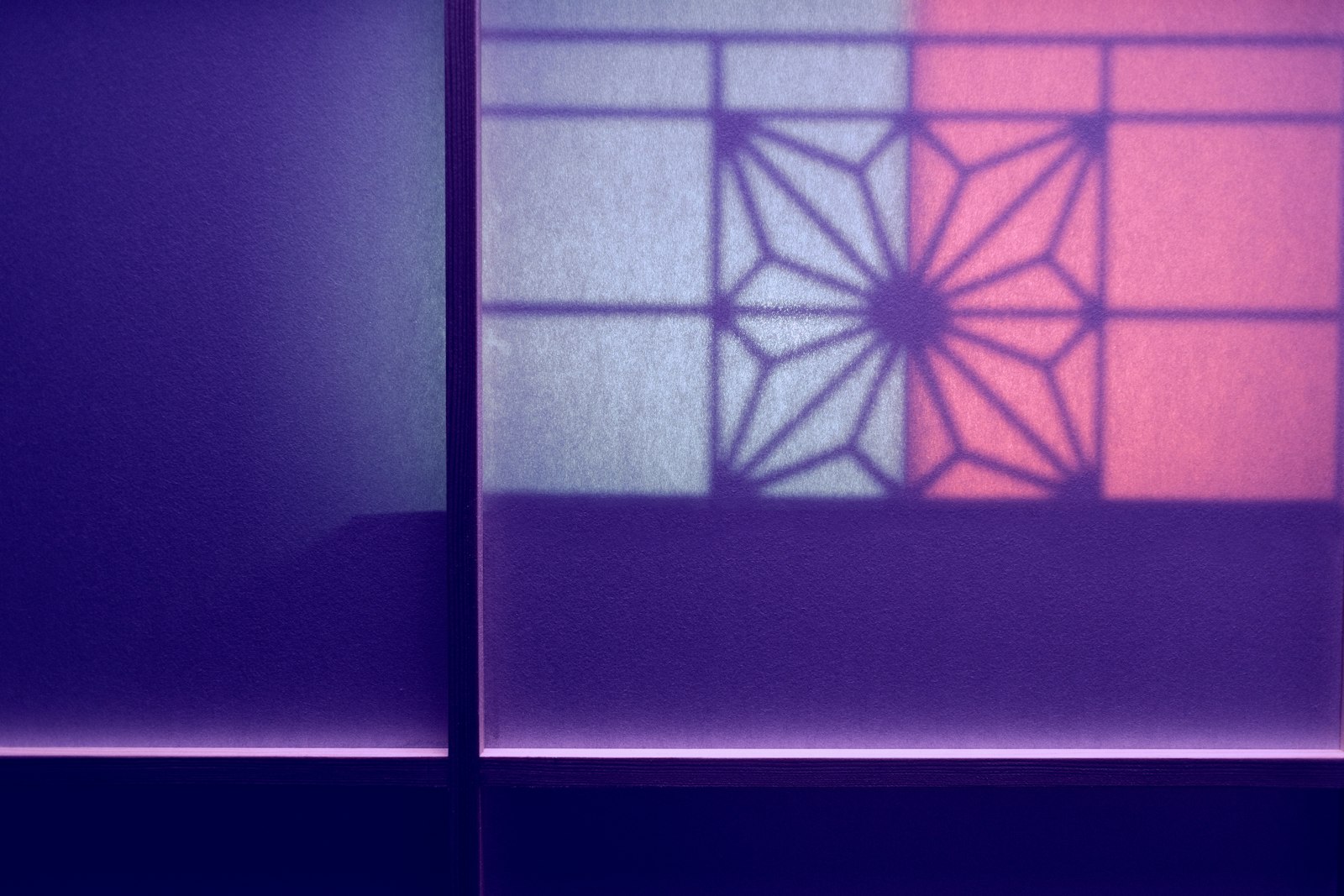
Hold a piece of kumiko up to the light and the first thing you notice is that it should not be possible. An intricate geometric lattice, sometimes hundreds of tiny wooden pieces locked into a pattern of stars and hexagons, held together without a single nail, screw or drop of glue, relying instead on the precision of the cuts alone. This is Japanese woodworking at its most refined and most patient, a craft so exacting that a master may spend a lifetime pursuing it. Understanding kumiko is to understand a way of thinking about wood, precision and beauty that has much to teach any home that values the work of the hand.
What kumiko is
Kumiko is a traditional Japanese technique of assembling thin strips of wood into decorative latticework. The strips, often little thicker than a matchstick, are grooved, notched and mortised so precisely that they interlock and hold one another in tension, forming panels of astonishing complexity and delicacy. The patterns have poetic names drawn from nature: chrysanthemum, hemp leaf, arrow feather, each a geometric abstraction of something observed in the natural world.
The craft grew out of the wider tradition of Japanese joinery, the same body of knowledge that raised temples and teahouses without metal fastenings, trusting the fit of wood to wood to hold a building up. That reverence for the joint, for the idea that a well-cut piece of wood needs no nail, is central to the whole tradition. It is the same conviction that animates the finest Western cabinetmaking too; the craft has a clear kinship with the work of the joiners keeping woodwork alive in our own tradition, who likewise prize the honest joint over the hidden fixing.
Precision as a philosophy
What makes kumiko extraordinary is the tolerance it demands. The pieces must be cut to fractions of a millimetre; too loose and the lattice falls apart, too tight and the delicate strips split. A master works largely by hand, planing each piece, cutting each groove, testing each fit, in a process that cannot be rushed and barely can be mechanised. The finished panel is the visible record of that patience, every one of its hundreds of joints a small act of exactitude.
This makes kumiko a discipline as much as a decoration. It teaches, to anyone who watches it made, a lesson about the value of doing one thing with total precision. That lesson runs through all the great woodworking traditions and through this magazine’s coverage of them; it is the same spirit we admire in the quiet craft of the panelled door, where the beauty likewise lies in the precision of the frame and the honesty of the joint. Kumiko is simply that principle carried to its most delicate extreme.
Kumiko holds itself together through precision alone. There is no glue to hide behind, no nail to force the fit. The craft is the joint made visible.
How it lives in the home
Traditionally, kumiko found its home in the sliding screens and transoms of the Japanese house, where it filtered light and air between rooms, casting intricate shadows and softening the boundary between spaces. It was never merely ornamental; it did the work of managing light and privacy while turning that work into art. That original purpose points to how it can be used today. The transom in particular has its own carved tradition, which our piece on the art of the ranma transom considers in more depth. The same balance of light, privacy and craft governs the fabric hung across a Japanese doorway, as our piece on the art of the noren curtain explains.
- As a screen or room divider. A kumiko panel set into a partition filters light and softens a division without walling it off entirely.
- In doors and cabinet fronts. A small run of kumiko in a cupboard door or a sliding panel brings the craft into a room at a manageable scale.
- As a light fitting. Backlit, the lattice throws its pattern in shadow across a wall or ceiling, turning geometry into a play of light.
- As a single framed piece. Even one small panel, displayed like the artwork it is, carries the whole quiet argument for the craft.
The key, as with all such intense craft, is restraint. Kumiko is powerful precisely because it is delicate and rare; a whole room lined with it would exhaust the eye. A single, well-placed panel, allowed to catch the light, does far more. This is the same discipline of the well-judged wooden feature that governs the return of the wood-panelled study: let the craft speak once, clearly, rather than everywhere at once.
The value of the slow made thing
In a world of moulded, mass-produced ornament, kumiko is a deliberate provocation. It is slow where everything else is fast, exact where everything else is approximate, and honest where so much decoration is fake. It cannot be automated, faked or rushed without instantly losing what makes it worth having. To bring a piece of it into a home is to make a small stand for the value of human skill, patience and precision.
That is why kumiko sits so naturally alongside the other honest craft traditions this magazine returns to, from hand-thrown pottery to hand-cut joinery. It belongs to the same family as the careful timber work found throughout the well-made house; its logic is the same one that governs the shutter and the screen, explored in the quiet craft of the window shutter. All of these treat wood as a material worthy of real skill, and all reward the eye that slows down to look.
Why it belongs
Kumiko belongs in the considered home for the same reason any great craft does: because it brings the trace of human skill and patience into daily life, and because it is beautiful in a way that machines cannot counterfeit. It need not be Japanese in setting to work; a single panel, thoughtfully placed and well lit, brings its quiet precision to any room that will have it. It is exactly the kind of slow, honest, deeply made thing this magazine champions across our homes and culture coverage. Find one good panel, put it where the light will find it, and let the joinery do the rest.
Priya tours the homes most people only glimpse from the road, and asks how they are really lived in.