Understanding the Art of the Noren Curtain
Neither door nor decoration, the Japanese noren softens a doorway into a threshold you pass through. Understanding the split curtain and its quiet intelligence.
 By Priya Nair
1 September 2026 · 6 min read
By Priya Nair
1 September 2026 · 6 min read
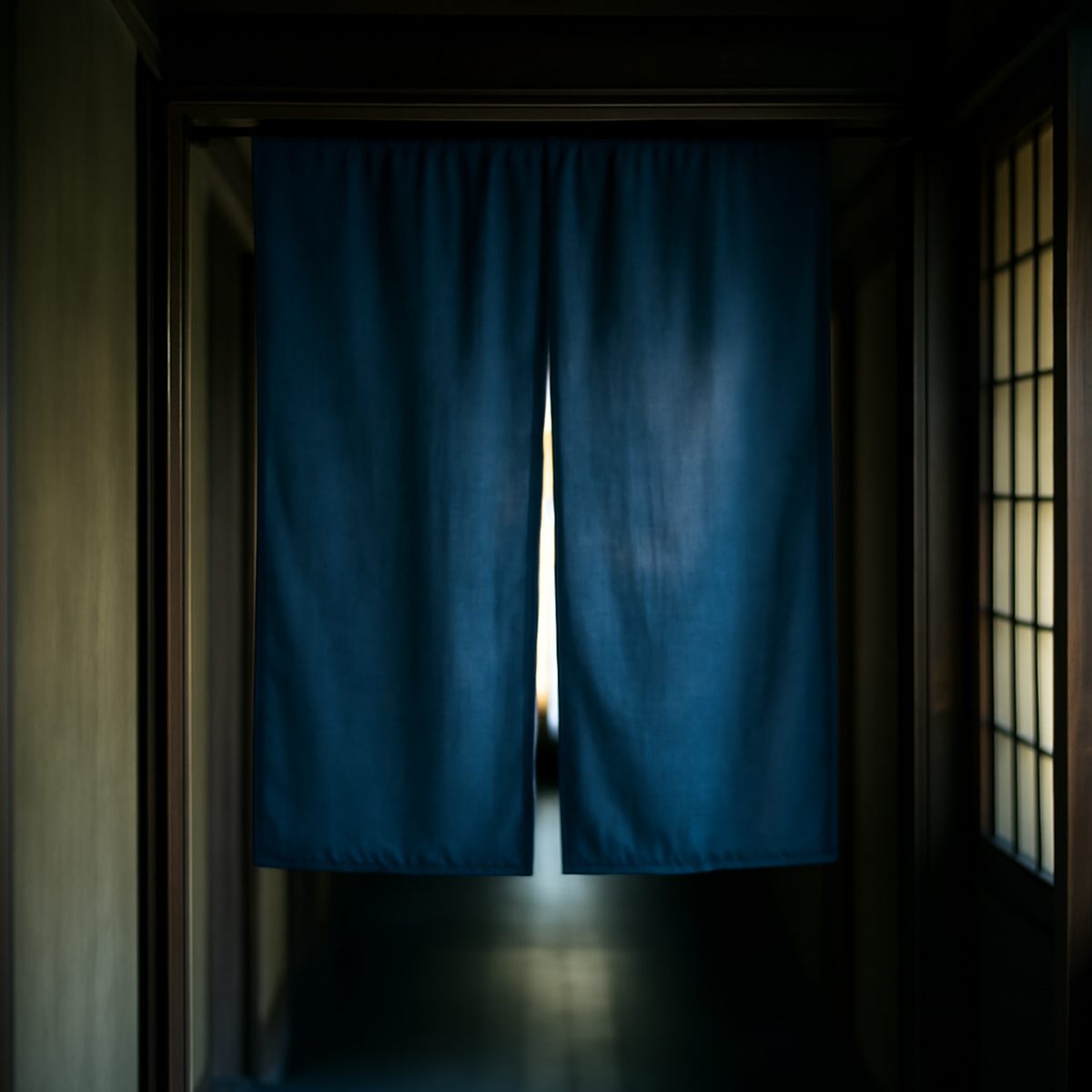
Step through the entrance of a traditional Japanese shop or home and you often pass, without quite noticing, beneath a short fabric curtain split into vertical panels that brush your shoulders as you go. This is the noren, and it is one of those objects that seems almost too simple to warrant attention until you understand what it is doing. It is not a door, because it never closes. It is not merely decoration, because it works. It is a soft threshold, a way of dividing space without severing it, and in that modest ambition lies a whole philosophy of how a home can be arranged.
Neither door nor decoration
The noren occupies a category Western interiors barely have a word for. Hung across a doorway or opening, usually reaching somewhere between chest and knee height, and slit into two or more panels, it marks a boundary you can see through, hear through and simply walk through. It signals that one space has become another, kitchen to dining room, shop to street, private to public, while leaving air, light, sound and movement free to pass. It closes psychologically without closing physically.
This idea of the soft, permeable threshold is deeply Japanese, of a piece with the sliding screens and low sightlines of the tradition, and it belongs to the same family of considered boundaries as the art of the kumiko panel and the floor-level calm of the tatami room. All three divide space gently, trusting suggestion over solid partition, and all three make a small room feel larger by never fully shutting it off.
The craft and the colour
Traditionally the noren was cloth of cotton or linen, dyed, more often than not, in indigo, and marked with a family crest, a shop’s name or a simple motif in reserved white. The dyeing was serious craft: paste-resist and stencil techniques built up the design, and the deep, living blue of natural indigo gave the fabric a depth that flat colour never achieves. A shop’s noren was its signature, hung out at opening and taken in at close, a soft flag of trade worked in cloth.
The noren teaches you that a boundary need not be a wall. It says here is a different room, a different mood, without ever saying you cannot come in. That is a very Japanese kind of politeness, worked in cloth.
That marriage of indigo and honest cloth is the noren’s aesthetic heart, and it shares everything with the wider case for natural blue in the home, made in the argument for indigo generally and echoed in the calm, blue-and-neutral restraint of the Japandi interior. A single well-made noren carries that whole sensibility into a doorway.
Bringing one into the home
The noren translates into a Western home more gracefully than you might expect, precisely because it solves problems our architecture creates. It softens the awkward doorless opening between kitchen and dining space. It screens a utility area or pantry without the cost and permanence of a door. It marks the entrance to a study or bedroom as a change of mood rather than a hard closure. And it does all this while adding a length of beautiful cloth and a little gentle movement to a room.
Hung well, it wants the right height, low enough to brush the shoulders and read as a threshold, not so low as to obstruct, and a simple rod or bamboo pole through the sewn channel at the top. Choose natural cloth and, ideally, real dye; the noren rewards the same honest materials that any good curtain does, the argument for which is made in why linen curtains deserve a second look. One is enough. This is not a fabric to multiply, but a single considered gesture at a single meaningful opening.
Where a noren earns its place
- Across a doorless opening between kitchen and dining room, softening the transition.
- Screening a pantry, utility or study entrance where a door would feel heavy.
- At a bedroom threshold, to mark a change of mood rather than seal the room.
- As a length of dyed cloth worth looking at, chosen for its indigo depth and hung simply.
Movement, light and the seasons
What a solid door can never do, and the noren does effortlessly, is move. A curtain of cloth responds to the smallest current of air, lifting as someone passes, stirring when a window opens, breathing gently with the life of the house. That small, constant motion animates a doorway in a way no fixed element can, and it is a large part of the noren’s quiet charm. A room glimpsed through a stirring curtain is more inviting than one seen through an open frame, half-revealed and half-promised.
The Japanese also treat the noren as a seasonal object, and it is a habit worth borrowing. A heavier cloth in a deeper indigo suits the colder months; a lighter, looser weave, sometimes of open linen or ramie, lets more air and light through in summer and changes the mood of a threshold entirely. Swapping the noren with the seasons is a modest, inexpensive way of marking the turning year inside the home, of the same family as changing bed linen or cushion covers, and it keeps a doorway from ever settling into the unnoticed permanence that a fitted door imposes. The threshold, like the season, is allowed to change.
The lesson in the cloth
The noren endures because it answers a question our homes keep asking and rarely solve well: how to separate spaces without shutting them off from one another. Its answer is generous and quietly brilliant, a boundary you can see through and walk through, a threshold made of cloth and suggestion rather than timber and hinge. Once you have lived with one, the hard closed door between two rooms that want to breathe together starts to look like the crude solution it often is.
Hang one at the right opening, in honest indigo cloth, and watch how it changes the way you move through the house, marking transitions you never knew you were making. It is among the gentlest and most intelligent objects a home can borrow from another tradition. For more of those quiet, considered ideas worth adopting, the Homes & Culture section is where we gather them, cloth threshold and all.
Priya tours the homes most people only glimpse from the road, and asks how they are really lived in.