How to Choose and Use Miso
Miso is far more versatile than the soup it is best known for. Here is how to choose the right type and use it properly in everyday home cooking.
 By Renée Tan
30 August 2026 · 6 min read
By Renée Tan
30 August 2026 · 6 min read
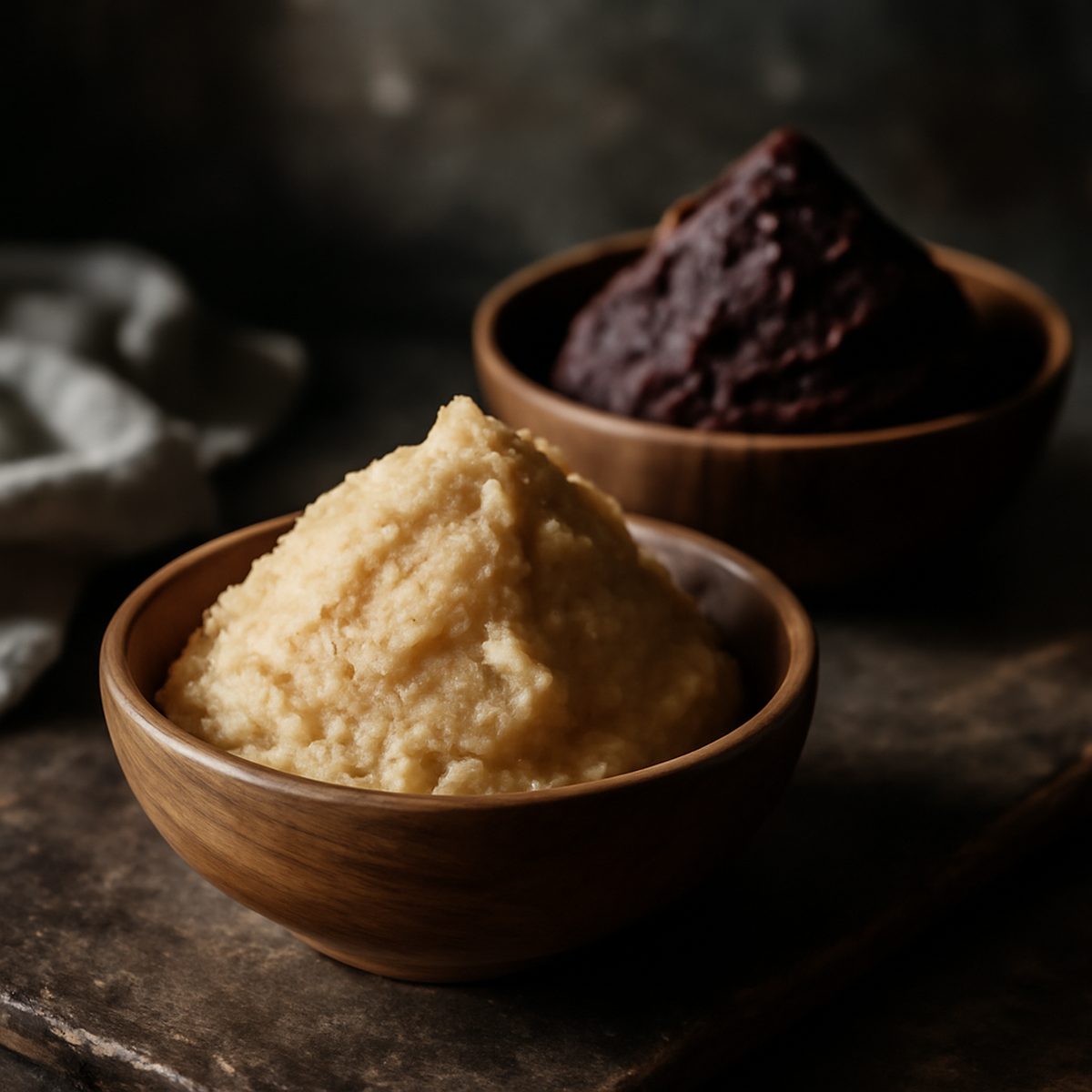
Miso tends to enter most home cooks’ lives through a single, narrow application: the soup that accompanies a sushi set. This does the ingredient a disservice. Miso, a fermented paste made from soybeans and a grain such as rice or barley, inoculated with koji and left to age for months or years, is one of the more versatile ingredients a home kitchen can stock, capable of adding deep savoury complexity to marinades, dressings, glazes, and braises well beyond its most familiar use. Understanding the different types available, and how their age and colour relate to flavour, makes it considerably easier to use well.
Understanding the main types
White miso, or shiro miso, is fermented for the shortest period, typically a few weeks to a couple of months, and carries a mild, slightly sweet flavour with a pale golden colour. It works well in dressings, light marinades, and delicate soups where a heavier miso would overwhelm other ingredients. Red miso, or aka miso, ferments considerably longer, sometimes for a year or more, developing a deeper colour, saltier profile, and more pronounced umami intensity as the fermentation process breaks down more of the soybean’s proteins and sugars. It suits richer applications: braises, hearty soups, and glazes for fattier proteins that can stand up to its intensity.
Mixed or awase miso blends white and red in varying proportions, offering a middle ground that many home cooks find the most versatile single jar to keep stocked, since it can substitute reasonably well in recipes calling for either extreme without tipping too far in one direction. A handful of specialty misos, made with barley rather than rice, or aged for exceptionally long periods, offer more distinctive, harder-to-generalise flavours worth exploring once the fundamentals are understood. Miso is one of several pantry staples that reward the same attention to type and freshness, as our guide on how to choose and use turmeric shows.
Cooking applications beyond soup
Miso’s most transformative use in a home kitchen may be as a marinade base. Mixed with a small amount of mirin, sake, and sugar, then rubbed onto fish or meat and left to sit for a day or two before grilling or broiling, miso produces a deeply caramelised, savoury crust that is difficult to replicate with any other single ingredient. This technique, most associated with the Japanese dish saikyo yaki, works particularly well with fattier fish such as black cod or salmon, where the miso’s salt and sugar content helps develop a lacquered exterior while keeping the flesh moist beneath.
Simple ways to start using miso more often
- Whisk a spoonful into vinaigrettes for a savoury depth that plain oil and vinegar cannot achieve alone
- Stir into softened butter with a touch of garlic for a compound butter that transforms roasted vegetables
- Add a small amount to tomato-based sauces or stews, where it deepens umami without announcing itself as miso at all
Storage and shelf life
Because miso is a fermented product, it keeps considerably longer than most opened condiments, generally remaining usable in the refrigerator for many months as long as it is kept tightly sealed and any surface exposed to air is smoothed down with a spoon between uses. Some cooks even find that miso continues to develop character over time in the fridge, deepening slightly in flavour rather than simply degrading. A thin layer of surface darkening is generally harmless and can be stirred back in or removed with a spoon, though a strong off smell or visible mould is a sign the paste should be discarded.
“People are scared of miso because they think it’s fragile,” one Japanese-trained Singapore chef told us. “It’s actually one of the most forgiving things in the fridge.”
Miso within the wider Japanese pantry
Miso sits alongside soy sauce and other fermented staples as one of the foundational elements of Japanese cooking, and understanding it deepens an appreciation for dishes built around similar principles, such as the careful balance found in a well-made bowl of modern Japanese cooking beyond sushi. For those exploring Japanese ingredients more broadly, our companion piece on Japanese whisky covers a similarly patient, fermentation-adjacent Japanese craft tradition, albeit one built around distillation rather than paste. Our wider Dining & Drinks section carries further coverage of the pantry staples and techniques worth understanding for anyone cooking seriously at home.
Buying miso worth cooking with
Not all miso sold in Singapore supermarkets is made the same way. Some mass-market versions are fermented for only a matter of weeks using accelerated processes and pasteurised before packaging, which extends shelf life but flattens much of the complexity a longer, unpasteurised fermentation develops. Where possible, seeking out miso labelled as unpasteurised or “live,” typically found in the refrigerated section of a well-stocked Japanese grocer rather than the ambient shelf, tends to offer a noticeably deeper, more layered flavour. It costs a little more, but the difference is usually apparent within the first spoonful, particularly in simple applications like a plain miso soup where there is nowhere for the paste’s quality to hide.
Regional variation adds further nuance for cooks willing to explore beyond the standard white and red categories. Hatcho miso, made entirely from soybeans without any grain component, offers an intensely savoury, almost chocolatey depth prized in certain braises. Saikyo miso, a particularly sweet, pale variety associated with Kyoto, suits delicate glazes where a standard white miso might taste comparatively one-dimensional. Working through these regional styles gradually, rather than trying to master all of them at once, is a reasonable way to build genuine familiarity with the ingredient’s full range over time, and a far more rewarding approach than treating miso as a single, interchangeable pantry item.
Final word
Miso rewards a home cook willing to move past its most familiar soup format and treat it instead as a savoury seasoning ingredient in its own right, closer in versatility to a good stock or a well-made mustard than to a single-purpose condiment. Keep both a white and a red on hand, understand roughly which applications suit each, and miso quickly becomes one of the most reliably useful jars in the fridge, quietly improving dishes that have nothing to do with Japanese cooking at all.
Renée has covered Singapore's restaurants for over a decade, with a soft spot for the kitchens most people walk past.