The Best Turkish and Anatolian Dining
Smoky grills, considered meze, slow-cooked stews: a guide to where Singapore's Turkish and Anatolian dining is quietly getting better and more interesting.
 By Renée Tan
30 August 2026 · 6 min read
By Renée Tan
30 August 2026 · 6 min read
Turkish food in Singapore has long lived in the shadow of the doner kebab stand, which does the wider cuisine no favours. Anatolian cooking, at its best, is a slow, considered tradition built on charcoal, good bread, and a pantry of pickles, yoghurts and cured meats that most diners here have never properly tasted. A handful of kitchens on the island are now doing the fuller version of that tradition justice — grilling over real charcoal, making their own bread daily, and treating meze as a proper course rather than an afterthought before the grill arrives.
What Proper Meze Looks Like
A serious Turkish table starts cold, not hot. The best spreads we have found in Singapore include a proper hummus made with tahini rather than shortcuts, a smoky aubergine purée with visible char running through it, and a yoghurt-and-cucumber dip seasoned with enough garlic and mint to actually taste of something. Cured meats — pastirma in particular, cured beef rubbed in a fenugreek paste called çemen — are a good barometer of how seriously a kitchen takes the wider cuisine, since they take real time and skill to make well and are easy to skip. A kitchen that bothers with house-made pastirma is usually a kitchen worth trusting with the grill that follows. Dolma, vine leaves or vegetables stuffed with rice and herbs, is another dish that rewards patience in the kitchen and is easy to spot when done properly: the rice should be loosely packed and fragrant with dill and mint rather than dense and one-note, and the leaves themselves tender rather than tough or overly acidic from too aggressive a pickling process.
The Grill Itself
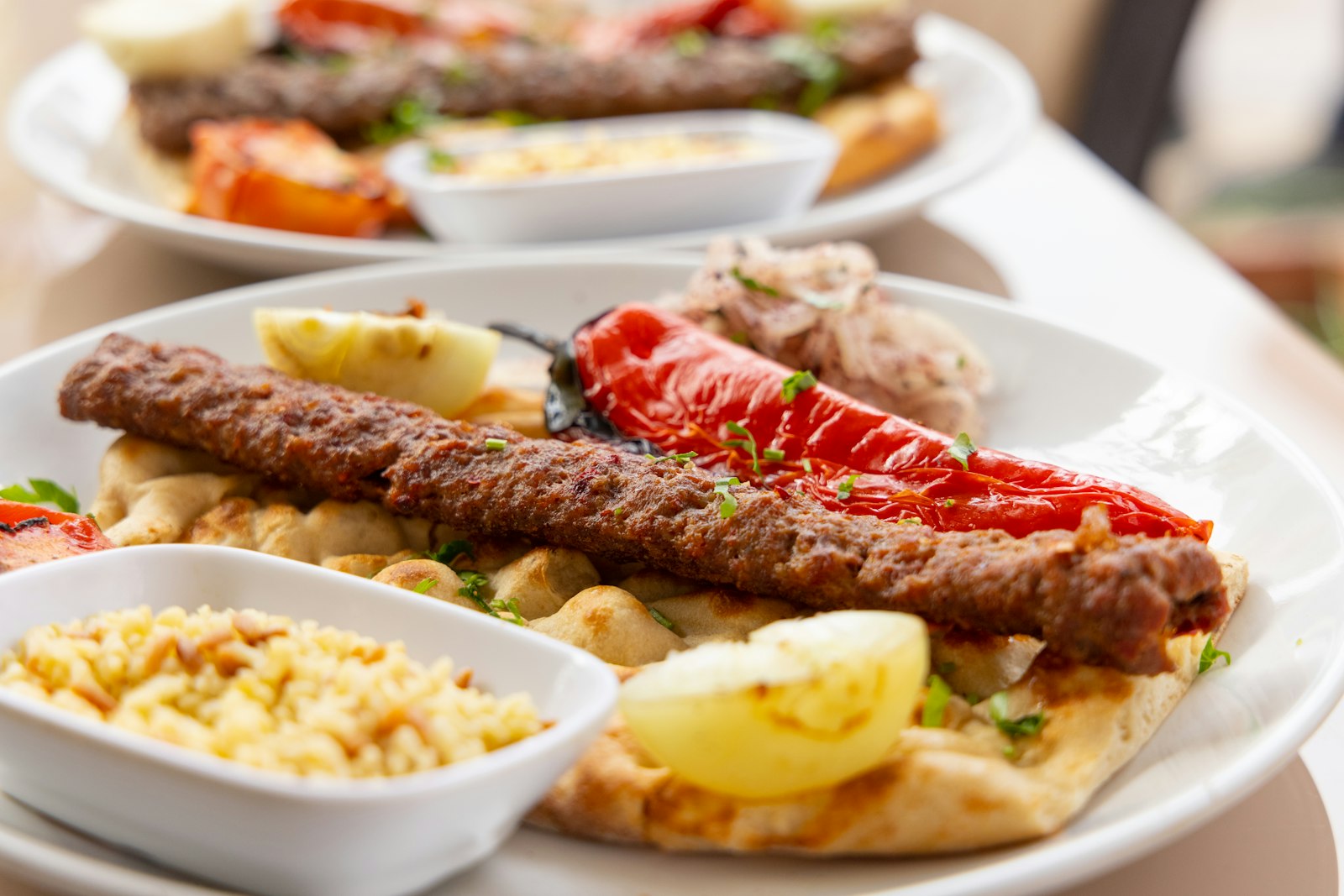
Charcoal is non-negotiable for proper Anatolian grilling, and the difference between a gas-fired kebab and a real charcoal one is obvious within the first bite — smoke, char, a slight bitterness at the edges that gas simply cannot replicate. Adana kebab, hand-minced lamb pressed onto flat skewers and seasoned with chilli, is the dish to judge a kitchen by; it should arrive charred outside, juicy within, with visible fat flecks throughout rather than a dry, over-processed texture. Lamb shoulder, slow-cooked until it falls from the bone, is the other essential order, usually served over a bed of aubergine purée or rice pilaf studded with pistachio.
- Order pastirma or sucuk as a barometer of how seriously the kitchen treats its charcuterie
- Bread should arrive warm and slightly charred, ideally baked in-house rather than bought in
- Adana kebab is the fairest single test of a kitchen’s grill work
How It Sits Alongside Other Mediterranean Cooking
Turkish and Anatolian cooking shares real territory with the wider Mediterranean and Levantine table, and diners drawn to one tend to enjoy the other. Our guide to the best Greek and Mediterranean dining in the city covers similar ground from a different angle — charcoal, olive oil, and a shared instinct for letting good produce speak plainly. For those who enjoy the ritual of a proper hammam alongside their meal, the best spa and hammam experiences pairs surprisingly well with an evening of Anatolian grilling, both drawing on the same slow, unhurried tradition.
Bread, Often the Most Overlooked Test
It is easy to treat bread as a formality at a Turkish table, something set down before the real cooking begins, but it deserves closer attention than that. Pide, the flatbread baked fresh to order in a wood-fired or stone oven, should arrive with a slight char and a pillowy interior, torn rather than sliced, and used throughout the meal to scoop up dips and juices rather than eaten separately. A kitchen that bakes its own bread daily, rather than buying it in from a supplier, is almost always a kitchen that has thought carefully about the rest of its menu too. Simit, the sesame-crusted ring bread more commonly found at breakfast, is a rarer but welcome sight on a dinner table and worth ordering if offered.
A Word on Wine and Raki
Raki, the anise-scented spirit that turns cloudy when mixed with water, is the traditional companion to a Turkish meze spread, and a kitchen that stocks it properly — served in tall, narrow glasses alongside a jug of iced water — signals real attention to the wider dining ritual, not just the food. The ritual of watching the clear spirit turn milky on contact with water is, in its own small way, part of the theatre of a proper Anatolian dinner, and worth pointing out to guests unfamiliar with it. A handful of Anatolian and Turkish wines, less familiar to most Singapore diners, are also starting to appear on the more considered lists in the city, worth ordering if you see them rather than defaulting to something more familiar.
“People expect kebab and think that’s the whole cuisine,” one chef told us, plating a spread of cold meze before the grill had even been lit. “The meze table is where the real cooking happens. The grill is just the finish.”
Where to Start
For a first visit, order broadly across the meze table before committing to a single grilled main, and ask what the kitchen makes in-house versus buys in — the answer tells you most of what you need to know about how seriously the restaurant takes the cuisine. Sharing plates generously across the table, rather than ordering individual mains, tends to produce the more satisfying meal here, since it mirrors how the cuisine is actually meant to be eaten, built for a long, unhurried evening rather than a quick, single-course dinner. For the wider landscape of where Singapore’s dining scene is heading across cuisines, our Dining & Drinks coverage is worth following closely.
Turkish and Anatolian dining in Singapore is still a small, quiet corner of the city’s food scene, but it is a corner worth paying proper attention to. The kitchens doing it well are not chasing trend or spectacle; they are simply cooking a genuinely old tradition with real ingredients and real patience, and that combination is increasingly rare enough to be worth seeking out on its own terms. Return more than once, and the differences between kitchens become sharper still — a stronger hand with dill here, a house-fermented pickle there — the kind of small, cumulative detail that only reveals itself to a diner willing to come back for a second and third meal rather than treating one visit as definitive.
Renée has covered Singapore's restaurants for over a decade, with a soft spot for the kitchens most people walk past.